


'%20x='0'%20y='0'%20height='100%25'%20width='100%25'%20%0A%20%20%20%20%20%20%20%20%20%20xlink%3Ahref='data:image/jpg;base64,/9j/2wBDAAYEBQYFBAYGBQYHBwYIChAKCgkJChQODwwQFxQYGBcUFhYaHSUfGhsjHBYWICwgIyYnKSopGR8tMC0oMCUoKSj/2wBDAQcHBwoIChMKChMoGhYaKCgoKCgoKCgoKCgoKCgoKCgoKCgoKCgoKCgoKCgoKCgoKCgoKCgoKCgoKCgoKCgoKCj/wAARCAAGAAoDASIAAhEBAxEB/8QAFQABAQAAAAAAAAAAAAAAAAAAAAb/xAAhEAACAQMDBQAAAAAAAAAAAAABAgMABBESIUEGBxMxQv/EABQBAQAAAAAAAAAAAAAAAAAAAAD/xAAUEQEAAAAAAAAAAAAAAAAAAAAA/9oADAMBAAIRAxEAPwCm7mRQWj2ljbQaJQCqSI5TC+QBth9HHvjJ5NUNv0vALeITSqZQo1EQqRnG+9KUH//Z'%3E%3C/image%3E%3C/svg%3E)

Chainsaw Man has passed into a decisive narration stage since Tatsuki Fujimoto has continued to heighten Part 2 using more cosmic stakes. Since its first anime appearance and a revival of its manga status, it has been actively developing its world of Devils, the hierarchies of fear, and the issues of identity conflicts. The conflict between Denji, the Chainsaw Man, and Yoru, the War Devil who resides in the body of Asa Mitaka has turned into the emotional and ideological center of the present arc. Once the plot is moved directly to Hell, the manga is once again re-establishing its balance of power.
Chainsaw Man is clearly positioning the possible introduction of a new Primal Devil as a narrative mechanism that could decisively settle the Denji vs. Yoru conflict. Chapter 225 confirms that both characters have been dragged into Hell, a realm where Primal Devils exist without restraint or contractual limitation. This shift fundamentally changes the rules governing their rivalry. Here, Chainsaw Man is no longer offering this feud as a struggle between their own strength but as a struggle that can be evaluated by greater existential powers.

The conflict between Denji and Yoru has been on the rise during Part 2 of the manga. Yoru had one thing in mind: to bring the body of Asa under complete control and eliminate Chainsaw Man to bring back to life the idea of war-related concepts taken out of reality. Denji, by contrast, has shown little ideological consistency, acting primarily on instinct, trauma, and impulse. This inequality has rendered their competition unsteady and not climactic.
In Chapter 225, Denji, fully rampaging as Chainsaw Man, consumes multiple Devils aligned with Yoru, including weaponized pawns such as the Leg Devil. These actions directly erase concepts critical to Yoru’s vision of a “perfect world,” weakening her authority and forcing her into a rare moment of desperation. The chapter explicitly depicts Yoru begging Asa for body control, signaling a collapse of dominance.
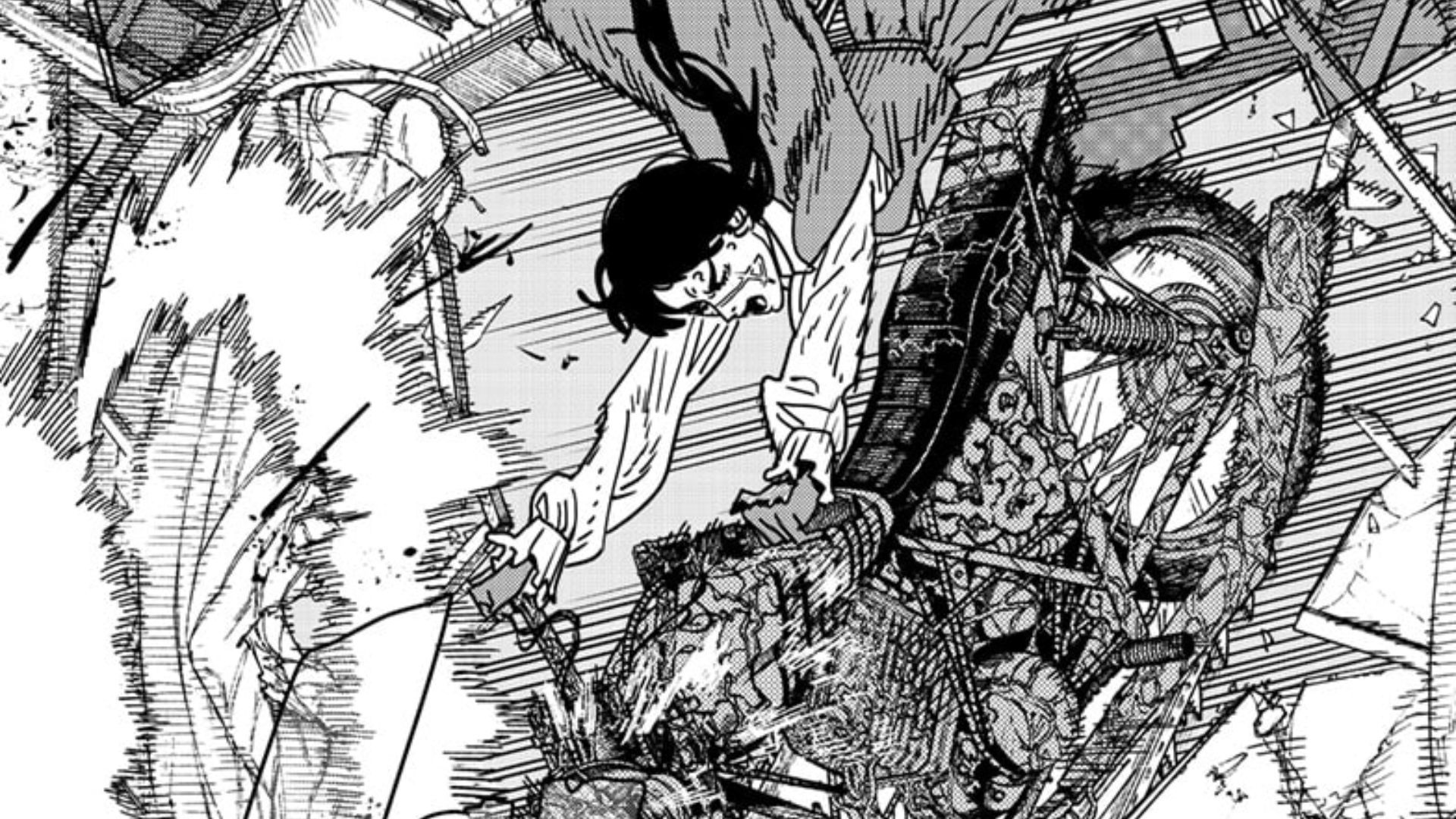
In retaliation, Yoru opens a literal gateway to Hell using a surreal trigger sequence described as “Barf, Motorcycle, Hell.” This act forcibly drags Denji into Hell alongside her, placing both characters in a domain governed by Primal Devils. In the story, Hell is not merely a location but the origin point of Devils who embody fundamental fears. This relocation immediately reframes their conflict.
Chainsaw Man and the role of Primal Devils in resolving Denji vs. Yoru
The concept of Primal Devils has already been established as the highest tier of threat in Chainsaw Man. Entities such as the Darkness Devil, Falling Devil, and Aging Devil operate beyond human comprehension and contractual logic. Chapter 174 demonstrated this hierarchy clearly, when the Aging Devil effortlessly aged Yoru’s attacks into dust despite her status as the War Devil. This precedent confirms that even Horsemen-class Devils are not supreme.
By taking Denji and Yoru into Hell, the story removes the protective limitations of Earth-bound rules. Primal Devils in Hell are not constrained by fear management systems, public perception, or devil-hunter interference. This environment renders conventional power scaling irrelevant. Neither Denji’s chainsaws nor Yoru’s weapons are guaranteed authority in this realm.

In the manga, Primal Devils function as narrative arbiters rather than mere antagonists. Their presence historically forces ideological collapse rather than straightforward victory. In Hell, Denji and Yoru are no longer enemies competing for dominance but liabilities vulnerable to extinction. This structural shift suggests that survival, not supremacy, becomes the immediate priority.
Thematically, the manga has resolved major conflicts through forced alignment rather than conquest. Makima’s downfall in Part 1 was not achieved through superior strength alone but through exploiting conceptual loopholes and emotional contradictions. Similarly, Hell’s Primal Devils could “settle” Denji vs. Yoru by threatening annihilation unless cooperation occurs. This would mirror the series’ established narrative logic.
Importantly, the manga does not need to introduce a named Primal Devil immediately to achieve this effect. The mere implication of unrevealed Hell Primals already surpasses known threats. Their presence reframes Denji and Yoru as insignificant in the cosmic hierarchy. This narrative positioning alone effectively resolves their stalemate by rendering it irrelevant.
 Trending
In conclusion, Chainsaw Man is using Hell and the looming presence of Primal Devils to fundamentally redefine the Denji vs. Yoru conflict. Rather than offering a traditional winner, the story positions higher existential forces as the final authority. By doing so, the manga transforms a personal rivalry into a question of survival against absolute fear, reinforcing its reputation for subverting conventional shōnen resolutions.


 Reply
Reply


