


'%20x='0'%20y='0'%20height='100%25'%20width='100%25'%20%0A%20%20%20%20%20%20%20%20%20%20xlink%3Ahref='data:image/jpg;base64,/9j/2wBDAAYEBQYFBAYGBQYHBwYIChAKCgkJChQODwwQFxQYGBcUFhYaHSUfGhsjHBYWICwgIyYnKSopGR8tMC0oMCUoKSj/2wBDAQcHBwoIChMKChMoGhYaKCgoKCgoKCgoKCgoKCgoKCgoKCgoKCgoKCgoKCgoKCgoKCgoKCgoKCgoKCgoKCgoKCj/wAARCAAGAAoDASIAAhEBAxEB/8QAFgABAQEAAAAAAAAAAAAAAAAAAAUH/8QAIRAAAQIEBwAAAAAAAAAAAAAAAQACAwQFExESITFxktH/xAAVAQEBAAAAAAAAAAAAAAAAAAAEBf/EABkRAAIDAQAAAAAAAAAAAAAAAAECAAMRBP/aAAwDAQACEQMRAD8AzCtUqLLmLLzFhxES6XsBBOYaN4Cginvw2b3PiImWsWOmXOilKiFQYJ//2Q=='%3E%3C/image%3E%3C/svg%3E)

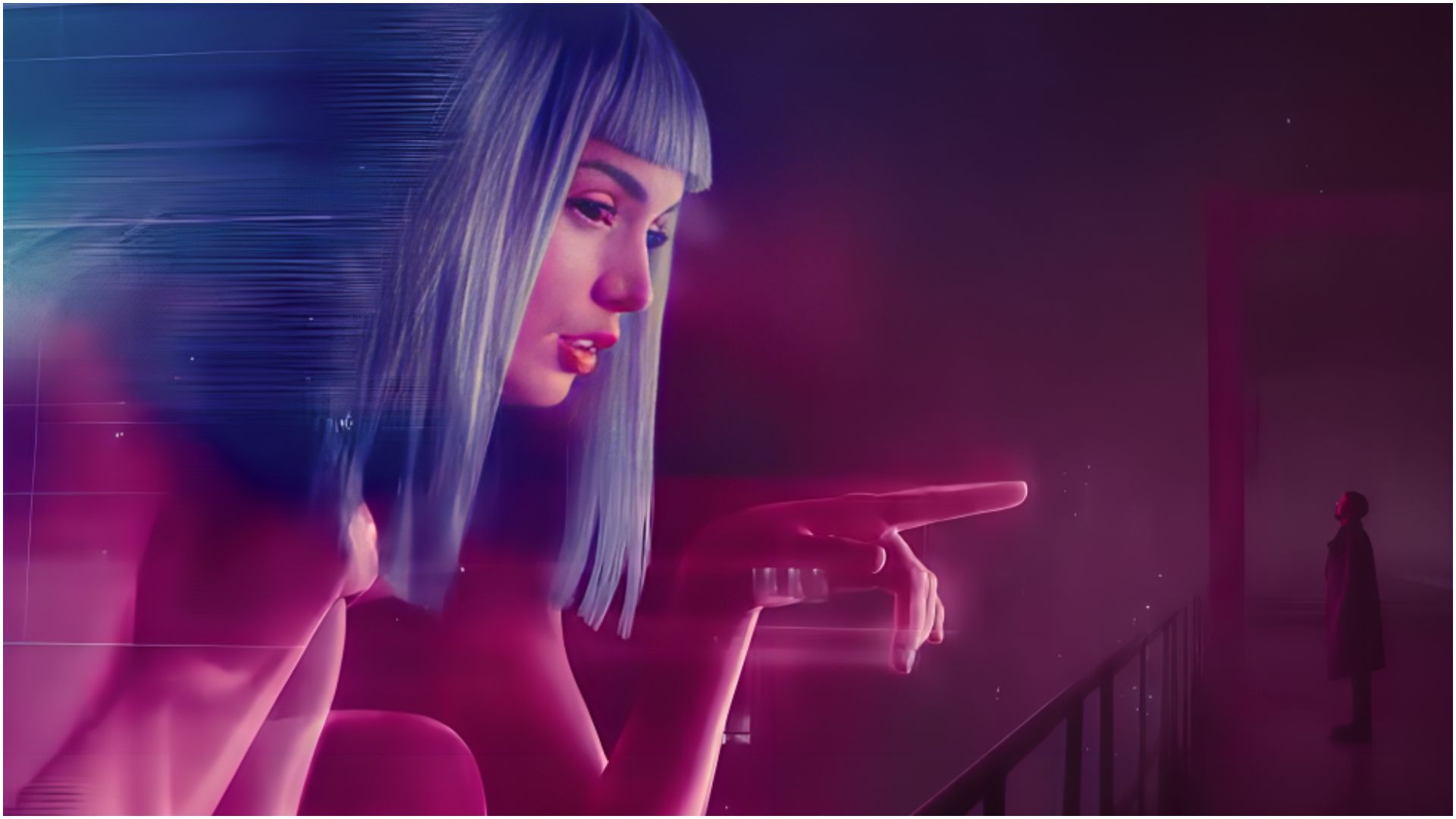
Blade Runner 2049 is a sequel to 1982's Blade Runner, and it was released on October 6, 2017, by Warner Bros. Pictures. The neo-noir science fiction film was directed by Denis Villeneuve, while Hampton Fancher and Michael Green wrote the script. It had its premiere at LA's Dolby Theatre. Here's the official synopsis as per Letterboxd:
Thirty years after the events of the first film, a new blade runner, LAPD Officer K, unearths a long-buried secret that has the potential to plunge what’s left of society into chaos. K’s discovery leads him on a quest to find Rick Deckard, a former LAPD blade runner who has been missing for 30 years.
Let's explore how the film ends.
What is the plot of Blade Runner 2049?
Blade Runner 2049 takes place nearly three decades after the events of the first one. This time, we are introduced to a new Blade Runner named Officer K (played by Ryan Gosling). While trying to uncover the truth, he comes across Rick Deckard (Harrison Ford), who has been missing for years.
How does Blade Runner 2049 end?
Towards the end of Blade Runner 2049, K meets Niander Wallace (played by Jared Leto), and they get into a fight. He rescues Deckard after defeating Wallace's assistant. In the last moment, Deckard finally meets his daughter Ana Stelline after many years.
K is a replicant who has been trying to find his origin throughout the film. He is trying to find out if he is a human being or an android with human feelings. One of the things he has is a memory of his childhood. This, he believes, cannot be fake, and he hopes to become human. Towards the end, he finally realises that he is not a human being but a replicant.
He believed he was the child of Deckard and Rachel due to his memories. But towards the end, K realises that the child's memory was implanted in his brain. This was done by the real child Ana, who worked as a memory designer for Wallace Corporation.
He knows that he is not a human, but still goes out of his way to protect Deckard because he has started caring for him and Ana. The film ends with Deckard going inside the building to meet Dr Stelline. Meanwhile, K lies down on the steps as he is severely injured. The film doesn't show it explicitly, but it's assumed that he doesn't make it alive.
K's sacrifice for all of them cements the idea that even replicants have feelings, and they can also act like human beings. Deckard is presumed dead, and there are parallels between his journey and K. In the first film, the audiences keep guessing if Deckard is a replicant or not.
The ending touches upon the idea that we are more than our memories. We are built through our actions and thoughts, which K's deeds prove.
 Trending
Stay tuned to Soap Central for more such stories.

Love movies? Try our Box Office Game and Movie Grid Game to test your film knowledge and have some fun!


 Reply
Reply


