


'%20x='0'%20y='0'%20height='100%25'%20width='100%25'%20%0A%20%20%20%20%20%20%20%20%20%20xlink%3Ahref='data:image/jpg;base64,/9j/2wBDAAYEBQYFBAYGBQYHBwYIChAKCgkJChQODwwQFxQYGBcUFhYaHSUfGhsjHBYWICwgIyYnKSopGR8tMC0oMCUoKSj/2wBDAQcHBwoIChMKChMoGhYaKCgoKCgoKCgoKCgoKCgoKCgoKCgoKCgoKCgoKCgoKCgoKCgoKCgoKCgoKCgoKCgoKCj/wAARCAAHAAoDASIAAhEBAxEB/8QAFgABAQEAAAAAAAAAAAAAAAAAAAQG/8QAIhAAAQQBAwUBAAAAAAAAAAAAAQIDBREABAYSExQhImGy/8QAFQEBAQAAAAAAAAAAAAAAAAAAAAH/xAAaEQEBAAIDAAAAAAAAAAAAAAABAgADEiEx/9oADAMBAAIRAxEAPwDJbE1UVPRUm9rmui6yhvt1gKLnJsha1KI9SAFVXiwfmQPbmiw8upJquRqo0gfrGMkrKyeY2XVVzXtz/9k='%3E%3C/image%3E%3C/svg%3E)

Chevy Chase’s place in comedy history had been secure on paper: SNL alumnus, leading man in the National Lampoon’s Vacation series, and a central figure on Community. Still, his public image has been complicated by frequent reports of difficult conduct, and the release of I’m Chevy Chase and You’re Not has reopened those conversations.
According to a New York Post story, in one of the earliest known altercations, in 1978, Chase and Bill Murray had come to blows in John Belushi’s dressing room. The dispute reportedly began after Murray made a rude comment about Chase’s marriage to Jacqueline Carlin; Chase then derided Murray’s appearance and the encounter turned physical.
When asked on CBS Sunday Morning, a segment cited by Us Weekly on February 14, 2022, whether stories calling him “a jerk” were accurate, Chase had been blunt:
“I guess you’d have to ask them. I don’t give a crap! I am who I am, and I like where – who I am. I don’t care. And it’s part of me that I don’t care. And I’ve thought about that a lot. And I don’t know what to tell you, man. I just don’t care.”
Allegations of racist behavior on the set of Community had bolstered criticism of Chase in later years, and recent commentary from figures such as Yvette Nicole Brown and Terry Sweeney shows how the documentary rekindled discussion about the performer’s legacy.
The documentary revisited circumstances behind Chevy Chase's exit from Community

According to the documentary, viewed by The Hollywood Reporter, Chevy Chase had felt ostracized by the close-knit cast of Community during his time on the NBC sitcom. The film examined the circumstances surrounding Chase’s departure from the series, including a storyline in which his character, Pierce Hawthorne, appeared in a puppet show that featured a hand puppet performing in blackface.
An argument over the scene’s appropriateness between Chevy Chase and co-star Yvette Nicole Brown allegedly escalated when Chase uttered the N-word, prompting Brown to storm off the set. Community director Jay Chandrasekhar appeared in the documentary and recounted his recollection of the incident. As mentioned in The Hollywood Reporter, Chandrasekhar said in the film
“I know that there was a history between [Chevy and Yvette] around race, and she got up and stormed out of there. Chevy storms off, so the producer is like, ‘We need Yvette in the scene, right?’ I’m like, ‘Yeah, she’s in the next scene.’ And he goes, ‘Well, she won’t come out unless Chevy apologizes to her.’”
According to THR, Chevy Chase participated in the show but did not comment on the alleged incident involving Brown.
Separately, Us Weekly reported that days before CNN released the documentary, Brown appeared to address the project indirectly through social media, without naming Chase or the film. “Do your own work so you don’t become labor for others. That is my motto,” Brown wrote via Instagram on Monday, December 29.
“Beyond that truth, if I have something to say, I have NO problem saying it. I’ve never had a problem speaking up and out with my whole chest when it is warranted or when I think it will change a wayward mind or some truly disgusting behavior. When I choose NOT to speak on something, it’s usually because it won’t change a thing and more importantly because it’s most likely tawdry, low-vibrational or dumb and therefore BENEATH me.”
While she did not reference Chevy Chase or the documentary directly, Brown also urged people to keep her name out of their mouths.
Documentary revisits Chevy Chase controversies involving Community and SNL colleagues

Additional allegations surrounding Chevy Chase’s behavior were revisited as I’m Chevy Chase and You’re Not examined his career. According to Us Weekly, Community creator Dan Harmon claimed that Chase made racial jokes toward Donald Glover between takes. Harmon said in Glover’s March 2018 New Yorker cover story,
“Chevy was the first to realize how immensely gifted Donald was, and the way he expressed his jealously was to try to throw Donald off. I remember apologizing to Donald after a particularly rough night of Chevy’s non-P.C. verbiage, and Donald said, ‘I don’t even worry about it.’”
Harmon also alleged that Chase told Glover,
“People think you’re funnier because you’re black.”
The documentary further revisited Chase’s conflict with Terry Sweeney, who became Saturday Night Live’s first out gay cast member during the 1985–86 season. According to The Hollywood Reporter, Sweeney addressed a sketch proposal in which Chase suggested joking about the AIDS epidemic.
Director Marina Zenovich recalled the remark in the film.
“You said something to Sweeney like, ‘Oh, you’re the gay guy. Why don’t we ask if you have AIDS. And every week, we weigh you,’” she said.
Lorne Michaels reflected on the culture of the time, saying,
“I think Chevy was just being Chevy. He would say things that were funny, and he would assume you were comedy people, and he could speak that way. You know, we would say terrible things, because that’s what would make us laugh.”
The joke occurred amid the height of the AIDS crisis, making it particularly hurtful to Sweeney, who had already felt isolated on the cast. Chase responded in the documentary by saying,
“Terry Sweeney, he was very funny, this guy. I don’t think he’s alive anymore.”
Sweeney later replied, as per The Hollywood Reporter,
“Don’t you think he is saying this and making himself look more like the a** he is!!!”
 Trending
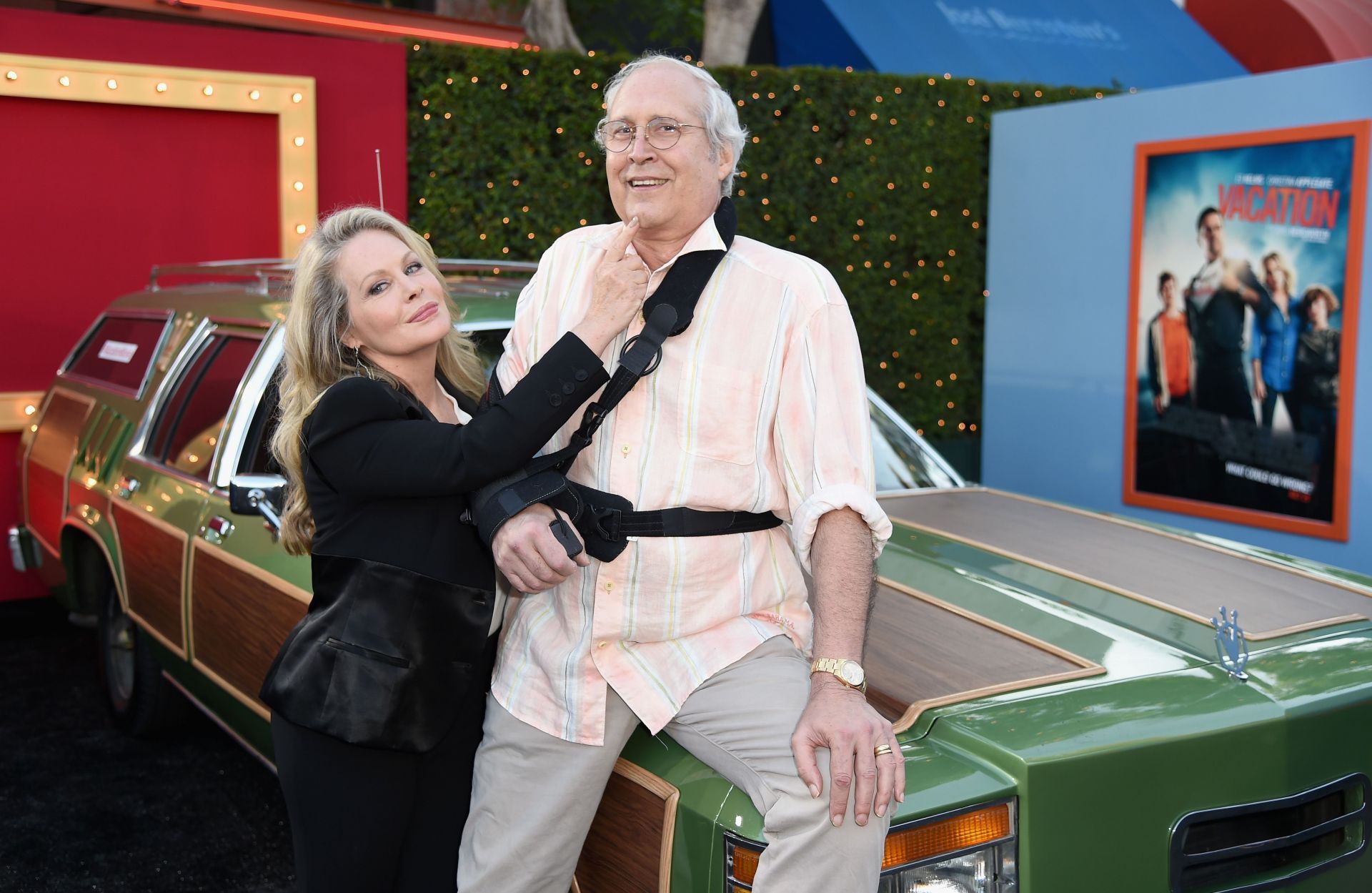
Chevy Chase's life and career are looked at in I'm Chevy Chase and You're Not. The project includes interviews with Chase and his family, as well as celebrities such as Martin Short, Lorne Michaels, Goldie Hawn, and Beverly D'Angelo, among others.

Love movies? Try our Box Office Game and Movie Grid Game to test your film knowledge and have some fun!


 Reply
Reply


