


'%20x='0'%20y='0'%20height='100%25'%20width='100%25'%20%0A%20%20%20%20%20%20%20%20%20%20xlink%3Ahref='data:image/jpg;base64,/9j/2wBDAAYEBQYFBAYGBQYHBwYIChAKCgkJChQODwwQFxQYGBcUFhYaHSUfGhsjHBYWICwgIyYnKSopGR8tMC0oMCUoKSj/2wBDAQcHBwoIChMKChMoGhYaKCgoKCgoKCgoKCgoKCgoKCgoKCgoKCgoKCgoKCgoKCgoKCgoKCgoKCgoKCgoKCgoKCj/wAARCAAGAAoDASIAAhEBAxEB/8QAFgABAQEAAAAAAAAAAAAAAAAAAAUH/8QAHxAAAQMEAwEAAAAAAAAAAAAAAwEEEQACBSETMUGi/8QAFAEBAAAAAAAAAAAAAAAAAAAABf/EABkRAAMAAwAAAAAAAAAAAAAAAAABAgMEEf/aAAwDAQACEQMRAD8AxrBuxgzBlftguR3FlRXJNsz15rdWCZVjyXRjm6JK6QWk+qUpPC+SC7Ep2f/Z'%3E%3C/image%3E%3C/svg%3E)

The most recent Korean megahit by Netflix, The Great Flood, has people mulling over the essence of consciousness and being. A simple catastrophe thriller, as it looks at first, becomes an intricate plot that keeps viewers asking about the same issue related to the character of the film.
On December 19, 2025, Netflix’s global charts witnessed the rise of The Great Flood to the top position as the non-English movie with the most views on the platform. The director of the sci-fi disaster thriller, Kim Byung-woo, accompanying Kim Da-mi and Park Hae-soo, has charmed the audience of millions while critics argued about the movie with its ambiguous ending and philosophical turn.
Understanding An-na’s true nature in The Great Flood

Is An-na human or AI? That’s the big question in The Great Flood, and the movie loves to mess with your head about it. Various critics of the film point out that An-na has different aspects of personality during the course of the story, hence making her identity intentionally unclear.
In the original timeline, An-na is one hundred percent human. She is working at Isabela Labs, also known as the Darwin Center, one of the high-tech joints building the future, or just preventing our extinction through AI advancement. During this time, she is acting as mom to Ja-in, a synthetic kid created in the lab as part of a repopulation scheme.
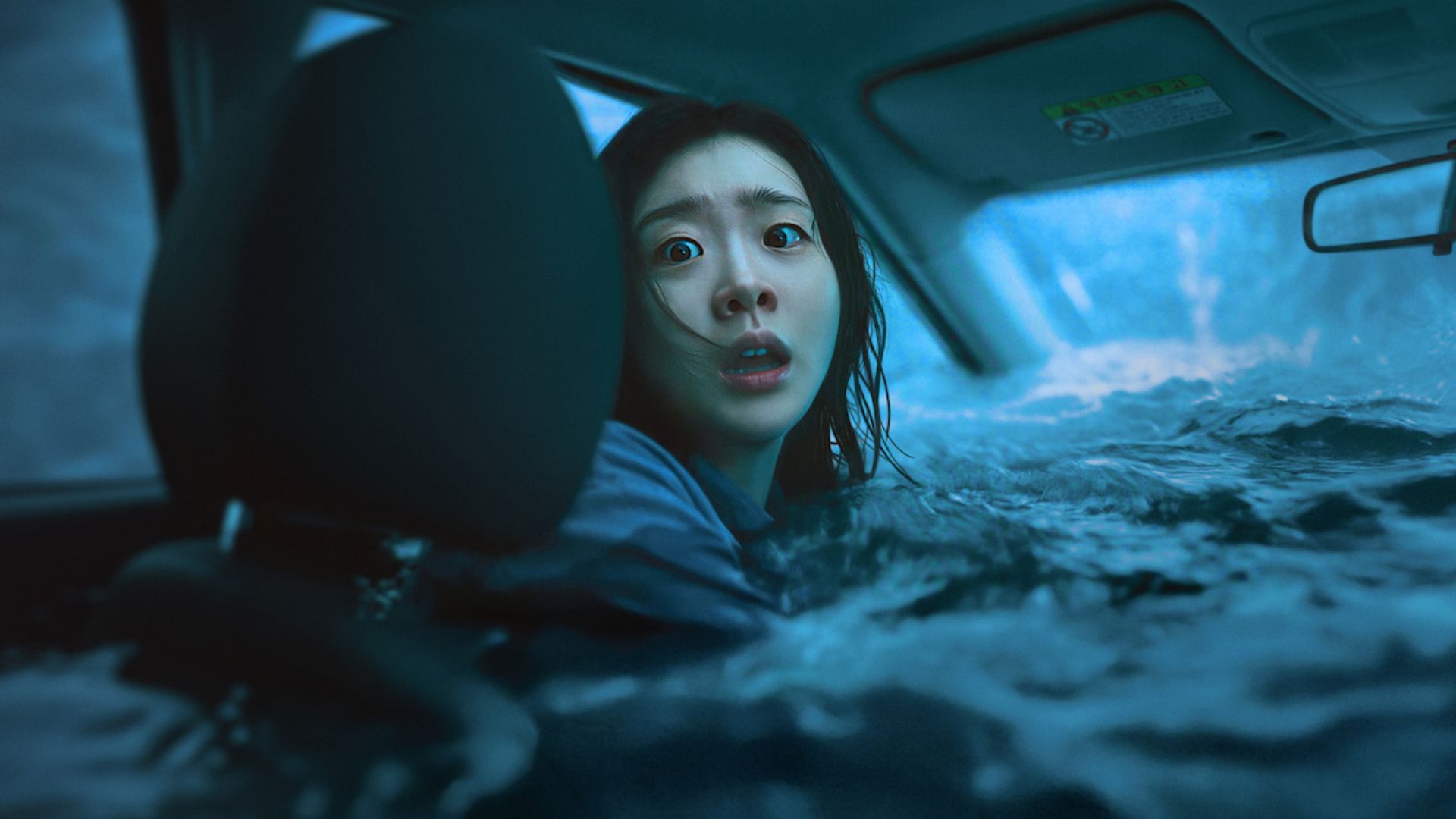
Then, the apocalypse hits, Seoul goes underwater, and An-na is forced into a nightmarish choice. She has to ditch Ja-in to save herself, and hops on a helicopter, leaving the poor kid to drown.
Before she dies, An-na asks the lab to upload her consciousness into a computer system, the one that makes artificial humans. So, the OG An-na is gone, but her brain, or digital version of it, is now running the show.
Most of The Great Flood, you are not even following the original An-na. You are trailing a digital version, stuck in a simulation, reliving the worst day of her life over and over. She is a guinea pig for something called the Emotion Engine. The idea is to nail down real human emotions, especially the powerful mother-child bond, so future artificial humans aren’t just cold robots after the world ends.
Critics and viewers have pointed out the existential questions this raises. Is she still human because she has her memories and feelings? Or is she just a next-level AI wearing a human mask? The movie never gives you a straight answer. There’s a detail that she doesn’t age at all, despite running this simulation for 60 years. So, maybe she is already synthetic, or maybe that’s the point. There’s no clear line anymore.
The simulation that traps An-na represents the film’s most innovative narrative element. The gist is, Isabela Labs cracked the code on making synthetic humans who can physically exist and have babies. But they can’t fake feelings. No matter how hard they tried, the bots couldn’t actually care about the kids, and without that, civilization was not going to work.
In The Great Flood, An-na, back when she was still 100% human, came up with a workaround. Her idea was to start with the kids, then train up artificial mothers by putting them through the emotionally stressful experience, over and over. The whole simulation was a test: can an AI mom actually develop real human emotions if you make her live through enough intense stuff, even if it’s all digital make-believe?
The day they chose for the simulation was the absolute worst one of An-na’s life. She had failed to rescue Ja-in, her kid, and left him behind in a flood. So, the system forces her to relive that trauma on repeat, figuring if she really feels guilt, grief, and all that, maybe the AI cracked human emotion after all.
And you see it play out in The Great Flood. The longer she is stuck in this loop, the more An-na starts acting less like a robot and more like an actual person. She doesn’t just try to save Ja-in; she starts helping everybody: the pregnant woman in labor, the lost kid, and more. None of that stuff was hardwired in. It just happened because she started genuinely caring.

The big ‘aha’ moment drops when An-na finally remembers telling Ja-in to hide in a closet the first time around, a memory she had somehow blocked. Once she pieces that together, she finally finds and saves him. Test passed, emotional arc complete, and a synthetic being pulled off the most human move of all: learning from pain and loving anyway.
 Trending
The Great Flood’s main question is: can AI ever actually be human if it learns how to feel? You watch An-na go through all the simulation loops, and maybe being conscious isn’t just for individuals with blood and guts. She picks stuff up, changes, even falls hard for Ja-in. It makes you wonder if being human is more about what’s going on inside your head than what your body is made of.
And those endless, some reviewers say that An-na repeating everything over and over is both a curse and a sort of second chance. Every time she messes up, she gets another shot at understanding what being human even means. The guilt from ditching Ja-in in the real world is like her engine; it keeps her grinding until she finally figures it out and won’t leave him again.

Love movies? Try our Box Office Game and Movie Grid Game to test your film knowledge and have some fun!


 Reply
Reply


