


'%20x='0'%20y='0'%20height='100%25'%20width='100%25'%20%0A%20%20%20%20%20%20%20%20%20%20xlink%3Ahref='data:image/jpg;base64,/9j/2wBDAAYEBQYFBAYGBQYHBwYIChAKCgkJChQODwwQFxQYGBcUFhYaHSUfGhsjHBYWICwgIyYnKSopGR8tMC0oMCUoKSj/2wBDAQcHBwoIChMKChMoGhYaKCgoKCgoKCgoKCgoKCgoKCgoKCgoKCgoKCgoKCgoKCgoKCgoKCgoKCgoKCgoKCgoKCj/wAARCAAGAAoDASIAAhEBAxEB/8QAFgABAQEAAAAAAAAAAAAAAAAAAAQH/8QAHxAAAgICAQUAAAAAAAAAAAAAAQIDBAARBQYTMVFh/8QAFAEBAAAAAAAAAAAAAAAAAAAABP/EABkRAAMAAwAAAAAAAAAAAAAAAAABAgMRMv/aAAwDAQACEQMRAD8AzWO/x/SdyhDDDNIzgzrYKp3EZgVAB140x2PgyhrHCuxZ4rLOx2WMMeyfeMYeIlrbG5Omj//Z'%3E%3C/image%3E%3C/svg%3E)

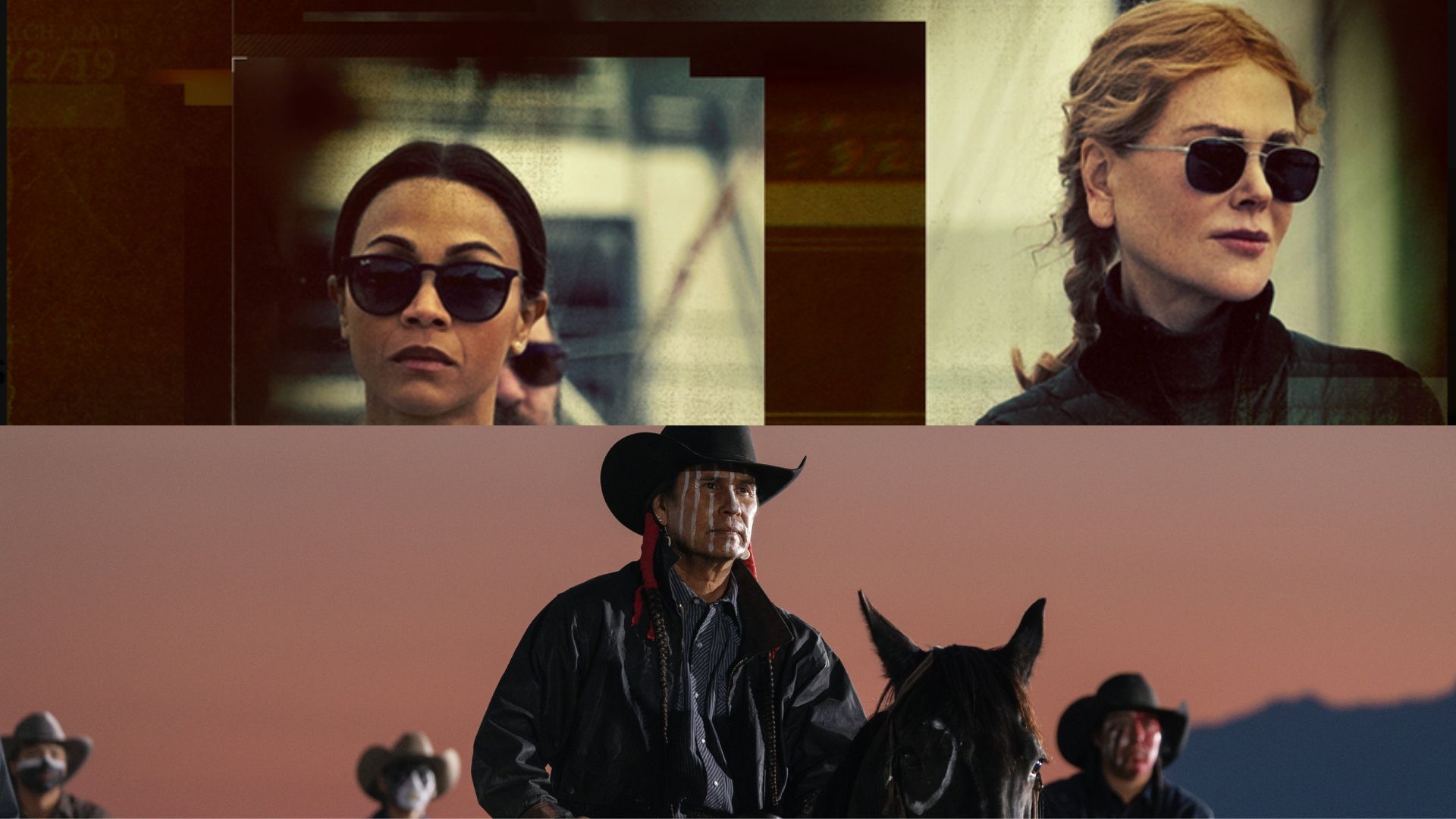
Special Ops: Lioness does not look like it should work all that well at first glance. It feels risky. It feels heavier than what we're used to, and it also feels like a strange left turn from Taylor Sheridan’s usual world of ranches, land wars, and family politics and power struggles.
And yet, Special Ops: Lioness becomes one of his most focused, tense, and emotionally sharp projects. It trades the open fields we've seen in Yellowstone for closed rooms, cattle for covert missions, and family politics for global pressure. It feels leaner. It feels more urgent.
So, which show actually wins? The answer is simple yet layered. Special Ops: Lioness outperforms Yellowstone in terms of pace, global stakes, realism, female agency, and tension. Yellowstone, however, excels in legacy, emotional depth, myth-making, cultural pull, and long-term attachment. One series moves like a heartbeat under stress; the other flows like a river carving its way through history.
Both shows are equally effective, just in very different ways. It is this contrast that makes the comparison so compelling.
5 reasons Special Ops: Lioness outdoes Yellowstone
1) Special Ops: Lioness feels tied to real life in a way Yellowstone never tries to be
Special Ops: Lioness feels like it exists inside the world we already recognize. The show pulls its emotional weight from real global fears. Terrorism, espionage, foreign interference, oil politics, surveillance, and international power plays are not abstract concepts here.

They feel immediate. They feel modern. They feel like headlines we have all seen in some form. That connection gives the show a sharp edge that never dulls.
Yellowstone lives in a symbolic world. Its conflicts are powerful, but they are rooted in land, tradition, and legacy. That makes them meaningful, but also distant for many viewers.
Lioness, on the other hand, deals with threats that feel close to the present moment. The tension comes from recognizing the shape of the danger. The show does not need dragons or villains. The world itself is unstable enough.
This is why Special Ops: Lioness feels more urgent. It does not ask you to believe in a family dynasty or a romantic idea of power. It asks you to sit inside a system that already exists and feel how fragile and stressful it is. That makes every decision feel heavier.
2) Lioness puts women at the center of action instead of the edges
One of the biggest shifts Special Ops: Lioness makes is who it places at the center of its story. The women are not side stories. They are not emotional decoration. They are not symbols. They are the strategy. They are the risk. They are the core of the operation.

The show builds its tension around female operatives who move through hostile spaces by forming human connections. That creates a very specific kind of drama. It is not just about physical danger. It is about emotional exposure. Trust becomes a weapon. Relationships become a tool and a risk at the same time.
Yellowstone often treats its female characters as reactions to the men’s choices or as victims of the system. They suffer. They fight. They survive. But they rarely reshape the world around them. Lioness flips that completely. The women do not react to the system. They operate it. They enter it. They break it open from the inside.
That shift alone makes Lioness feel fresher, more modern, and more emotionally complex.
3) Special Ops: Lioness moves with focus, while Yellowstone likes to wander
Special Ops: Lioness is tight. It does not drift. It does not wander into side stories that do not matter. Every episode moves the story forward. Every scene has a reason to exist. The show feels built like a mission. There is a goal, a risk, a plan, and consequences.

Yellowstone is the opposite by design. It stretches. It breathes. It lets storylines simmer for long stretches of time. That slow burn can be beautiful, but it also means the energy dips. Some arcs feel like they exist to fill space rather than deepen meaning.
Lioness never gives you that feeling. It feels like a ticking clock. The story always feels like it is leaning forward. That forward motion creates momentum. It makes viewers feel like something is always about to happen.
This focus gives Special Ops: Lioness a sharper identity. It knows exactly what kind of show it wants to be and never loses that shape.
4) Lioness replaces brute force with psychological tension
Yellowstone resolves many of its conflicts through physical dominance. Fights. Threats. Violence. Power is shown through strength and intimidation. That works for a story about land, control, and survival. But it is also predictable.

Special Ops: Lioness plays a different game. Power here comes from information, timing, and emotional manipulation. The confrontations are not loud. They are quiet. They happen in conversations, in glances, in pauses, in what is not said. That kind of tension is slower but deeper.
The danger is not always visible. It sits under the surface. That makes every interaction feel unstable. Anyone could be lying. Anyone could be compromised. Anyone could be watching.
This style of tension keeps the audience alert. It does not let you relax into familiar patterns. It keeps you guessing.
5) Lioness feels like a creative risk, while Yellowstone feels like a perfected formula
Yellowstone is incredibly good at what it does. But it does not surprise me anymore. It knows its tone. It knows its audience. It knows its rhythm. That makes it reliable and safe.

Special Ops: Lioness feels like Taylor Sheridan stepping outside his comfort zone. The world is unfamiliar. The politics are messy. The emotional tone is darker. The scale is global instead of local. The rules are different.
That risk gives the show energy. You can feel the creator pushing himself instead of repeating himself. That effort shows on screen. The show feels alive in a different way.
Why is Yellowstone still such a banger
1) Yellowstone builds emotional roots that Lioness never tries to grow
Yellowstone does something Special Ops: Lioness never attempts. It builds a world you can live inside for years. The ranch becomes a place. The family becomes familiar. The land becomes a character. Fans do not just watch Yellowstone. They settle into it.

That emotional investment matters. It creates attachment. It creates memory. People return not just for the plot but for the feeling of being back in that world. Lioness does not offer that kind of comfort. It is designed to be tense, not cozy.
Yellowstone wins when it comes to emotional grounding. It gives viewers a sense of home even when the story is dark.
2) Yellowstone turns American history into living drama
Yellowstone works because it taps into something deeply American. Land. Ownership. Legacy. The idea of protecting what was handed down. These themes are old, but they are powerful. They connect to identity.

The show uses this history not as background but as fuel. The conflicts feel rooted in time. They feel inherited. That gives the story weight beyond the present moment.
Lioness feels modern and sharp, but Yellowstone feels timeless. That timelessness is part of its power.
3) Yellowstone understands myth better than realism
Yellowstone does not try to feel like a documentary. It feels like a modern legend. The ranch is not just land; it is a throne. The cowboy is not just a worker; he is a symbol of power, control, and survival. Every conflict is framed like a battle for a kingdom, not just a property dispute. That mythic layer is why the show feels bigger than daily life.

It shapes how we imagine strength, legacy, and authority. Special Ops: Lioness stays grounded in systems and realism. Yellowstone floats above that space and turns ordinary struggles into something almost epic. That elevation makes its drama feel heavy, symbolic, and emotionally grand.
4) Yellowstone thrives on slow emotional payoff
Yellowstone is built around patience. It allows emotions to sit, rot, grow, and change over long stretches of time. Grudges are not resolved quickly. Love does not arrive neatly. Hurt does not disappear after one confrontation.

This slow build makes the emotional moments feel earned instead of forced. When something finally breaks, it matters because viewers have lived with the tension for so long. Special Ops: Lioness moves fast because it has to.
Yellowstone moves slowly because it chooses to. That waiting creates depth. It lets characters evolve naturally, shaped by years of pressure instead of one moment of crisis.
5) Yellowstone creates a universe, not just a story
Yellowstone does not exist as a single narrative. It exists as a world. Different generations, different timelines, and different stories all circle around the same land and the same family legacy.

That scale gives the show weight beyond its main plot. It feels like a living history instead of a contained series. Fans are not just watching events unfold; they are watching a lineage stretch across time. Special Ops: Lioness is focused and intense, but it is narrow by design.
Yellowstone is wide. It builds a saga, not just a season. That is why it becomes a franchise and a cultural space, not just a show.
Special Ops: Lioness and Yellowstone succeed for opposite reasons. Lioness wins with speed, focus, realism, and emotional precision. It reflects a tense modern world and places women and strategy at its center. Yellowstone wins with depth, history, myth, and emotional comfort. It builds a place people want to return to and characters they want to grow with.
Neither replaces the other. They solve different needs. Special Ops: Lioness speaks to urgency. Yellowstone speaks to memory. And together, they show just how wide Taylor Sheridan’s creative range actually is.
 Trending
Stay tuned to SoapCentral for more.


 Reply
Reply


