


'%20x='0'%20y='0'%20height='100%25'%20width='100%25'%20%0A%20%20%20%20%20%20%20%20%20%20xlink%3Ahref='data:image/jpg;base64,/9j/2wBDAAYEBQYFBAYGBQYHBwYIChAKCgkJChQODwwQFxQYGBcUFhYaHSUfGhsjHBYWICwgIyYnKSopGR8tMC0oMCUoKSj/2wBDAQcHBwoIChMKChMoGhYaKCgoKCgoKCgoKCgoKCgoKCgoKCgoKCgoKCgoKCgoKCgoKCgoKCgoKCgoKCgoKCgoKCj/wAARCAAGAAoDASIAAhEBAxEB/8QAFgABAQEAAAAAAAAAAAAAAAAAAAUH/8QAHxAAAQQCAgMAAAAAAAAAAAAAAQACBBEDEgYHISJh/8QAFQEBAQAAAAAAAAAAAAAAAAAAAQP/xAAWEQEBAQAAAAAAAAAAAAAAAAABAAL/2gAMAwEAAhEDEQA/AMiZy+UWYJmdjXyox1wlooEmz7fKFKg3tqXqNoDLrzT6RFIwS6b/2Q=='%3E%3C/image%3E%3C/svg%3E)

Chicago P.D. Season 13 Episode 8 is titled Born Screaming. It dropped on January 7, 2026, as the show’s midseason premiere.
The Episode picks up where the fall finale left off. ATF agent Eva Imani is inside Raymond Bell’s house, and the Intelligence Unit is scrambling to find Bell’s missing granddaughter, Julie.
The Bell case takes center stage, but Chicago P.D. Season 13 Episode 8 doesn’t forget about Voight. That personal storyline, those anonymous photos of him as a bruised kid in a hospital bed, along with the accusation that his father abused him and the threat pushing him to resign, has been simmering for weeks. This time, Voight finally faces the person who sent the photos. He lays out the real story of what happened to him back then.
Chicago P.D. Season 13 Episode 8: What does Voight reveal about his abusive father and childhood?

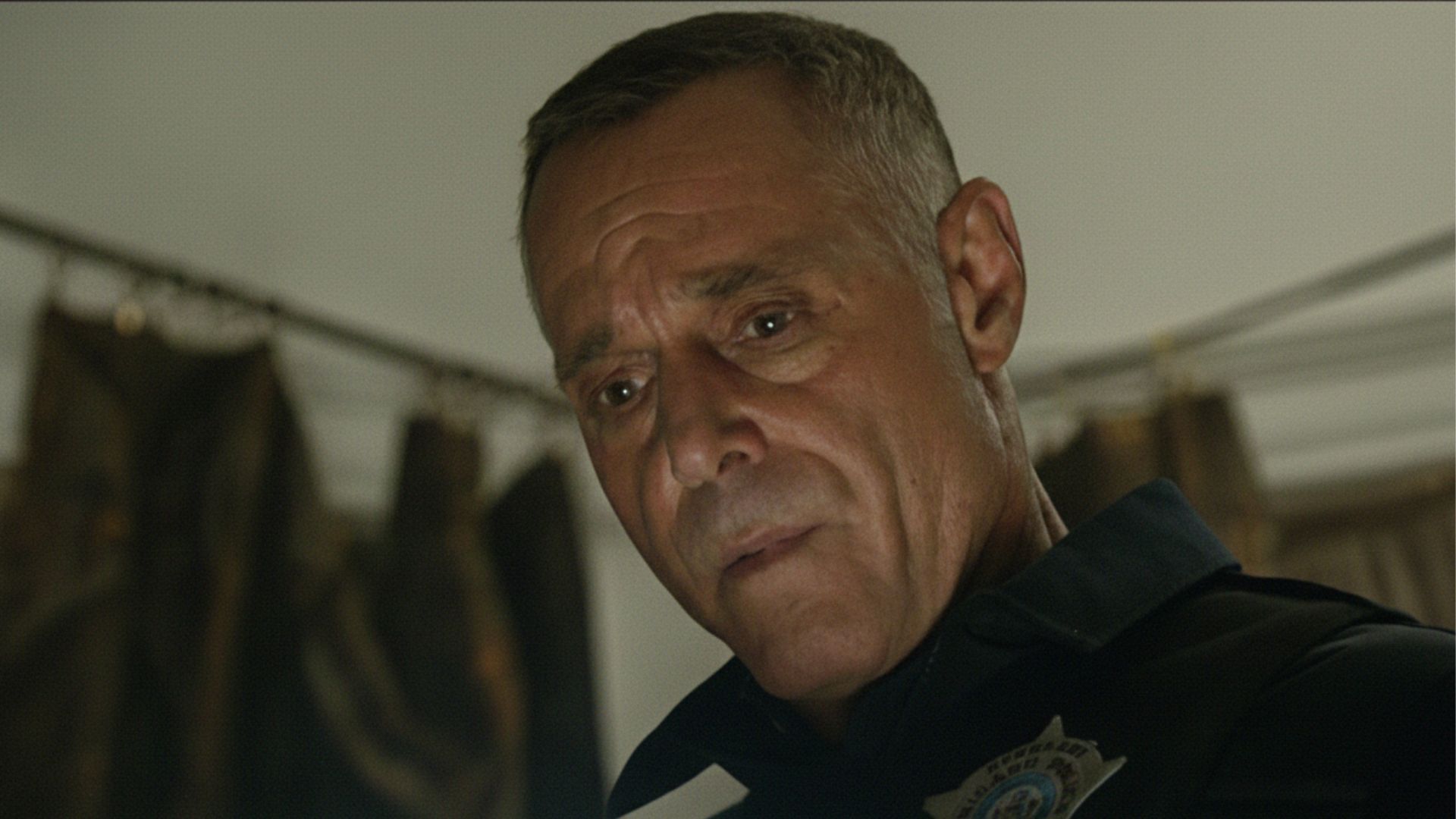
In Chicago P.D. Season 13 Episode 8, Voight claims the story of the “abusive father” is not correct. When Devlin appears in the office of Voight, he makes it clear that his father never beat him up, and the childhood hospital photo injuries were an act of Violence by Voight himself and not his father.
Earlier in Season 13, Voight was shown photographs of himself as a child, with injuries and in the hospital. The photographs were packaged like a scandal that was about to blow up. A text on the photograph claimed his father had abused Voight, followed by a message saying that he should resign or the photos would be released.
Chicago P.D. Season 13 Episode 8 is a confirmation of what Voight was slowly starting to suspect: that they had been sent by Devlin, the commander of Internal Affairs.
And it was not only humiliation. The threat strikes Voight where he feels the most vulnerable, in his legacy, his reputation, and the one relationship the show hardly allows him to discuss - his father. Voight does not refute the photo or the fact that he was injured as a child. He denies the cause.
When he is confronted by Devlin, Voight mentions that he was “born screaming” and fighting, someone who sought fights as early as he could recall. The hospital photo he describes comes at a time when he had gotten into a fight with older children about nothing and paid for it.
Then comes the key reveal about his father: Voight tells him that his dad found him after that beating, informed him that he was doing wrong, and that he would assist him in coming to terms with the person he was becoming. Voight describes his father as a good man and attributes to him the reason there’s “anything good” in him at all.
So, here’s what was revealed in Chicago P.D. Season 13 Episode 8:
- Voight claimed that his father did not abuse him.
- The childhood injuries in photos were the very fights of Voight.
- Voight claims that his father was attempting to guide him out of violence and towards purpose.
The emotional backbone of the scene that last point is that Voight does not see his father as the source of all his darkness; he sees him as the one who provided him with a set of rules. It is the reaction of Devlin that transforms the revelation into a more significant plot.
Devlin replies that it does not matter, and he can spin the photos to whatever he wants, even after Voight tells him the truth. The blackmail is not about facts; it is what the masses (and the department) may think had happened in case the story breaks out in the right way.
And Devlin has a personal motive. Chicago P.D. Season 13 Episode 8 directly connects the blackmail with the previous occurrences in Season 13. Devlin is enraged by Voight’s refusal to establish the Intelligence Unit, and Devlin thinks that it made him appear feeble within CPD. This is the revenge play of Devlin: Hit Voight until he prefers walking away.
The scene also provides a tangible piece of information on the reasons why Devlin selected this particular point of pressure. Voight informs Devlin that he carries the badge holder of his father, who was killed during his duty. It is not solely symbolism, Voight says, it makes him steady, something that keeps his father close. That fact redefines the blackmail: Devlin is not just threatening a reputation. He is intimidating the thing Voight holds dear like a moral compass.
Lastly, Voight does not negotiate. He refuses to resign.
 Trending
Rather, he creates a line that is personal and dangerous: Voight informs Devlin that, had he not felt his father close in that situation, Devlin would not have survived the day. He then sends him out of the office.
Storyline-wise, this is the turning point: the photos are no longer a secret but a weapon that Devlin can still use, and Voight is now aware of what is at stake.


 Reply
Reply


