


'%20x='0'%20y='0'%20height='100%25'%20width='100%25'%20%0A%20%20%20%20%20%20%20%20%20%20xlink%3Ahref='data:image/jpg;base64,/9j/2wBDAAYEBQYFBAYGBQYHBwYIChAKCgkJChQODwwQFxQYGBcUFhYaHSUfGhsjHBYWICwgIyYnKSopGR8tMC0oMCUoKSj/2wBDAQcHBwoIChMKChMoGhYaKCgoKCgoKCgoKCgoKCgoKCgoKCgoKCgoKCgoKCgoKCgoKCgoKCgoKCgoKCgoKCgoKCj/wAARCAAGAAoDASIAAhEBAxEB/8QAFgABAQEAAAAAAAAAAAAAAAAAAAUG/8QAHxAAAgEEAgMAAAAAAAAAAAAAAQIDAAQFERIhBhNh/8QAFAEBAAAAAAAAAAAAAAAAAAAAAf/EABkRAAIDAQAAAAAAAAAAAAAAAAECAAQRIf/aAAwDAQACEQMRAD8Az3kWVvsbg8K2UEF/CTbSSKV4sxSTme9d7Ghs1LfD3+Rdr2J7COO5PuVGiclQ3YBPL7SlFtyrcjQUMDs//9k='%3E%3C/image%3E%3C/svg%3E)

The trailer for The Odyssey was recently released, and fans of Christopher Nolan's work noticed something unexpected. This latest epic by Nolan does not follow the path everyone saw coming. While most assumed this would mirror Oppenheimer with its cast of familiar faces playing distinct historical characters, the footage released hinted at a different story.
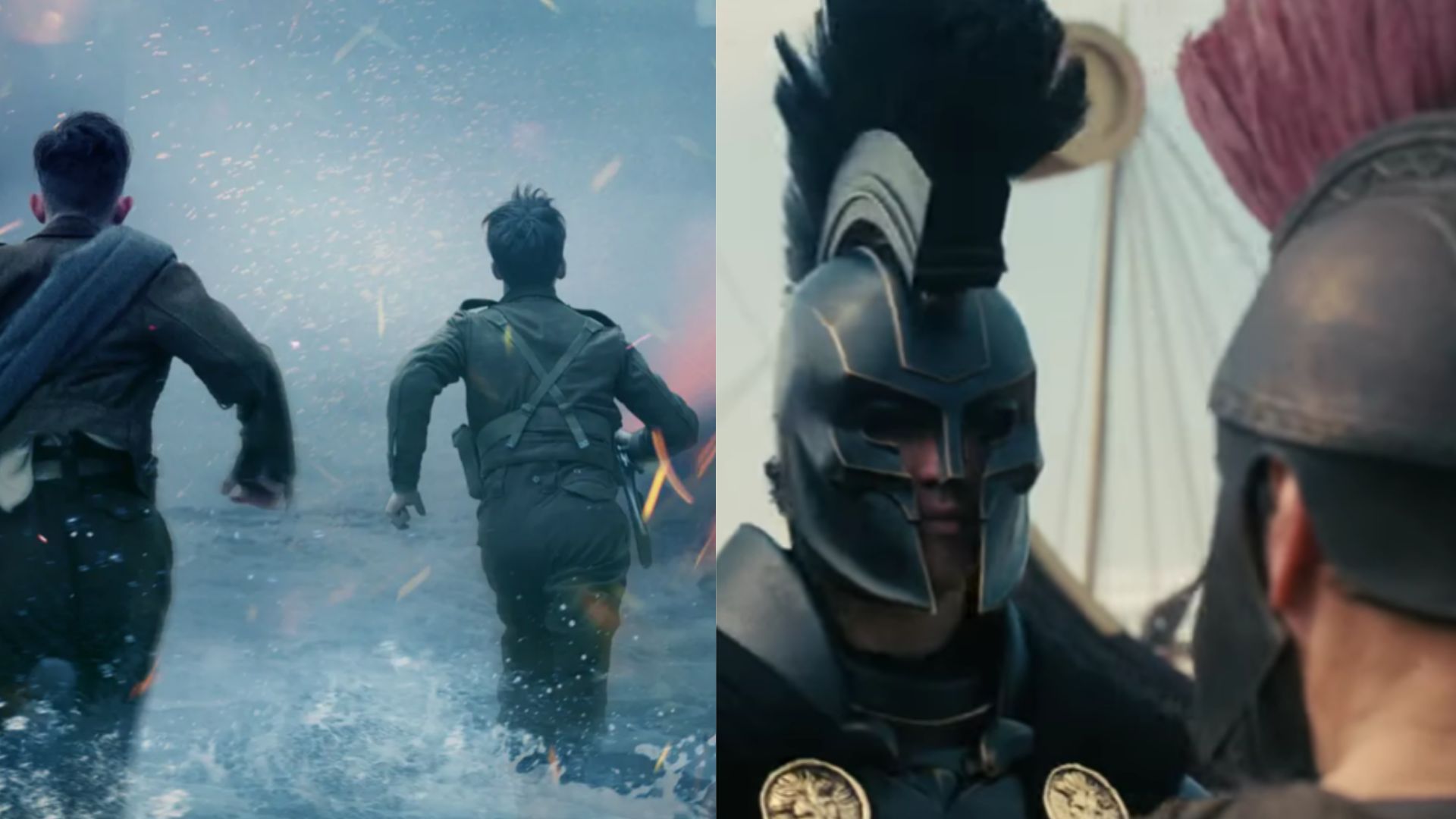
The Odyssey trailer shows a film more concerned with collective viewing experience than individual achievement. Nolan appears to be attempting to take the same approach he mastered in his war film, Dunkirk.
The footage prioritizes the shared struggle of Odysseus and his crew over mythological spectacle. This is not another biographical drama. Instead, the director has crafted what feels like an uplifted Dunkirk sequel, transporting his ground-level storytelling from World War II beaches to ancient Mediterranean waters.
The method transforms Homer's epic into something more unhinged and immediate than expected. The similarity between the two movies becomes clearer with every frame of The Odyssey trailer footage.
Why does The Odyssey feel like a Dunkirk Sequel?
The Odyssey trailer throws light on the men rowing their ships through turbulent seas. These sequences mirror Dunkirk's approach to soldiers trapped on beaches. Nolan ensures the camera is close to the action, capturing weathered faces and strained muscles. The soldiers in Dunkirk fought for survival without big monologues. Similarly, Odysseus's crew tackles the elements without mythological fanfare.
Both movie strips away individual highlights. In Dunkirk, even recognized characters blended into the combined struggle. The new movie trailer suggests similar conditions for the Greek warriors. Matt Damon's Odysseus appears among his people rather than embarking on a personal journey.
Anna Hathaway's Penelope and Tom Holland's get glimpses as well, but the collective dominates the footage. This appears intentional, and Nolan wants audiences to experience the journey alongside these sailors.
The cinematography choices reinforce this Dunkirk sequel-like atmosphere. Wide shots capture entire groups of men working as a team, while close-ups reveal the personal strain within the greater effort.
What elements stand out in the Odyssey trailer?
The cyclops scenes evoke terror. The trailer shows the crew entering a dark cave. This is not portrayed as an adventure, but rather as a struggle for survival. The men move cautiously through the dark, and every step carries a threat. Christopher Nolan films it like the ticking clock dread from Dunkirk.
Naval combats conclude the final footage of the trailer. Ships crash through waves while the collective struggles with oars. The physical stress is highlighted on every face.
Additionally, the storm sequences dominate a huge part of the footage. The trailer reveals huge waves threatening to damage vessels. Men cling to ropes for survival. These moments mirror Dunkirk's desperate evacuation sequences. Both movies make the environment itself the antagonist.
How does this differ from Oppenheimer's themes?
Oppenheimer employed celebrity casting as shorthand. Every familiar face signaled priority. Emily Blunt, Robert Downey Jr., and Matt Damon played particular historic figures. The Odyssey trailer suggests other priorities. While performers ike Lupita Nyong'o and Charlize Theron appear in the ensemble, they seem part of a larger sequence rather than standing out.
The larger plot centers on group dynamics as sailors work together in a unit pulling oars. They huddle together while facing monsters, and their collective efforts propel the story.
This ensemble approach, which represented Dunkirk, now shapes The Odyssey. Christopher Nolan is not interested in mythological grandeur only. He wishes the viewers to feel the physical reality of ancient sea travel. The difference is prominent when comparing the two trailers.
What makes this a believable Dunkirk sequel with a twist?
Both movies share a thematic DNA, as Dunkirk depicts innocent men facing impossible odds. The Odyssey trailer presents equal stakes with ancient warriors. Both strip away heroic angles and emphasize visceral experience over dialogue.
 Trending
Both use IMAX cameras to immerse viewers in uncharted territories. The connection runs deeper than visible similarities. Christopher Nolan possibly views this Dunkirk approach as the central theme in making Home's epic feel resonant.
Nolan will be delivering a masterpiece like Dunkirk, disguised in Greek mythology, making The Odyssey his most immersive and surprising project yet.


 Reply
Reply


