


'%20x='0'%20y='0'%20height='100%25'%20width='100%25'%20%0A%20%20%20%20%20%20%20%20%20%20xlink%3Ahref='data:image/jpg;base64,/9j/2wBDAAYEBQYFBAYGBQYHBwYIChAKCgkJChQODwwQFxQYGBcUFhYaHSUfGhsjHBYWICwgIyYnKSopGR8tMC0oMCUoKSj/2wBDAQcHBwoIChMKChMoGhYaKCgoKCgoKCgoKCgoKCgoKCgoKCgoKCgoKCgoKCgoKCgoKCgoKCgoKCgoKCgoKCgoKCj/wAARCAAGAAoDASIAAhEBAxEB/8QAFgABAQEAAAAAAAAAAAAAAAAAAAUH/8QAIhAAAgIBAQkAAAAAAAAAAAAAAQIAAwQSBQYRFCEiMkGR/8QAFAEBAAAAAAAAAAAAAAAAAAAAA//EABoRAAICAwAAAAAAAAAAAAAAAAABAgMhInH/2gAMAwEAAhEDEQA/AKt7XZm+uJQt16VZvL2kpeyaChAHaOh8D99zaLNtkux0sOJJiIcFljWvWPD/2Q=='%3E%3C/image%3E%3C/svg%3E)

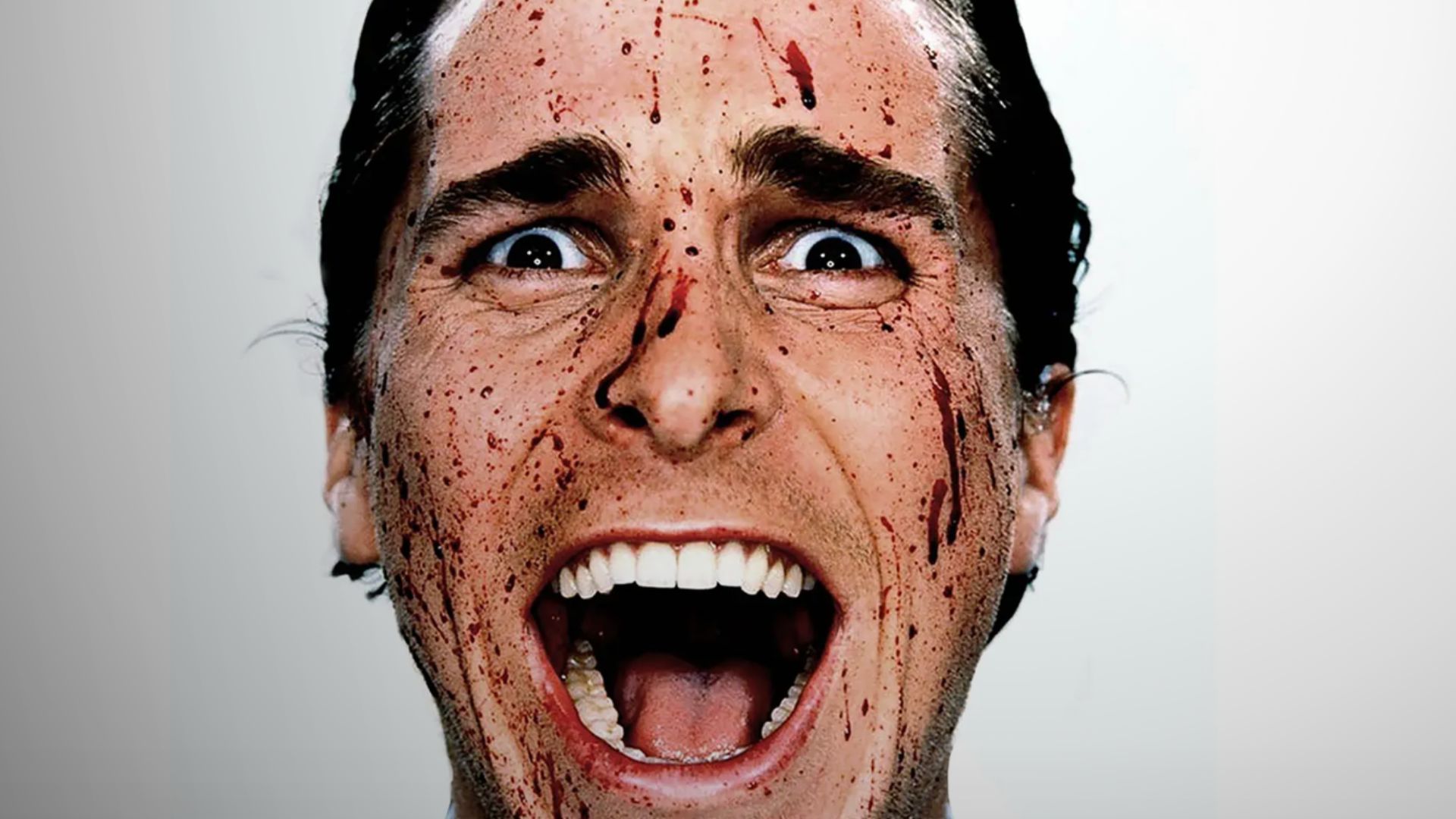
American Psycho hinges on ambiguity: the conundrum after the conclusion of the film pervades one's mind and refuses to leave. Nobody ever seems to agree on the events that took place. Mary Harron's 2000 horror film pulls off this trick and leaves the audience wanting more. The result? Another re-watch.
Mary Harron adapted Bret Easton Ellis's controversial novel into a cinematic puzzle, where viewers spend the runtime figuring out whether Patrick Bateman's character genuinely committed those brutal acts or if his mind manufactured everything.
The setting is New York, where materialism has reached absurd levels: people compete viciously over restaurant tables and designer clothes, treating superficial markers as a measure of human worth.
Whether Bateman really went on a killing spree or if his psyche invented everything remains deliberately unclear. The refusal to answer strengthens the narrative, as viewers are compelled to contemplate the distinction between reality and imagination. What defines identity when appearances dominate? What are the consequences of society prioritising looking successful over basic humanity?
Understanding the plot of American Psycho
Christian Bale brings Patrick Bateman to life as an investment banker whose daily routine reveals an empty existence, marked by competitiveness over business cards and sleepless nights over restaurant reservations. Once night falls, something darker emerges: he either murders individuals whom he views as inferior or imagines violent scenarios in detail, leaving viewers unable to determine which version is real.
American Psycho takes place during Wall Street's massive growth, when fortunes were being made overnight, creating a culture where Bateman and his colleagues become carbon copies of each other, matching suits, identical haircuts, and shallow conversations.
People constantly call each other by the wrong names because nobody is able to tell these men apart, highlighting how extreme consumerism erases individuality.
Bateman stays engaged to Evelyn despite showing no affection to her. We also see him sleeping with other women, yet none of them seems to bring satisfaction either. His secretary, Jean, is surprisingly the only person triggering something human in him, leading to the tense moment where he nearly kills her but then stops himself. What really consumes him is Paul Allen, whom Bateman loathes because Allen acquired everything Bateman wanted, particularly an impressive business card and access to Dorsia, where Bateman isn't able to reserve a table.
His hatred builds until he gets Allen drunk and hacks him to death with an axe while Huey Lewis and the News play, creating cinema's strangest comedy-horror combination. After disposing of Allen, Bateman fills Allen's apartment with bodies from other victims, including homeless people and s*x workers, escalating violence until everything spins out of control.
The turning point and surreal elements in American Psycho
Everything changes when Bateman approaches an ATM expecting to withdraw money, but the screen shows a message telling him to feed it a stray cat. Viewers immediately know something broke in reality because ATMs don't display such messages. He points his gun at a kitten when a woman interrupts, so Bateman shoots her instead, setting off this manic chase where the application of physics is seemingly impossible.
Unbelievable things occur, for instance, when he drops a running chainsaw from a great height, and it falls perfectly onto a woman below, operating on cartoon logic. Director Harron told No Film School she deliberately designed this to mark where the film stops being potentially real and becomes pure hallucination from Bateman's fracturing mind.
Once this violence ends in American Psycho, Bateman returns to his office emotionally shattered and calls his lawyer, Harold Carnes, sobbing through a voicemail confessing to murdering Allen and others. When they meet at a bar, Carnes laughs at the confession, saying someone as pathetic as Bateman couldn't kill anybody.
Then Carnes claims he had dinner with Paul Allen in London recently, which shouldn't be possible if Bateman's memories hold. This destroys Bateman's connection to reality in American Psycho, prompting him to search for proof at Allen's apartment. Still, the place has been thoroughly cleaned, with a real estate agent giving tours, and no visible signs of violence remain.
What really happened in American Psycho?
American Psycho leaves viewers with several interpretations that hold up depending on which details one chooses to focus on. One view says everything genuinely happened, Bateman killed everyone, including Allen, and nobody noticed because people are completely self-absorbed, fixated on status and appearance.
Perhaps Carnes lied about London, or saw someone different but mistook them for Allen, as everyone looks similar, and the apartment was professionally cleaned.
Another interpretation of American Psycho suggests Bateman committed some murders but not all, so maybe he only killed the homeless man and s*x workers. In contrast, the Allen murder was an elaborate fantasy his jealous mind created. The ATM scene becomes the dividing line where Bateman shifts from a psychopath committing crimes to a fully psychotic and unable to tell imagination from reality, meaning everything after might be hallucinations.
A third option claims nothing happened, and every murder lives only in Bateman's head as violent daydreams he never acts on. Screenwriter Guinevere Turner shut this down when she told Movie Maker that she and Harron wanted to avoid films where the reveal is just that everything was a dream, because that feels like cheating the audience.
The deliberate ambiguity in American Psycho
Director Harron refuses to say which murders actually took place because explaining would rob viewers of the opportunity to engage with the film at a deeper level and form their own conclusions. Turner confirmed to Movie Maker that while some elements clearly venture into surreal territory, they never wanted audiences to think everything just happened in Bateman's head.
Film scholars analyzing American Psycho generally agree that fantastic moments, such as the talking ATM, are delusions, while earlier murders are likely to have occurred within the film's reality.
This interpretation allows American Psycho to function as a sharp commentary on materialism eroding human values, rather than just being another psychological thriller.
What makes American Psycho brilliant isn't figuring out which murders were real, but how it forces viewers to sit with uncomfortable questions. Does the body count matter when Bateman's lack of empathy makes him dangerous, whether he acted or just fantasized obsessively?
American Psycho suggests that in the morally empty, status-obsessed environment, no meaningful difference separates murdering from imagining it because nobody would notice when they're competing over business cards. The ending shows Bateman at dinner with colleagues, trapped in vapid conversations, while a sign reads This Is Not An Exit, hammering home how he's stuck in this hollow existence, no matter what he does.
 Trending
American Psycho succeeds because it leaves viewers without closure, forcing them to grapple with disturbing questions about reality, identity, and moral decay.


 Reply
Reply


