


'%20x='0'%20y='0'%20height='100%25'%20width='100%25'%20%0A%20%20%20%20%20%20%20%20%20%20xlink%3Ahref='data:image/jpg;base64,/9j/2wBDAAYEBQYFBAYGBQYHBwYIChAKCgkJChQODwwQFxQYGBcUFhYaHSUfGhsjHBYWICwgIyYnKSopGR8tMC0oMCUoKSj/2wBDAQcHBwoIChMKChMoGhYaKCgoKCgoKCgoKCgoKCgoKCgoKCgoKCgoKCgoKCgoKCgoKCgoKCgoKCgoKCgoKCgoKCj/wAARCAAHAAoDASIAAhEBAxEB/8QAFgABAQEAAAAAAAAAAAAAAAAAAAQH/8QAIxAAAgAFAgcAAAAAAAAAAAAAAQIAAwQFEQYxBxITFFFhof/EABQBAQAAAAAAAAAAAAAAAAAAAAP/xAAYEQEAAwEAAAAAAAAAAAAAAAABAAIDMf/aAAwDAQACEQMRAD8AhuWoKyi76tpk68kLiXKZsEFAeY+NgT7wIzR+Jl7d2YNKUMcgAbfIQgc6j0iXUZ//2Q=='%3E%3C/image%3E%3C/svg%3E)

What makes the Game of Thrones writer, George R.R. Martin, different is that he has never considered fantasy as a license to disregard logic.
One of the fundamental rules of A Song of Ice and Fire is that even the magical elements have to have rules, especially biological ones. In one of his blog posts titled “Here There Be Dragons,” in July 2024, Maritin described how and why he conceived of his dragons as he did.
At the heart of Martin’s argument is a guideline that fantasy fans ignore all too frequently, but which the Game of Thrones author has rigorously adhered to. This is the Tolkien rule that says dragons need to be anatomically plausible. Even in magical worlds, creatures need to be physically believable. Martin not only liked that ethos, but he also anchored his dragons in reality while still preserving their mythic awe.
Read on to know more.
Game of Thrones dragons decoded
George R.R. Martin appreciated and followed the Tolkien rule while designing his dragons in the epic dragon saga, Game of Thrones. According to a report by Fandom Wire, before Martin delved into the ins and outs of dragon anatomy, he first described his overall creative approach. He said that A Song of Ice and Fire was never intended to be more than high fantasy’s equivalent of historical fiction, and that magic was meant to be viewed in the same way as in the television series: as a rare spectacle.
"In A SONG OF ICE & FIRE, I set out to blend the wonder of epic fantasy with the grittiness of the best historical fiction. There is magic in my world, yes… but much less of it than one gets in most fantasy. (Tolkien’s Middle-earth was relatively low magic, too, and I took my cue from the master). I wanted Westeros to feel real, to evoke the Crusades and the Hundred Years War and the Wars of the Roses as much as it did JRRT (John Ronald Reuel Tolkien) with his hobbits and magic rings."
This way of thinking directly revealed Martin’s attitude toward dragons. He doesn’t think of them as purely mythological beasts; he wants them to feel like living animals, animals that could conceivably be subject to the rules of nature even in the world of his imagination.
Martin then drilled down on the dragon rather than on its broader context, saying that flight and fire-breathing are non-negotiable attributes; everything else can be debated.
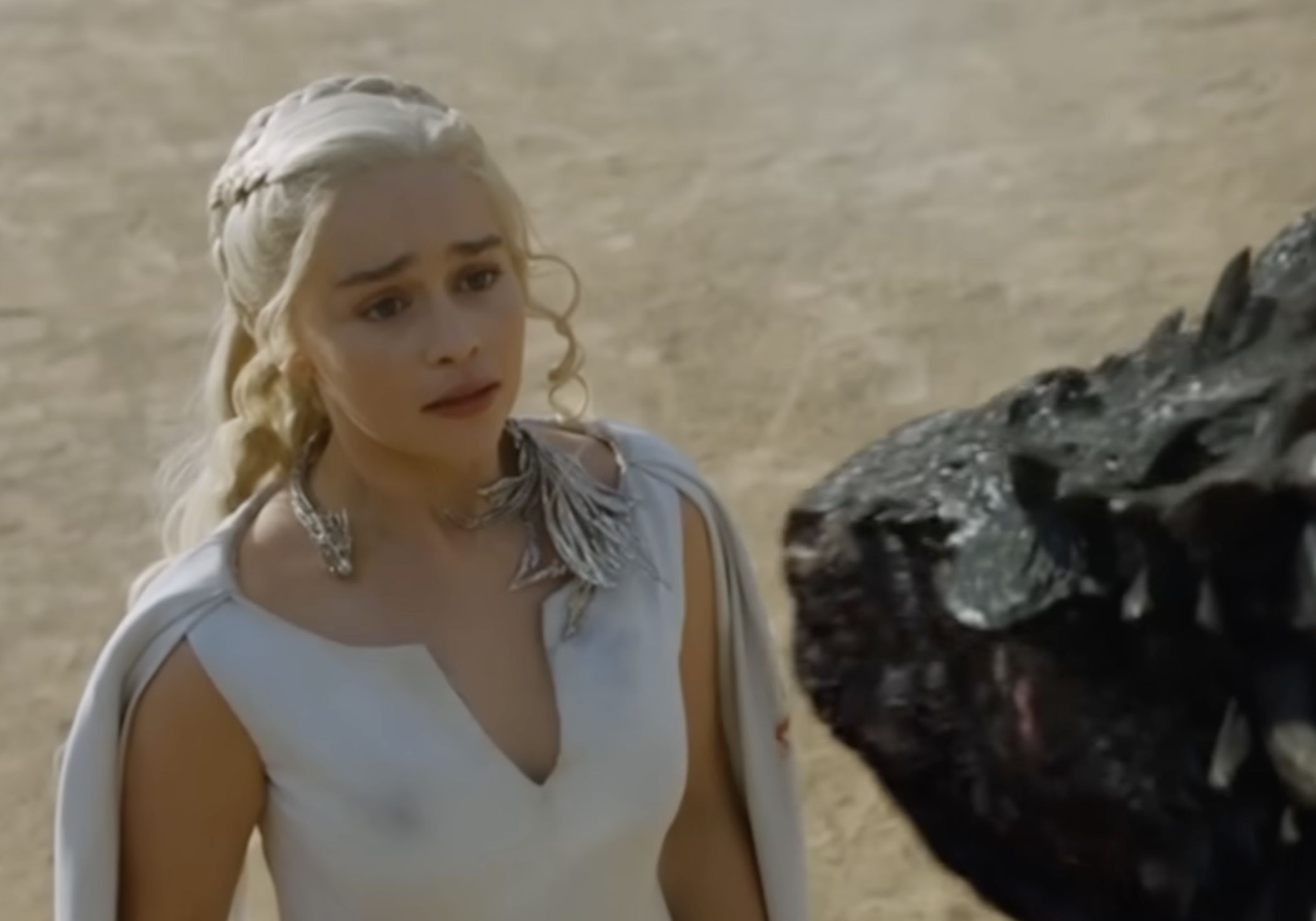
"I would have dragons, yes… but I wanted my dragons to be as real and believable as such a creature could ever be. I designed my dragons with a lot of care. They fly and breathe fire, yes, those traits seemed essential to me. They have two legs (not four, never four) and two wings."
Tolkien is the man behind The Hobbit, The Lord of the Rings, and The legendarium of Middle-earth. Therefore, his influence is most evident in GRRM's process.
On his blog, Martin traces dragon mythology across cultures, then explores an interesting scientific principle that Tolkien adhered to. It says that there are no six-limbed vertebrates. Animals in the wild don’t have four legs and wings as their two pairs of limbs. Tolkien observed this rule, and Martin did so too, making dragons bipedal, two-winged beasts.
Where does this philosophy clash with Game of Thrones?

 Trending
Martin’s insistence on internal logic doesn’t stop at dragon anatomy in Game of Thrones, and that’s partly why he has been openly critical of adaptations of his work. He has lately expressed displeasure at a few creative decisions in HBO’s House of the Dragon, especially when choices of narrative break from the structural logic of his novels.
In a now-deleted blog post, Martin criticized the removal of Prince Maelor from the Blood and Cheese storyline. Game of Thrones showrunner Ryan Condal had already told Martin as far back as 2022 that the character would be cut for practical reasons, a decision Martin clearly disagreed with.


 Reply
Reply


