


'%20x='0'%20y='0'%20height='100%25'%20width='100%25'%20%0A%20%20%20%20%20%20%20%20%20%20xlink%3Ahref='data:image/jpg;base64,/9j/2wBDAAYEBQYFBAYGBQYHBwYIChAKCgkJChQODwwQFxQYGBcUFhYaHSUfGhsjHBYWICwgIyYnKSopGR8tMC0oMCUoKSj/2wBDAQcHBwoIChMKChMoGhYaKCgoKCgoKCgoKCgoKCgoKCgoKCgoKCgoKCgoKCgoKCgoKCgoKCgoKCgoKCgoKCgoKCj/wAARCAAGAAoDASIAAhEBAxEB/8QAFgABAQEAAAAAAAAAAAAAAAAAAAQH/8QAHhAAAQQDAAMAAAAAAAAAAAAAAQACAxEEBRIhMUL/xAAUAQEAAAAAAAAAAAAAAAAAAAAD/8QAGBEAAgMAAAAAAAAAAAAAAAAAAAEDESH/2gAMAwEAAhEDEQA/AMj2+QdZHFkSN6bktcWBnwRV+1O7Yx5LjOIiwSnvgUeb81aIgjWWPI9o/9k='%3E%3C/image%3E%3C/svg%3E)

The final episode of Homeland threw fans for a loop. After eight seasons, Carrie Mathison is in Moscow, settling into a new life and publishing her memoir: Tyranny of Secrets: Why I Had to Betray My Country.
She looks right at home alongside Yevgeny Gromov, the Russian GRU officer. All those years of following her come down to one big question: Did Carrie actually turn on her country? Is she a traitor, or is there more to the story? Fans couldn’t stop arguing about it.
The answer is much more complicated than it seems at first. In the last episode, titled Prisoners of War, Carrie had a difficult decision to make that would mark her legacy and decide whether there would be a nuclear war on the border of Afghanistan and Pakistan. Her decision isn’t just personal; it’s the kind of move that could turn a celebrated CIA officer into one of America’s most infamous defectors.
But the creators of the show had meticulously created a finale that functions on several levels, showing that Carrie’s betrayal is actually the final disguise of her being in the service of American intelligence.
Homeland: How Carrie ended up working for Russia

The final season of Homeland was an intentional reflection of the first season of the show because it put Carrie’s loyalty to the test. Having been captured by Russian intelligence at the finale of Season 7, during which she was denied her bipolar medication by her GRU handler, Yevgeny, and allowed to decay mentally, the question of whether she was turned into a Russian asset dominated the story of the season. Even after coming back to the United States and trying to re-enlist in the CIA, Carrie failed a polygraph test, which further questioned her loyalty.
The main crisis of the Homeland finale was a crashed presidential helicopter. Inexperienced President Hayes was convinced that the Taliban forces had shot down the plane, killing the United States and Afghanistan presidents. Hayes was ready to initiate a large-scale military retaliation that would most probably lead to nuclear war with Pakistan.
But the Russians had the flight recorder of the helicopter, which could prove that the crash was caused by a mechanical defect and not the enemy’s shooting. The Russians were prepared to give this evidence under one condition: Carrie would either reveal the identity of Saul’s long-term Russian asset or execute Saul herself to end the asset relationship.
This asset had been safeguarded by the mentor and father figure of the series, Saul Berenson. The source was Anna Pomerantseva, a Russian translator in the United Nations who had given invaluable intelligence to the CIA. When Carrie confronted Saul by telling him point-blank to turn over Anna or the war would happen, he denied it with typical defiance. Carrie was desperate, and time was running out, so she lied.
She duped Saul’s sister, Dorit, saying that Saul had suffered a stroke, and this elicited his “legacy plan,” where he was to hand over his assets to Carrie in the event of his death.
In this deception, Carrie received a video message from Saul, which exposed the identity of Anna in Homeland. She forwarded this information straight to Yevgeny and to the Russian government. The Russians kept their word and published the flight recorder, which prevented the outbreak of war, but Anna knew that she had betrayed.
Instead of undergoing torture and execution, Anna decided to end her own life before Russian agents could capture her. This human sacrifice, whom Saul described as one of the most courageous individuals he had ever known, was the most questionable deed that Carrie had ever done.
She could not go back to the United States after burning a CIA asset and essentially handing Saul to the Russian assassins (she had temporarily paralyzed him in a fake assassination attempt), Carrie fled to Syria with Yevgeny and eventually ended up in Moscow. Then, the Homeland Episode jumped two years forward to reveal Carrie’s new life.
The final twist: Carrie’s true allegiance revealed

The epilogue of Homeland first gives the impression that Carrie has been turned into a Russian propagandist altogether. She spends her time in a lavish penthouse apartment in Moscow with Yevgeny, who gives her an extravagant gift to mark the banquet of her memoir.
The book, The Tyranny of Secrets: Why I Had to Betray My Country, seems to be a biting commentary on American intelligence affairs and foreign policy. The office walls of Carrie are covered with articles criticizing American deeds, such as fictional scandals in the show’s universe, as well as actual historical events, such as the atrocities in Abu Ghraib prison.
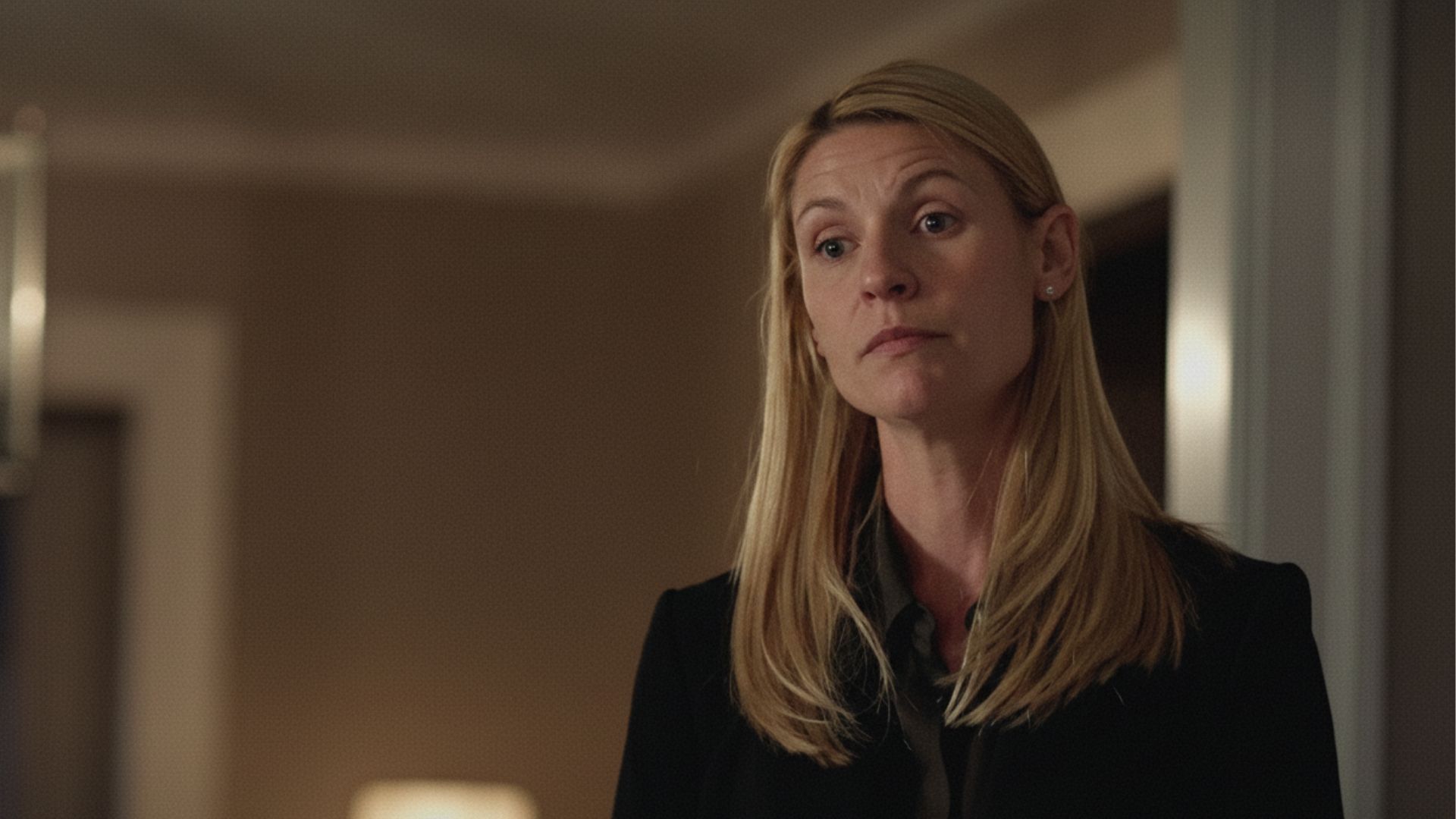
Nevertheless, the creators of the show have left some important hints in the Homeland finale, which show the real mission of Carrie. During a critical moment, Carrie and Yevgeny are about to go out on a date to a jazz concert. When they prepare to go, the camera stays on Carrie’s face.
She looks happy, even satisfied, the first time we see her happy since the death of Nicholas Brody many years ago. They visit a concert hall in Moscow to listen to American jazz musician Kamasi Washington play his saxophone, his music resonating with the American musical tradition that shaped the opening credits of Homeland.
As Carrie and Yevgeny listen to the concert, the scene switches back to Washington, D.C., where Saul is recovering from what seems to be a heart attack. He gets a package that is addressed to Professor Rabinow, which is his code name when the intelligence was sent to him by Anna.
There is a copy of a memoir by Carrie inside. Saul recalls how Anna used to have messages hidden in the spine of books, and he takes the time to look at the binding and finds a note left by Carrie.
The message reads:
“Greetings from Moscow, Professor. The Russian S-400 missile defense system sold to Iran and Turkey has a backdoor. It can be defeated. Specs to follow. Stay tuned.”
This disclosure changes all that the audience believed they knew about the past two years. Carrie had not fled to Russia, but had established herself as the new Russian agent of Saul, replacing Anna within the Kremlin. Her memoir, her relationship with Yevgeny, and the fact that she seemingly betrayed the United States were all part of the most elaborate cover operation of her life.
The closing scenes of the Homeland finale are ambiguous. Saul, though physically weak, is smiling as he reads the note. He has finally realized that he has not lost Carrie at all, and he will still have a professional relationship with her, although he will never get a chance to see her again.
 Trending
In the meantime, in Moscow, Carrie asks to go to the restroom in the middle of the concert. There, she secretly switches purses with another woman, indicating the use of intelligence tradecraft. The music becomes more dissonant and chaotic when she is back in her seat next to Yevgeny, which represents the intricacy of the position that Carrie finds herself in.
So, is Carrie really a Russian agent by the end of Homeland? It’s complicated. On paper, she is in Russia, she has written a book slamming the U.S., and now she seems to have Moscow’s trust. But she is actually still working for America. She is their inside source, feeding back key intel on Russia, just like Anna did for years. In the end, Carrie looks like a traitor to the U.S., but she has betrayed Russia for America.


 Reply
Reply


