


'%20x='0'%20y='0'%20height='100%25'%20width='100%25'%20%0A%20%20%20%20%20%20%20%20%20%20xlink%3Ahref='data:image/jpg;base64,/9j/2wBDAAYEBQYFBAYGBQYHBwYIChAKCgkJChQODwwQFxQYGBcUFhYaHSUfGhsjHBYWICwgIyYnKSopGR8tMC0oMCUoKSj/2wBDAQcHBwoIChMKChMoGhYaKCgoKCgoKCgoKCgoKCgoKCgoKCgoKCgoKCgoKCgoKCgoKCgoKCgoKCgoKCgoKCgoKCj/wAARCAAGAAoDASIAAhEBAxEB/8QAFQABAQAAAAAAAAAAAAAAAAAAAAX/xAAeEAACAgIDAQEAAAAAAAAAAAABAgQRAAMFBnESI//EABUBAQEAAAAAAAAAAAAAAAAAAAME/8QAHBEAAgICAwAAAAAAAAAAAAAAAQIAAwQREiEi/9oADAMBAAIRAxEAPwCb3Dj4fFdbjzIJfbKjs6/stCm2fJNgknw5Fkx5bydra9mgIXJFobq/cYyampHB5CNkMUfz1sT/2Q=='%3E%3C/image%3E%3C/svg%3E)

One of the most popular series on Apple TV, Pluribus, has finally come to an end. It serves as a sci-fi, with the story set in a world that has basically collapsed. What's unique is that the show isn't just about aliens and the dangerous world, but mainly about one's happiness and satisfaction.
The biggest question this series asks is Is it better to be yourself and unhappy, or give up who you are so everyone can be peaceful and content? And this idea is explored through a strange disaster caused by something from outer space.
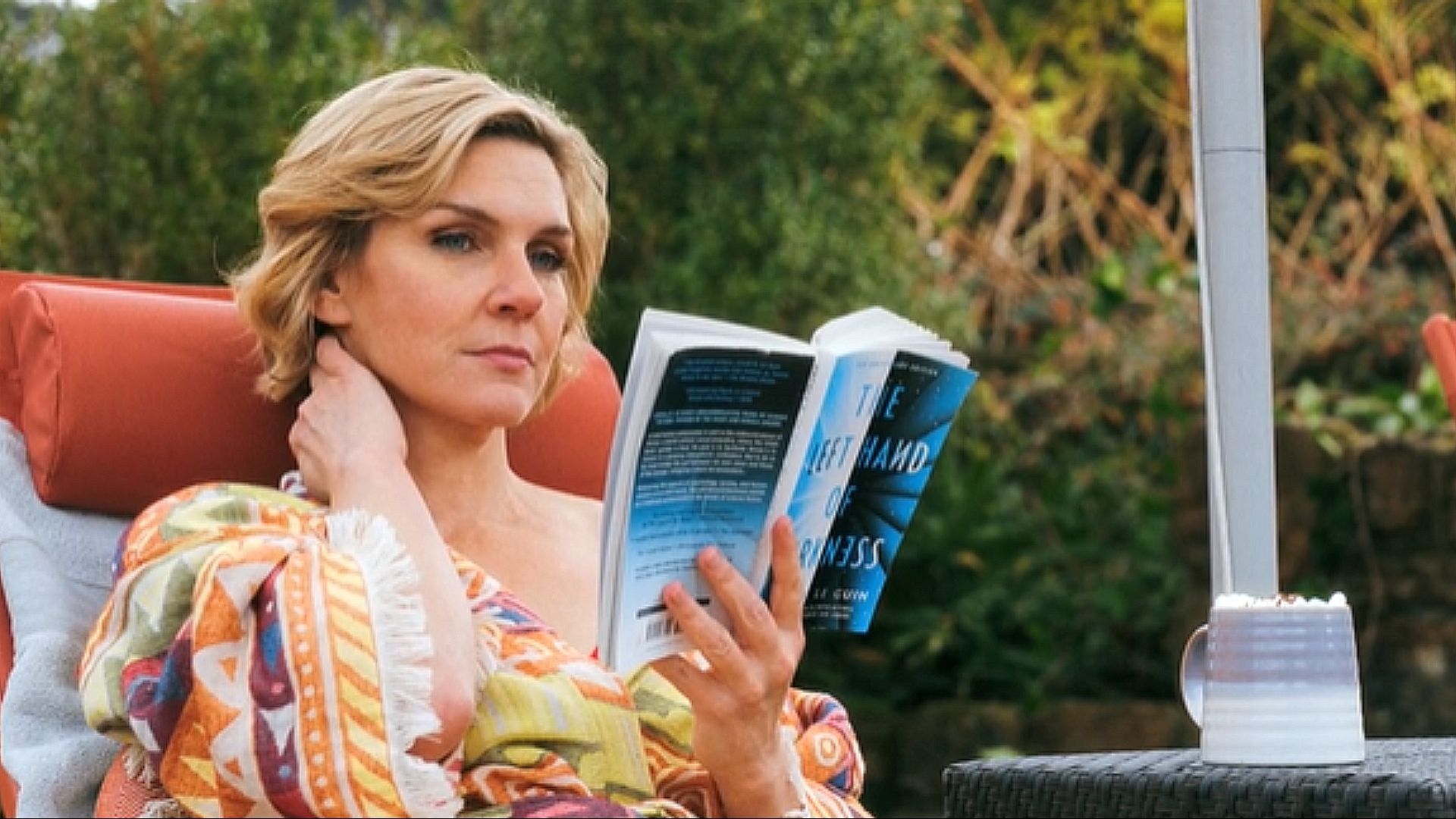
However, here we'll be discussing how the finale of Pluribus used The Left Hand of Darkness by Ursula K. Le Guin to help viewers understand the main conflict of the series. This book isn't any easter egg or randomly added to episode 9, the finale.
Mainly, this book is used to shed light on Carol and Zosia’s relationship and the larger question of individuality versus collective existence. The novel is about two beings who care deeply for each other but come from completely different ways of living.
And they can never fully meet without one of them losing something essential. SO, Pluribus mirrors this idea almost exactly.
Pluribus finale: The meaning behind Carol holding Ursula K. Le Guin's The Left Hand of Darkness, explained

Pluribus has become one of the most talked-about sci-fi series in 2025 on Apple TV+, as it follows a virus that spreads in the world, and instead of leading to deaths, it affects humans in unexpected ways. The affected ones start losing their individuality.
They don't crave power or act greedily. Instead, these affected people think everyone is equal and even feel happy and content. And out of billions of people, only 13 individuals are naturally immune to the virus.
They haven't lost their individuality and can still prove what makes them different. And among these immune survivors is Carol Sturk. She's a novelist and strongly believes that losing individuality, even for peace is a terrible thing.
To her, the Joining is not a miracle. It’s the end of what makes humans human. But in the end, she learns a shocking reality: the hive-mind is not just something surrounding her anymore. It is actively trying to absorb her, whether she agrees or not.
And in the finale of Pluribus, Carol is also seen holding The Left Hand of Darkness by Ursula K. Le Guin. And this is her way of understanding and explaining what her and Zosia's relationship actually is.
In Guin’s novel, the human envoy Genly Ai struggles to truly understand Estraven because Estraven’s identity and way of existing do not fit into human categories. Even though they develop trust and emotional closeness, there is still a wall between them.
In Pluribus, Carol is in a similar position. She is fully human, deeply individual, emotionally exclusive, and attached to personal identity. Zosia, as part of the hive-mind, does not experience love, ownership, or selfhood in the same way.
Zosia can care for Carol, but that care is shared equally, not privately or exclusively. The metaphor works because Carol, like Ai, keeps trying to fit someone fundamentally different into a human understanding of love and connection, and that effort is doomed from the start.
So, this is how Pluribus uses this incredible story from the novel to highlight the issues with Zosia and Carol's relationship. And why Carol chose not to continue with what the two had between them
 Trending
Also Read: Silo Season 2: What does Juliette tell Solo and Hope about her return to Silo 17? Details explored
Continue exploring SoapCentral for regular updates on TV shows.


 Reply
Reply


