


'%20x='0'%20y='0'%20height='100%25'%20width='100%25'%20%0A%20%20%20%20%20%20%20%20%20%20xlink%3Ahref='data:image/jpg;base64,/9j/2wBDAAYEBQYFBAYGBQYHBwYIChAKCgkJChQODwwQFxQYGBcUFhYaHSUfGhsjHBYWICwgIyYnKSopGR8tMC0oMCUoKSj/2wBDAQcHBwoIChMKChMoGhYaKCgoKCgoKCgoKCgoKCgoKCgoKCgoKCgoKCgoKCgoKCgoKCgoKCgoKCgoKCgoKCgoKCj/wAARCAAGAAoDASIAAhEBAxEB/8QAFgABAQEAAAAAAAAAAAAAAAAAAAUH/8QAHxAAAgIBBAMAAAAAAAAAAAAAAQIAAwUGESExExRB/8QAFQEBAQAAAAAAAAAAAAAAAAAAAAH/xAAYEQADAQEAAAAAAAAAAAAAAAAAAQIhsf/aAAwDAQACEQMRAD8AyrEal9jG5O9VuWuha1dC/LA8HY/OpIr1aAihqLSQACfJ3EROMlyqW9Z//9k='%3E%3C/image%3E%3C/svg%3E)

Prime Video dropped a Japanese psychological thriller, Human Specimens, that’s already sending shivers down people’s spines. It landed worldwide on December 18, 2025. All five episodes were released in one go.
It’s based on a book by Kanae Minato, the writer behind Confessions, which became a bestseller, snagged the Japanese Booksellers Award, and even made it all the way to the Oscars. People in Japan call Minato the “queen of iyamisu,” which means she is the mastermind of mystery fiction that deals with grisly episodes and the dark side of human nature.
With a rep like that, Human Specimens has big shoes to fill. People expect mind games, uncomfortable questions, and psychological torture. So, is this adaptation of the much-hyped Japanese mystery novel actually as twisted as it claims, or is it just another show tripping over its own attempts at being ‘deep’? People are definitely curious. So, let’s explore.
Should you watch or skip Human Specimens? Here’s our take

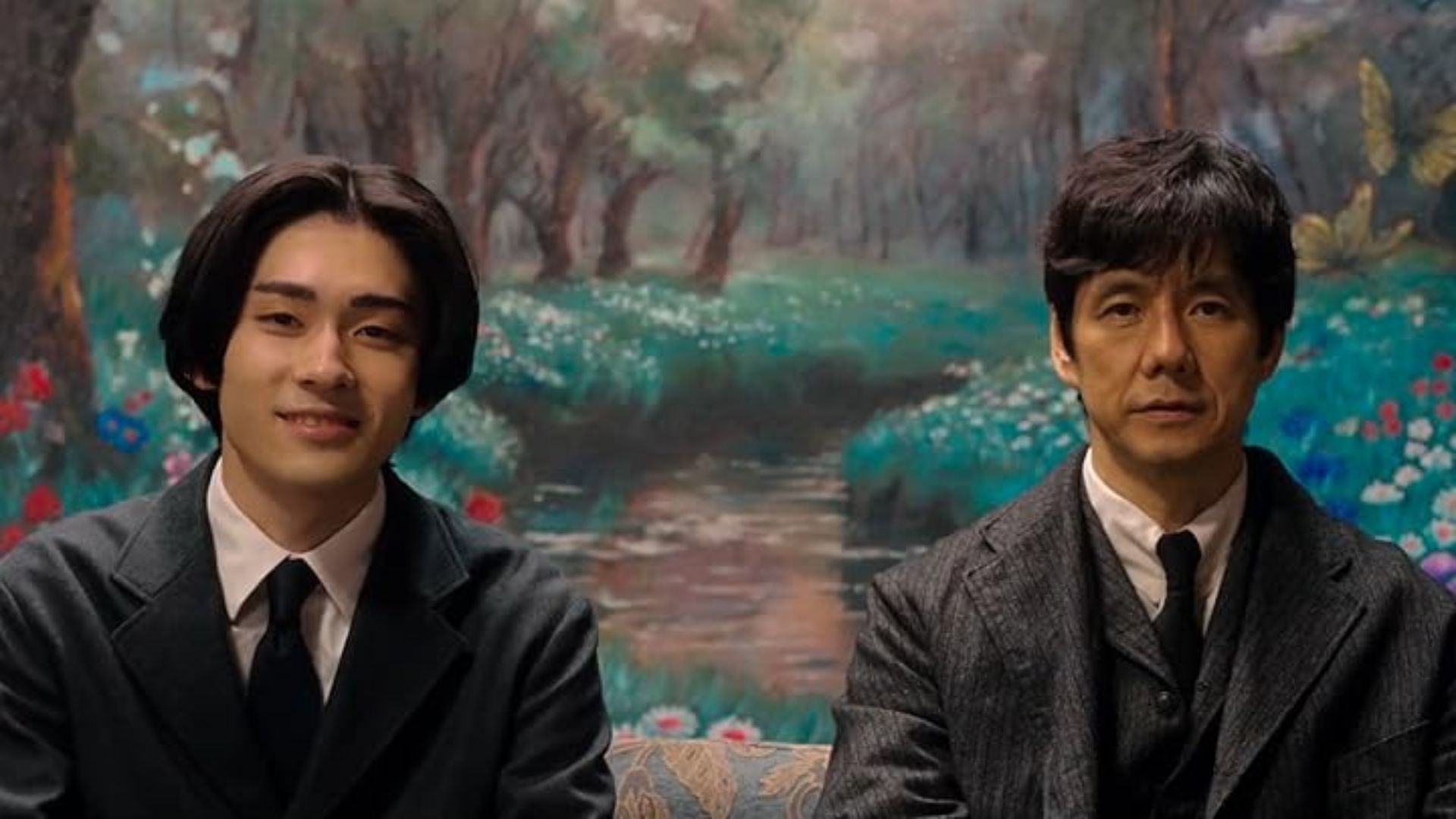
The story of Human Specimens centers on Professor Shirô Sakaki, a butterfly-obsessed researcher who admits to turning six boys, including his own kid, Itaru, into so-called “human specimens.” That’s your entry ticket to this psychological thriller. It’s told from different angles, peeling back all the gnarly layers to show what’s really up with Sakaki’s twisted choices, digging into the father-son relationship, and poking at our addiction to trapping beauty before it slips away.
As for the cast, you have Hidetoshi Nishijima, who is famous for his role in Drive My Car, an Oscar winner from 2021. He snagged the Japan Academy’s Best Actor award. Then there’s Ichikawa Somegorô, a 20-year-old and already a kabuki prodigy, jumping into modern TV for the first time. Behind the camera is Ryûichi Hiroki, who has an uncanny knack for picking apart human psychology (see: April Bride, The Waxing and Waning of the Moon).
What works: Visual excellence and Nishijima’s performance
According to DMTalkies, director Hiroki leans into the strange and creepy with Human Specimens, but not in that desperate, try-hard way. It’s more like the whole thing simmers with a gross vibe that clings to you, kind of when you leave a haunted house and realize you still feel jumpy twenty minutes later. That sense of unease is totally intentional. You are not supposed to just shake it off once the credits are done rolling.
Visually, Human Specimens deserves a particular recognition. The five boys are set up in strange, almost dreamlike scenes, and the way they interact is off-kilter enough to keep you squirming. Production design, VFX, and the whole pacing are super bizarre and almost hypnotic. Plus, the series goes heavy on Japanese flair, especially with all the butterfly theme and artsy shots.
World Screen quoted Minato (the author) as saying:
“It was particularly challenging to express colors and specimen designs through words alone. That’s precisely why I strongly hoped for a visual adaptation, and my wish has been granted in the most wonderful way possible.”
Meanwhile, Nishijima holds the whole thing together. He told It’s All Entertainment:
“The original novel by Ms. Kanae Minato is layered with powerful themes – the infinite depths of parent-child love and conflict, the complexity of human nature, the fine line between art and madness, and the desperate pursuit of beauty.”
And his take on Professor Sakaki supposedly nails all that inner turmoil and creepiness. This villain is someone who messes with your head and actually makes you care, even if you feel gross about it.
What doesn't work: Compression issues and supporting cast
Squeezing a whole novel into just five episodes is what gave Human Specimens a bit of a downgrade. The show has many themes: generational trauma, parental nightmares, ambition, obsession, what art really means, all the way to tetrachromacy, misunderstanding art, color blindness, breaking down art forms, changing the whole definition of beauty, emotional games, ego trips, messy family, betrayal, forgiveness, and jealousy.
The combination of this ambitious scope and the Rashomon approach, which examines incidents from different points of view, results in a dense viewing experience that might seem hurried at times.
And then there’s the screen time. Hidetoshi Nishijima carries the whole show on his back, which is great for his fans. But the rest of the cast, including Somegoro Ichikawa, Rie Miyazawa, Aoi Ito, and the other supporting roles, barely get a shot. Every time Nishijima is not in the scene, things drag.

Thematic depth and cultural context
Thomas Dubois, head of French and Japanese originals at Prime Video, was quoted as saying by World Screen:
“This dark and compelling drama series earnestly confronts the eternal questions that Kanae Minato explores with her sharp pen—the purpose of life and the nature of love.”
But it’s all filtered through a Japanese perspective. So, if you are into seeing the world through a different lens, there’s something in it for you.
Director Hiroki goes on to say that Human Specimens dives into humanity’s love affair with beauty, all wrapped up in a gnarly father-son dynamic. He claims they are trying to show love and madness getting tangled together. It’s more like a deep dive into obsession, art, and what happens when parents expect way too much.
The butterfly motif serves as more than a mere aesthetic flourish. In the course of the series, butterflies are shown as symbols of beauty and death at the same time, as well as preservation and destruction, which are very suitable symbols for a story of the man who wants to make his subjects live forever in the most terrifying way possible.
The verdict: Who should watch Human Specimens?
Human Specimens is a psychological thriller that is able to impress visually. Hidetoshi Nishijima owns every scene. But the show tries to cram way too much into too little space. Supporting characters look like they are just hanging around, not actually getting their moment. It feels like a five-course meal stuffed into a lunchbox.
You can give it a shot if you are into slow-burn thrillers that care more about themes than chase scenes. If you are already a Nishijima fan, you will probably love this one too, since it’s basically his show. Also, if you like your stories morally gray and a little dark, especially on the human nature side, welcome to your next binge. Bonus points if you love Japanese mysteries and artsy, symbolic shots that sometimes make you pause and think.
But maybe skip it if you want everyone in the cast to get their due. If you are not okay with a dark theme (some of it involves kids), probably Human Specimens is not your jam. If you want clear-cut plots and steady pacing, this show is going to test your patience. And if you are looking for something breezy, then this one is a no-no.
Human Specimens tried to do justice to Kanae Minato’s novel, and there’s a lot of ambition packed in there, but it stumbles sometimes. Still, if you are into Japanese psychological thrillers that aren’t afraid to poke at dark corners of the human mind, you will get what you came for.
 Trending
It’s one of those shows that gets under your skin. You will probably catch yourself thinking about the beauty vs. madness, and how quickly love can flip into obsession, especially when it comes to parents. But fair warning: if you are looking for something comfy or easy to binge, maybe look elsewhere. Human Specimens is designed to play with your head, and it nails it, almost too well.
Human Specimens is now streaming on Prime Video.


 Reply
Reply


