


'%20x='0'%20y='0'%20height='100%25'%20width='100%25'%20%0A%20%20%20%20%20%20%20%20%20%20xlink%3Ahref='data:image/jpg;base64,/9j/2wBDAAYEBQYFBAYGBQYHBwYIChAKCgkJChQODwwQFxQYGBcUFhYaHSUfGhsjHBYWICwgIyYnKSopGR8tMC0oMCUoKSj/2wBDAQcHBwoIChMKChMoGhYaKCgoKCgoKCgoKCgoKCgoKCgoKCgoKCgoKCgoKCgoKCgoKCgoKCgoKCgoKCgoKCgoKCj/wAARCAAGAAoDASIAAhEBAxEB/8QAFgABAQEAAAAAAAAAAAAAAAAAAAUH/8QAIhAAAQMDAwUAAAAAAAAAAAAAAQACEQMEEgYUMQUTISOh/8QAFAEBAAAAAAAAAAAAAAAAAAAAAf/EABYRAQEBAAAAAAAAAAAAAAAAAAEAEf/aAAwDAQACEQMRAD8AzutqKpa1untaH42jSx4BgPlgA+hQTpF90dxvce77Iw4nzHKInACNW//Z'%3E%3C/image%3E%3C/svg%3E)

Crime dramas were simply redefined for me after watching Better Call Saul. This show was a real eye-opener!
For a considerable time, I thought Breaking Bad was the ultimate representation of this fictional world. It was powerful, unpredictable to the end and always in a process of constant escalation. However, as I was watching Better Call Saul, I realized that it was going beyond that and doing something really different.
A specific episode did not just highlight the series for me in a new way; it actually overhauled my whole perception of the show. It was a huge surprise for me how one episode focused on a courtroom could have such a lasting impression!
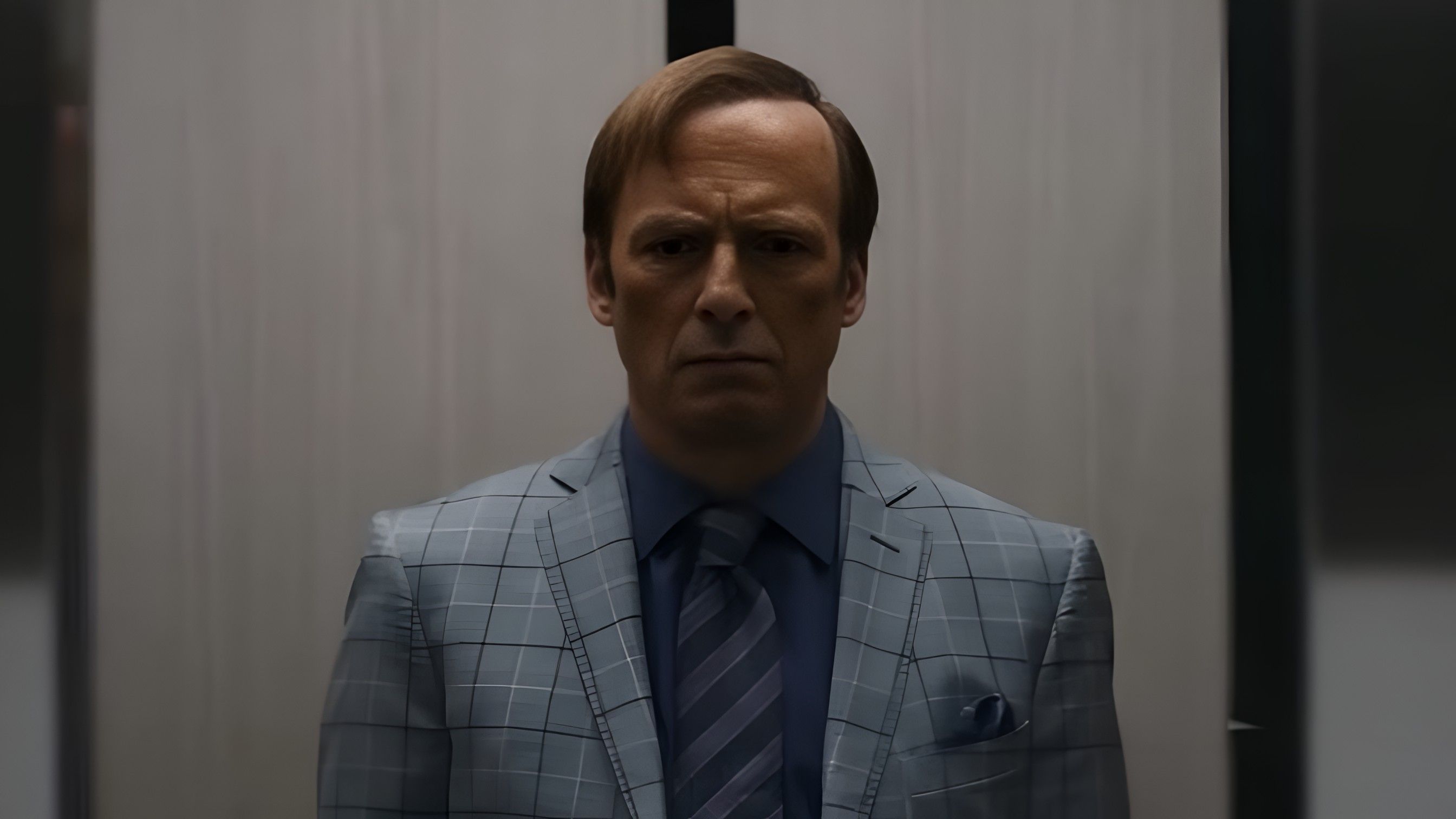
Season 3, Episode 5, “Chicanery,” is the point in time when I sensed Better Call Saul had completely owned its identity. In this episode, the New Mexico Bar Association gets together to discuss Jimmy's disbarment for meddling in his brother Chuck's business deal. However, Kim and Jimmy claim that he lied on tape just to make Chuck feel better about his alleged electromagnetic hypersensitivity.
There were no explosions nor violent twists in this episode. The script was unrolled with a lot of dialogue, legal structure, and emotional tension. By the time I finished watching, I started asking myself if the critics had been right after all. Was it really a turning point for the series?
How the story slowly led me to “Chicanery” of Better Call Saul
When I reached “Chicanery,” I had already seen how Better Call Saul carefully developed the relationship between Jimmy McGill and Chuck. The show never hurried their quarrel. Every disagreement, every silent dislike, and every professional clash felt purposeful.
The patience with which Better Call Saul dealt with the situation was what struck me most. In contrast to Breaking Bad, where conflicts frequently escalated rapidly, this series let the situation simmer.
When “Chicanery” came, it was not a surprise; it was a foregone conclusion. The very sense of inevitability that was there made the episode much more impactful for me.
How the courtroom setting provided a great experience
Initially, I did not expect an episode with a heavy courtroom theme to be so engaging. Yet, Better Call Saul managed to transform the legal hearing into a psychological war zone. Each word articulated seemed to be premeditated, and each reaction was of utmost importance.
The very aspect I most appreciated was the authenticity. The episode did not over-dramatize the legal processes for the sake of drama, but rather, it demonstrated how the very rules could be turned into a weapon. This unfolding of events made me aware of the fact that Better Call Saul is more of a show based on systems and structure than on spectacle.
Witnessing Chuck McGill's disintegration
Chuck’s disintegration during the trial was very hard for me to witness, and I guess that was the purpose. The episode did not make it a surprising reversal of events. However, I perceived it as the slow disintegration of a person who had been just managing to hold himself together.
One thing that I could not avoid noticing was that Better Call Saul managed Chuck with great tact. He was neither turned into a villain nor completely framed as someone to be pitied. His catastrophic downfall was both tragic and extremely human. This occurrence lingered with me for a long time after the episode had finished.
How Jimmy's choices made me question everything
Jimmy McGill’s behavior in “Chicanery” compelled me to live with moral uncertainty. His strategy was brilliant, totally legal, and without doubt, very successful, but it was not free. Witnessing him so publicly part from Chuck made me feel a little uneasy, although I did get the motive behind it.
I found it admirable that Better Call Saul did not impose any emotions on me. The series merely laid out the repercussions. I was not compelled to either support Jimmy or denounce him. What happened was that I was left to ponder the significance of his choices, and this was much more interesting than the imposition of a straightforward moral directive.
Why the episode’s restraint impressed me
One of the first things that caught my attention was the restraint shown in "Chicanery". The creators didn't force any emotions through dramatic musical cues, nor did they make sudden reversals that were intended to shock me. The dialogue, pacing, and performances brought the tension forth solely.
Such restraint also rendered the episode rooted in reality and quite certain. Better Call Saul, as a company that produces films for theaters, relied on the viewers' power of concentration without the assistance of continually provided stimuli. In comparison to the high-stakes chaos, which is frequently associated with Breaking Bad, this method appeared to be deliberate and controlled.
How the legal framework strengthened the story
Watching "Chicanery", I became increasingly aware of the legal system's pivotal role in Better Call Saul. The law is not merely a background context; it is an active shaping force of the narrative. Jimmy was supposed to stay within the boundaries created by ethics and standards, but he rarely did.
These conditions made the episode very real indeed. I wasn't viewing an exaggerated courtroom drama. I was witnessing how legal rules could expose personal flaws and cause long-standing tensions. This approach, which one might call grounded, is one of the reasons the episode affected me so much.
Why the focus on one conflict worked
I also observed the episode's intense focus. There were no distracting subplots to divert my attention. Everything revolved around the hearing and the relationship between Jimmy and Chuck.
This narrow focus made the emotional fulfillment appear to be justly rewarded. Better Call Saul did not go for too much at once. On the contrary, it dedicated itself completely to one story and explored it in depth, which I found much more impactful.
How this episode changed my perspective on the series
I still consider Breaking Bad to be a very intense and significant cultural phenomenon, but “Chicanery” changed my perception of Better Call Saul to the extent that I saw it as being entirely different rather than just inferior. The very fact that it did not attempt to do the same thing that was done before was the first reason for my change of view.
Rather, it embraced and drew upon the audience’s patience, realism, and the psychological side of things. The watching experience made me realize the reason why a good number of the audience give Better Call Saul a higher rank than the rest. It is no longer about raising the bar but rather about receiving the consequences.
Why “Chicanery” still remains in my memory
To me, looking back at “Chicanery” still holds the rank of being one of the episodes that made the strongest impact on my TV-watching experience. It was not because the episode was very elaborate, but because it was accurate in its execution. Every scene had its reason, and everything was done economically.
 Trending
I don’t think this episode can put an end to the argument between Better Call Saul and Breaking Bad. It just does the same things as before but makes it evident that Better Call Saul qualifies for an independent and merit-based judgment. And that awareness, in my case, was the game changer.
Also read: Better Call Saul ending explained: Jimmy McGill’s 86-year prison sentence


 Reply
Reply


