


'%20x='0'%20y='0'%20height='100%25'%20width='100%25'%20%0A%20%20%20%20%20%20%20%20%20%20xlink%3Ahref='data:image/jpg;base64,/9j/2wBDAAYEBQYFBAYGBQYHBwYIChAKCgkJChQODwwQFxQYGBcUFhYaHSUfGhsjHBYWICwgIyYnKSopGR8tMC0oMCUoKSj/2wBDAQcHBwoIChMKChMoGhYaKCgoKCgoKCgoKCgoKCgoKCgoKCgoKCgoKCgoKCgoKCgoKCgoKCgoKCgoKCgoKCgoKCj/wAARCAAGAAoDASIAAhEBAxEB/8QAFgABAQEAAAAAAAAAAAAAAAAAAAQF/8QAIxAAAQMDAwUBAAAAAAAAAAAAAgEDBAAFEQYHIRITIjFRUv/EABUBAQEAAAAAAAAAAAAAAAAAAAED/8QAFxEAAwEAAAAAAAAAAAAAAAAAAAExEf/aAAwDAQACEQMRAD8A09UbwTosTWFuei98imlGaI3PFtvrMCFEx+QTC/SXPrmuy79vxrNAYcsjZm1HbAiR9eVQURV5TNKUQpVh/9k='%3E%3C/image%3E%3C/svg%3E)

Stranger Things practically set new standards for the TV industry overnight! What started as a Netflix series mixing different genres gradually led to a global engagement about the topics of nostalgia, storytelling, and emotional realism.
The show is commonly talked about not only due to its occult mythology, but also its impact through and through the actors' performances, especially through the interactions of the heroes, the older ones, which have been quite noticeable.
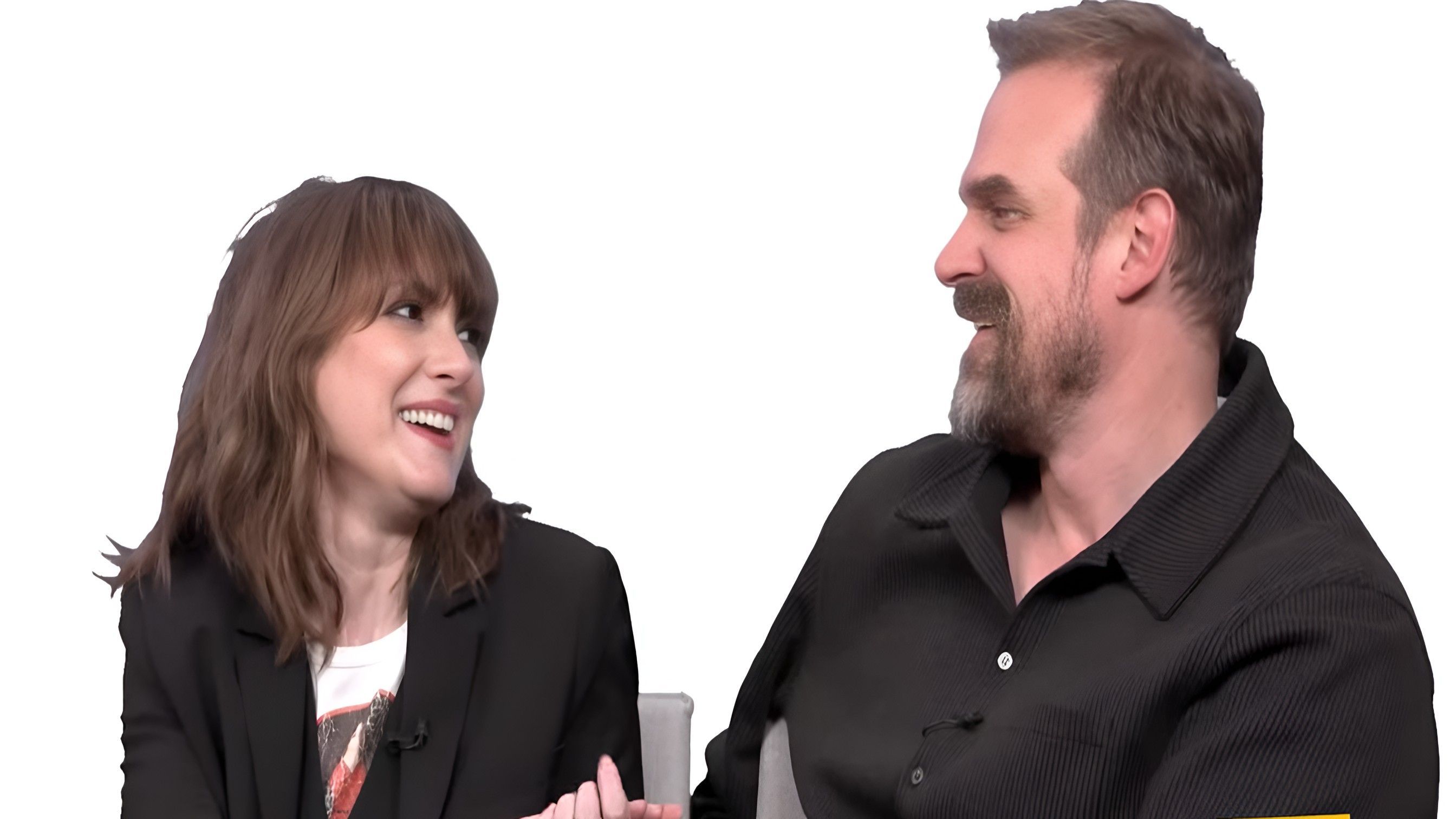
That interaction was not born out of hype but rather partnership and cooperation! Winona Ryder, throughout the years, has been very open with her feelings about her co-star David Harbour, expressing not only respect for what he does as an actor but also for the emotional understanding he has of the material.
During an interview with Josh Horowitz Clips, Winona Ryder said
"I was so excited. I was like oh my God he's great because. I'm I did see you in a play and I but it was a long timeo it was but I also felt like he was just like the kind of like the perfect you know Hopper I mean and he he like he's better than he's better than I you could have could have ever hoped"
Here is the interview for your reference:
David Harbour's character in Stranger Things
Hopper is the main character played by David Harbour in Stranger Things, who is a police chief in the small town of Hawkins, Indiana. At first, Hopper is portrayed as a character with serious flaws, detached emotionally, having gone through a personal tragedy, and living in a world apart.
As time passes, the character of Hopper turns out to be the very basis upon which the emotional aspect of the series rests. In the beginning, Hopper is depicted as an anti-crime agent, but eventually, he emerges as an embodiment of loss, liability, and slow tenderness sensation revival.
The storyline of his character runs alongside the events of the supernatural world depicted in the series, allowing the series to present its magic along with human suffering.
The Joyce Byers and Jim Hopper dynamic
One of the most significant relationships in Stranger Things is that between Joyce Byers, played by Ryder, and Jim Hopper. Joyce is presented as a mother in a difficult situation who is going through fear, disbelief, and ultimately, desperation after the disappearance of her son. Hopper, at the beginning of the story, is portrayed as a reluctant authority figure who is skeptical but emotionally receptive.
The development of their relationship from the start to the end of the series has been characterized by the attributes of trust and emotional sharing. This change is played out through the restraint of the actors rather than the dramatization. They both use hesitations, controlled reactions, and emotional understatement in their acting.
This dynamic has been regarded by both critics and audiences as one of the most emotionally stable aspects of the series.
The role of veteran actors in Stranger Things
Stranger Things strikes out among its competitors by featuring a well-balanced ensemble cast as its main consummation. The saga merges not only the iconic actors like Winona Ryder and David Harbour, but also the superbly talented rising stars who thought their roles carried a lot in the story.
There are conversations in the industry that usually point to this mix as one of the reasons for the emotional coherence of Stranger Things. The professionalism of Ryder and Harbour created a hawkish presence in scenes that required a lot of emotional intensity, especially in the early seasons of the series.
The actors’ contributions were such that the eerie elements in the plot of Stranger Things were always connected with credible emotional reactions.
Instead of a happily documented moment at the casting, the verified interviews show something more: a working relationship established through trust, discipline, and shared emotional responsibility.
This point of view in the larger framework of the show underlines that the choice of performance and the consistency of collaboration were the main factors for the show’s success, rather than isolated moments or promotional narratives.
 Trending
Even as the series is nearing its last episode, the aforementioned dynamics behind the scenes still help to explain the reason why Stranger Things is still emotionally resonant a long time after its premiere.


 Reply
Reply


