


'%20x='0'%20y='0'%20height='100%25'%20width='100%25'%20%0A%20%20%20%20%20%20%20%20%20%20xlink%3Ahref='data:image/jpg;base64,/9j/2wBDAAYEBQYFBAYGBQYHBwYIChAKCgkJChQODwwQFxQYGBcUFhYaHSUfGhsjHBYWICwgIyYnKSopGR8tMC0oMCUoKSj/2wBDAQcHBwoIChMKChMoGhYaKCgoKCgoKCgoKCgoKCgoKCgoKCgoKCgoKCgoKCgoKCgoKCgoKCgoKCgoKCgoKCgoKCj/wAARCAAGAAoDASIAAhEBAxEB/8QAFQABAQAAAAAAAAAAAAAAAAAAAAX/xAAfEAACAQQDAQEAAAAAAAAAAAABAgMABAUhBhExEhP/xAAUAQEAAAAAAAAAAAAAAAAAAAAE/8QAGhEAAgIDAAAAAAAAAAAAAAAAABEBUQMhMf/aAAwDAQACEQMRAD8AX2dxuPk5Bl48cPzthbrCoRAysxVWOwQR6d1Cnm4vezyXT4a7+p2Mp+bpkHbHvSg9D3wapSi49NWO6nUH/9k='%3E%3C/image%3E%3C/svg%3E)

Mad Men is one of those shows people think they fully understand until you pause, look closer, and realize there’s a whole second layer quietly working underneath.
And yes, that second layer comes straight from The Sopranos.
The biggest influence isn’t crime, violence, or even the antihero itself. It’s how both shows use the mind. Dreams, illusions, fantasy, and inner thought are used as storytelling tools.
Before Mad Men ever existed on AMC, Matthew Weiner took his pilot script to David Chase and ended up writing for The Sopranos. That experience shaped how he later told Don Draper’s story. Instead of explaining emotions out loud, both shows let strange mental moments do the talking.
So if Mad Men ever felt emotional without being loud, or deep without being dramatic, this is why. The Sopranos taught how to let silence, dreams, and weird inner moments speak for the characters.
How The Sopranos taught Mad Men to show feelings without saying them
One of the most important things The Sopranos changed about television was how feelings could be shown without dialogue. Tony Soprano doesn’t sit and explain his fears. Instead, the show lets his brain do the talking through dreams, hallucinations, and strange inner moments. Mad Men picks up this exact idea and uses it on Don Draper.

Both Tony and Don live very controlled lives on the surface. They look confident, successful, and in charge. But inside, both are constantly uneasy. They are hiding things, avoiding truth, and carrying guilt they cannot say out loud. That is where the dream world comes in. It becomes the space where their real emotions finally leak out.
This is why moments that feel strange or unreal in Mad Men actually matter a lot. When Don sees Bertram Cooper singing after Cooper’s death, it looks playful on the surface. But emotionally, it is Don processing loss, change, and the end of an era. He cannot cry in the office. He cannot talk about grief. So his mind turns it into a strange performance.
Tony’s dreams work the same way. When he dreams of a talking fish revealing his friend’s betrayal, his brain is pushing him toward a truth he does not want to accept. The dream does the emotional work before his conscious mind can catch up.
So in both shows, dreams are not decoration. They are decision engines. They gently push the characters toward actions they are too afraid to take while awake. Mad Men quietly borrowed this emotional engine from The Sopranos and made it softer, quieter, and more stylish.
Don Draper and Tony Soprano are built from the same emotional blueprint
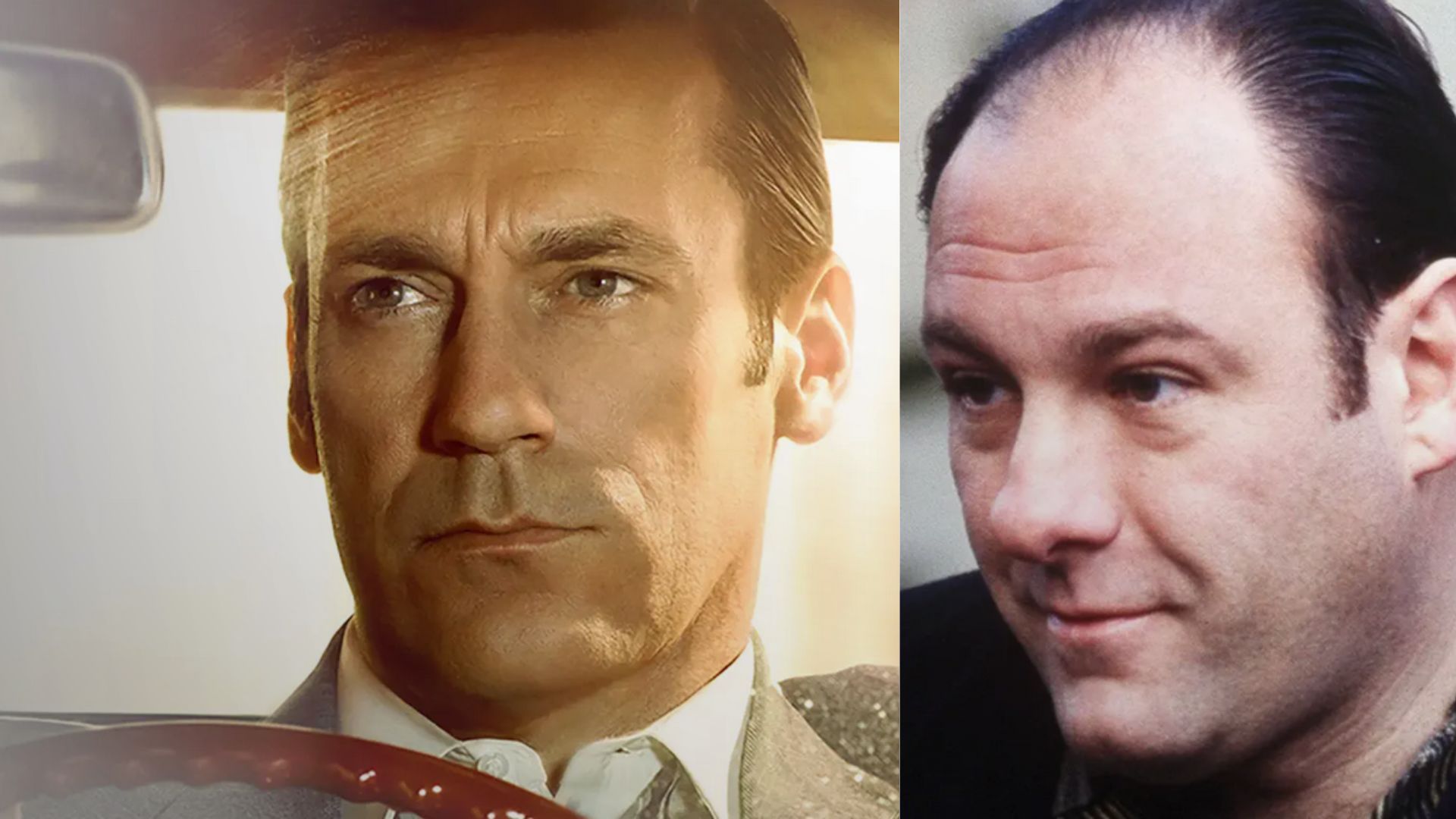
Don Draper and Tony Soprano look nothing alike on paper. One sells ads in Manhattan. The other runs a crime family in New Jersey. But emotionally, they are cut from the same cloth.
Both present themselves as family men while constantly failing their families. Both cheat and lie. Both split their lives into neat boxes and hope none of those boxes crash into each other. Don hides his stolen identity and his poor past. Tony hides his panic attacks and therapy. These secrets sit like weights on their chests.
This pressure is what makes the dream space necessary. Both men are trapped between who they pretend to be and who they actually are. The more they lie outwardly, the louder their inner world becomes.
Don’s fever dream, where he kills his former lover, is not about violence. It is about fear. Fear that he cannot change. Fear that he hurts people by nature. Fear that his past keeps chasing him. Tony’s coma dream, where he becomes Kevin Finnerty, is not about fantasy. It is about identity. It asks what Tony is without power, status, or crime.
Both dreams ask the same question in different languages. Who are you when the costume comes off?
Mad Men didn’t copy Tony’s story. It translated his emotional struggle into a different world. Instead of guns and gangs, it used suits and boardrooms. But the emotional map is almost the same.
Why this influence quietly changed how television tells stories
Before shows like The Sopranos and Mad Men, television mostly explained itself. Characters talked about their problems. Conflicts were visible and loud. These two shows shifted that idea completely.

They trusted viewers to feel instead of being told. They trusted silence. They trusted confusion. They trusted moments that felt uncomfortable or unclear.
That trust changed television. It allowed shows to become slower, deeper, and more layered. It made space for characters who are not heroes, not villains, and not easy to understand.
Matthew Weiner carried that trust directly from David Chase into Mad Men. That is why the show feels so calm, even when it is emotionally heavy. That is why its ending is quiet, not explosive. Like The Sopranos, it leaves space instead of giving answers.
So the real influence is not just style or structure. It is philosophy. Both shows believe people are complicated, feelings are messy, and truth often lives below the surface. They don’t chase clarity. They chase honesty.
That is the invisible thread tying Mad Men to The Sopranos. It is not in the plot. It is in psychology.
Mad Men features one significant The Sopranos influence that is not in crime, drama, or shock, but in the way it considers the human mind as a space for storytelling. The show treats this as part of the narrative, not as side effects, to have dreams, inner fears, and emotional confusion.
Matthew Weiner got that from David Chase. Emotionally, Don Draper was created in the same way as Tony Soprano. This is a show that, with all its contrasts, is still very quiet, serious, and profound.
After recognizing the link, the story of the office hardly seems to be a theatrical psychological portrait, which uses soft hues and slow moments to tell the story of a person's inner world.
 Trending
Stay tuned to Soap Central for more.


 Reply
Reply


