


'%20x='0'%20y='0'%20height='100%25'%20width='100%25'%20%0A%20%20%20%20%20%20%20%20%20%20xlink%3Ahref='data:image/jpg;base64,/9j/2wBDAAYEBQYFBAYGBQYHBwYIChAKCgkJChQODwwQFxQYGBcUFhYaHSUfGhsjHBYWICwgIyYnKSopGR8tMC0oMCUoKSj/2wBDAQcHBwoIChMKChMoGhYaKCgoKCgoKCgoKCgoKCgoKCgoKCgoKCgoKCgoKCgoKCgoKCgoKCgoKCgoKCgoKCgoKCj/wAARCAAGAAoDASIAAhEBAxEB/8QAFQABAQAAAAAAAAAAAAAAAAAAAAf/xAAhEAABAwMEAwAAAAAAAAAAAAABAgMEAAUREhMhMUGBof/EABUBAQEAAAAAAAAAAAAAAAAAAAIF/8QAHREAAgEEAwAAAAAAAAAAAAAAAQMCAAQFERIhwf/aAAwDAQACEQMRAD8AssGG/OG4NhltkErSMq1jIz3119Pqcy7TdFS3lNXBlLZWopBaPAzx5pSoORZK5tUsd2TvylECCo8Rqv/Z'%3E%3C/image%3E%3C/svg%3E)

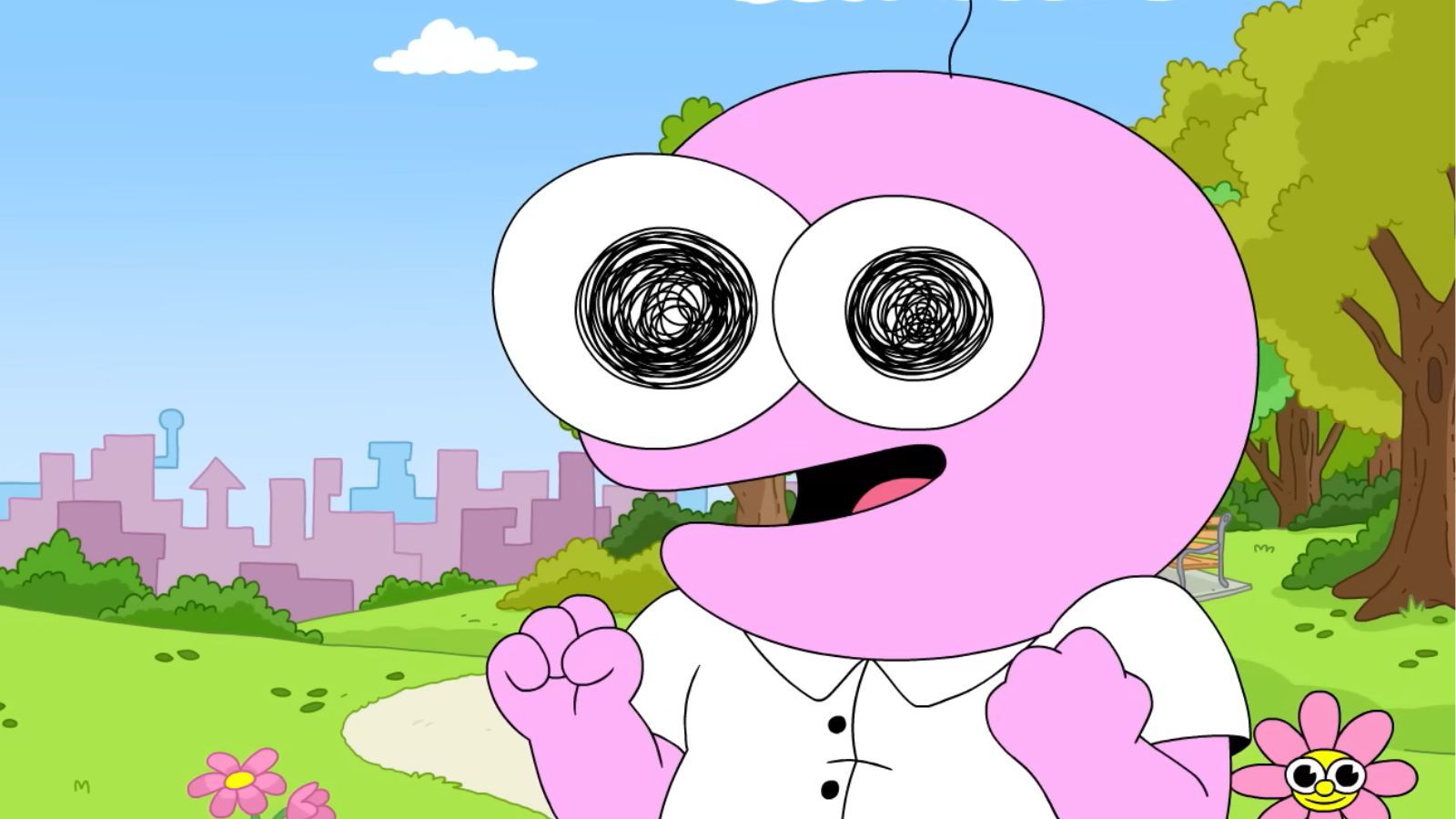
Smiling Friends may look like a harmless cartoon suitable for children, thanks to it's bright animations and short runtime, but do not let the visuals fool you. The Adult Swim sitcom is made for adults and leans hevaily into disturbing humor, shocking imagery and themes that are inappropriatte for a younger audience.
As a parent, if you're thinking of handing over the remote to your younger ones, here's everything you need to know about Smiling Friends and why it's unsuitable for children.
What is Smiling Friends about?
Head on down to a giant building shaped like a smiley face and you will find Smiling Friends, a charity that claims to exist for one simple reason: making people happy. On paper, the job sounds wholesome. Call the hotline, request help, and two employees will show up to brighten your day. In reality, things spiral fast.
The series follows Charlie Dompler and Pim Pimling, an odd couple duo tasked with cheering up some of the most deeply unwell people imaginable. Pim is relentlessly upbeat, fueled by blind optimism and good intentions. Charlie, on the other hand, is cynical, exhausted, and painfully aware that happiness is rarely that simple. Alongside coworkers Allan, Glep, and their deeply unsettling yet oddly sincere boss, Mr. Boss, the team stumbles into situations that veer from absurd to outright disturbing.
Created by Zach Hadel and Michael Cusack for Adult Swim, Smiling Friends blends surreal humor with wildly shifting animation styles, using chaos, discomfort, and dark comedy to expose how fragile the idea of happiness really is.
Why is Smiling Friends unsuitable for children?
Smiling Friends is unsuitable for children because it consistently blurs the line between cartoon comedy and genuinely disturbing adult content. While its bright animation and short episodes may look harmless, the show relies heavily on graphic violence, crude sexual references, and dark themes that are not appropriate for young viewers.
The show's biggest red flag is it's violence. As an adult animated show, characters are frequently shot, stabbled, impaled, eaten or ripped apart often with violence and gore. lthough it's done for comedic elements, it can still be disturbing and desensitizing for a younger audience as the imagery is quite explicit.
Another concern is the show's sexual content. The show repeatedly references genitalia, sexual acts and uncomfortable jokes about body. Although nudity is censored, characters often appear nude, joking about physical parts and suggestive situations. These moments are not educational or subtle, and younger viewers are likely to find them confusing or inappropriate.
Language also plays a role. Strong profanity appears frequently, especially in later seasons, with uncensored versions including repeated use of the f word and other explicit terms. Substance use is present as well, with characters shown drinking, vaping, or using drugs in a casual, comedic manner.
 Trending
Perhaps most troubling are the themes. Episodes revolve around suicide, demons, existential dread, and emotional dysfunction. One of the very first storylines involves a character holding a gun to his head. Even when framed humorously, these ideas require emotional maturity to process safely.
While Smiling Friends does contain occasional positive messages about empathy and helping others, they are buried under shock humor and extreme content. For these reasons, it is best suited for mature teens and adults, not children.


 Reply
Reply


