


'%20x='0'%20y='0'%20height='100%25'%20width='100%25'%20%0A%20%20%20%20%20%20%20%20%20%20xlink%3Ahref='data:image/jpg;base64,/9j/2wBDAAYEBQYFBAYGBQYHBwYIChAKCgkJChQODwwQFxQYGBcUFhYaHSUfGhsjHBYWICwgIyYnKSopGR8tMC0oMCUoKSj/2wBDAQcHBwoIChMKChMoGhYaKCgoKCgoKCgoKCgoKCgoKCgoKCgoKCgoKCgoKCgoKCgoKCgoKCgoKCgoKCgoKCgoKCj/wAARCAAGAAoDASIAAhEBAxEB/8QAFgABAQEAAAAAAAAAAAAAAAAAAAIH/8QAHhAAAgICAgMAAAAAAAAAAAAAAQIDBAARBSESMVH/xAAUAQEAAAAAAAAAAAAAAAAAAAAD/8QAGBEBAQADAAAAAAAAAAAAAAAAAQACITH/2gAMAwEAAhEDEQA/AMCs83YtrHHYVFeV1ZmjGh0Toay1pRyKHI7YeXv7jGA4homFe3//2Q=='%3E%3C/image%3E%3C/svg%3E)

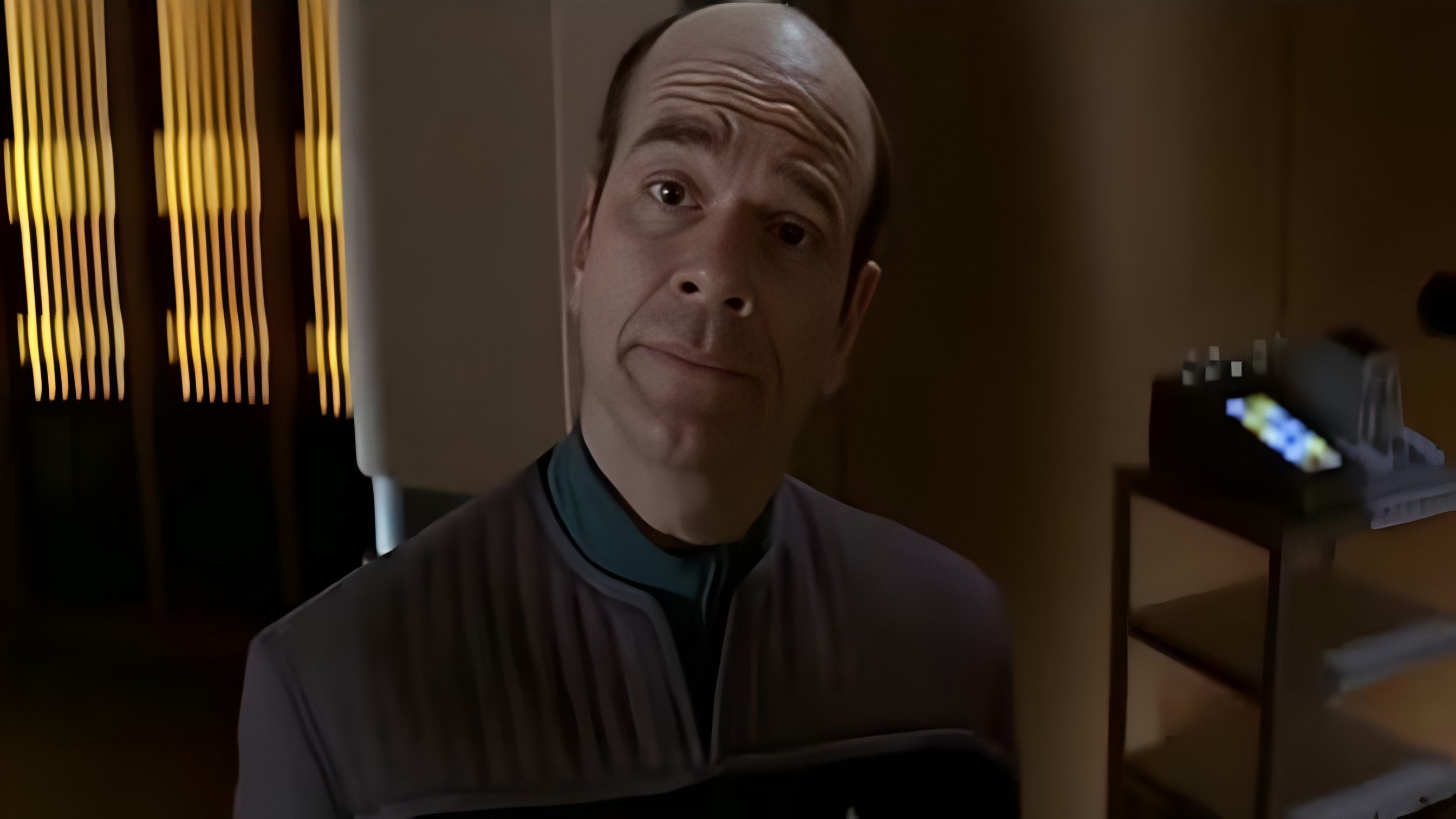
Trekkers, get ready! It looks like The Doctor, Emergency Medical Hologram of Star Trek: Voyager, is coming back to life. In Star Trek: Starfleet Academy, the new series, he will be portrayed by none other than Robert Picardo. For two decades, The Doctor has remained one of the most popular characters within the franchise, his character evolving from a holographic program to one full of humor, empathy, and moral complexity.
Now, fans get to see him again in a time far beyond that of the events of Voyager. The return is thrilling, but at the same time, it is not a mere looking back at history. Picardo has made it clear that even though the Doctor is still the same, the character has been given important changes to accommodate the far-future setting of the series.
Hence, the viewers will have a Doctor who is both known and transformed, a character that has gone through hundreds of years and gained the Voyager crew's experiences, which they had never even thought of.
The Doctor is back, the same character in Star Trek
Robert Picardo is going to play the Doctor again. Hence, this is the original EMH of Voyager, who is taking on the continuation of the story, which is known to be loved by the fans. There will be no reboot, no different version, and no “new Doctor” who is going to take the place of the one who was adored by the audience decades ago.
Within the Star Trek cosmos, this particular incident bears tremendous significance. The Doctor returns, and not merely as a side note or a cameo, but as a major part entwining the past Star Trek epochs and the future 32nd-century storyline. The link to the past honors the legacy of Voyager, and simultaneously, it gives rise to new storytelling techniques.
Conversely, the Doctor's return brings into focus the strange quality of Star Trek's imaginary universe: the holographic beings can endure for hundreds of years without the physical limitations of the organic life system. This longevity gives the writers the chance to take the stories to the far future while still having emotional and narrative ties to the past of the franchise.
32nd century setting
Star Trek: Starfleet Academy takes place in the 32nd century, a very long time after the events of Voyager. The Doctor’s survival in this timeline is completely reasonable because he is a hologram, a creature who cannot die of old age. It has been several centuries since he first joined the Voyager crew, and now he has to deal with a new era, new cadets, and new challenges.
This time jump is not just a means to unlock rare themes in Star Trek, but rather an invitation; a character way back from the very past who has lived through and seen all the changes of the society that has shifted from one to another. The Doctor's immortality is not simply a plot device; it gives the opportunity to Star Trek to raise its questions about identity, memory, and experience for one who has actually seen the coming and going of history over time.
The Doctor has evolved
Picardo has referred to this particular Dr as "deeper" than the character first seen in the Voyager. As per Newsweek,
"I would say that The Doctor is as we remember him, but deeper. The way he was, but more so, if that makes sense. He still certainly has his sense of humor, but there's a depth to him now, from that incredible sense of immortality, I think we would all agree it would be a blessing and a curse."
This characteristic denotes loss, growth, and experience over hundreds of years. Doctors will now be able to bear more overwhelming emotions than before, all along the lifetime of their interactions and relationships, and of course, as time passes.
The Doctor’s role in the academy
Even though the particular details of the plot are still secret, the early information indicates that The Doctor will be an integral part of the environment at Starfleet Academy, probably in the role of a mentor or a teacher. He might be able to conduct lessons for cadets, monitor their medical training, and then share his knowledge, which comes from centuries of experience.
Such a character would suit the Doctor's unbroken character arc, which at the very beginning of Voyager was again a purely medical program's point of view, but later was recognized as a sentient personality with empathy, humor, and even leading qualities.
The Academy's decision to give him a mentorship role not only enriches his medical proficiency but also the ethical, emotional, and philosophical aspects of his character.
Robert Picardo’s reprisal of the role of The Doctor in Star Trek: Starfleet Academy is surely one of the most thrilling occurrences in the recent history of Star Trek’s saga. The character of the original Voyager EMH is changing to the needs of a new epoch while staying true to the persona that the fans have loved.
Changes in speech, tone, and temperament signify the passage of centuries, thus making the Doctor a perfect fit for the 32nd-century world populated by cadets and the far-future Starfleet operations.
The details that remain unclear are few; among them are his age, memory continuity, and role that might be of full scope, but what is certain is that the Doctor’s presence brings with it both continuity and depth. His comeback is a carefully thought-out connecting link between the franchise’s past and its future.
 Trending
On top of that, the audience gets a chance to witness a timeless character tackle new issues, probe into human nature, and be a part of the young Starfleet of tomorrow. In the case of Star Trek fans, both old and new, this is a thrilling episode in the series; the Doctor has come back, changed, and is now prepared to leave a mark on the new Starfleet that will last long and be very memorable.


 Reply
Reply


