


'%20x='0'%20y='0'%20height='100%25'%20width='100%25'%20%0A%20%20%20%20%20%20%20%20%20%20xlink%3Ahref='data:image/jpg;base64,/9j/2wBDAAYEBQYFBAYGBQYHBwYIChAKCgkJChQODwwQFxQYGBcUFhYaHSUfGhsjHBYWICwgIyYnKSopGR8tMC0oMCUoKSj/2wBDAQcHBwoIChMKChMoGhYaKCgoKCgoKCgoKCgoKCgoKCgoKCgoKCgoKCgoKCgoKCgoKCgoKCgoKCgoKCgoKCgoKCj/wAARCAAGAAoDASIAAhEBAxEB/8QAFgABAQEAAAAAAAAAAAAAAAAAAAMH/8QAHhAAAwABBAMAAAAAAAAAAAAAAQIDAAQREjFCcYH/xAAVAQEBAAAAAAAAAAAAAAAAAAABA//EABcRAQEBAQAAAAAAAAAAAAAAAAECABH/2gAMAwEAAhEDEQA/AMP092o0W1KqqqSQZEhqcT5n6B6GTvK9rUoroiuxYKOWygnrvGMaWa4a0QVAu//Z'%3E%3C/image%3E%3C/svg%3E)

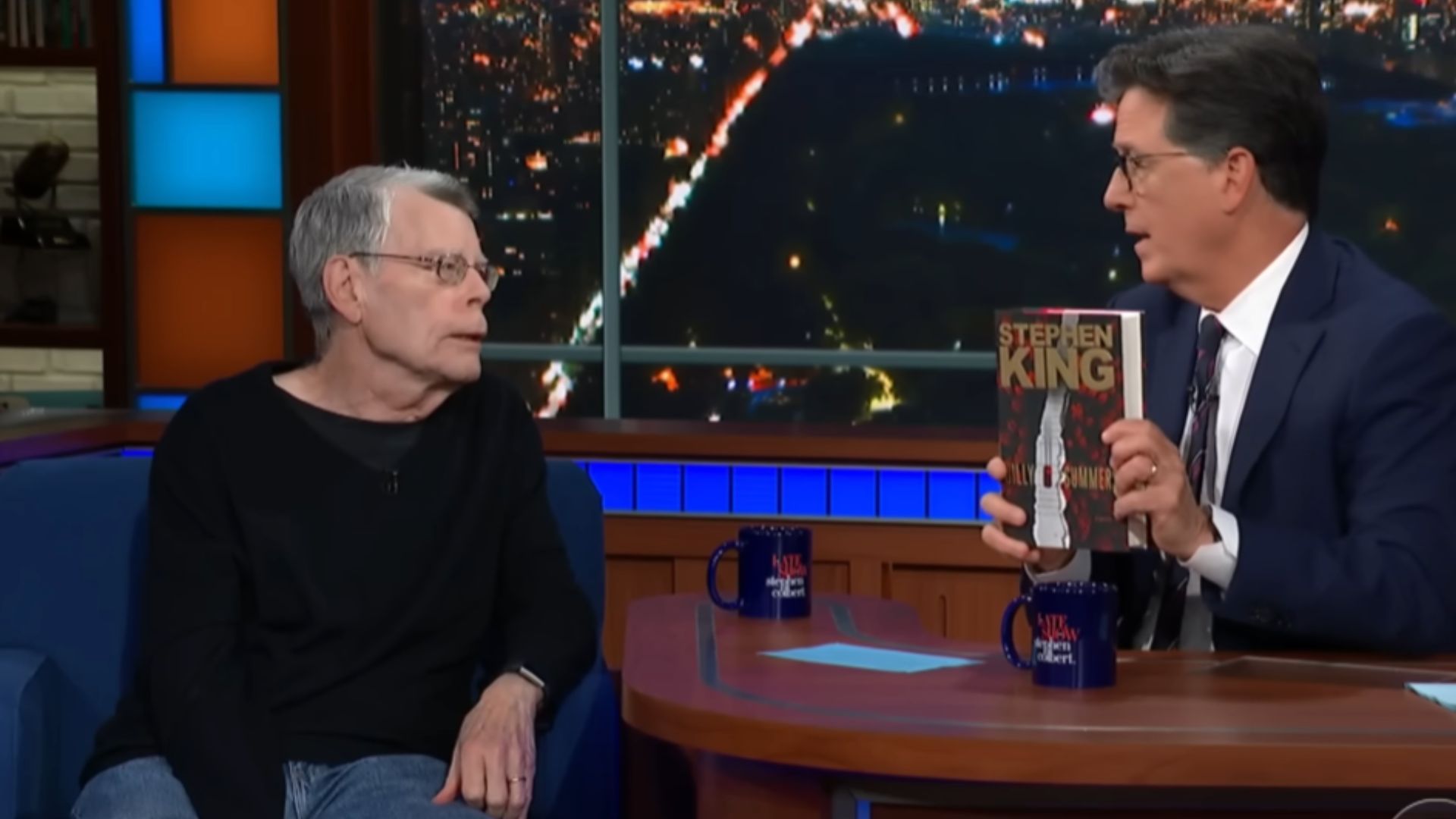
Stephen King rarely ranks his own stories. He writes them, sends them out, and moves on to the next. But on The Late Show with Stephen Colbert in 2021, he broke that rule. Colbert asked him to pick the top five things he ever wrote. King didn’t overthink it. He just said them straight. And the first name he dropped was Survivor Type.
King laughed a little while he explained the plot: A surgeon, a tiny island, and... Heroin. A man cutting pieces of himself to stay alive. And then he joked that the story could pass as a “Disney cartoon.” Only King would pitch cannibalism during late-night TV and make the room laugh.
After that, he listed the rest: Misery, Lisey’s Story, The Stand, and The Body. A blend of heavy hitters and quiet favorites. If you read King often, the list makes sense. It shows where his mind goes when he thinks about his own work.
Why does Stephen King's Survivor Type stand out so much?
Stephen King's Survivor Type came out in the early '80s. First in an anthology, then again in Skeleton Crew. Horror fans treat it like a rite of passage. Anyone who reads King eventually reaches it, winces, and says, “Okay… wow.”
It is one of those stories people bring up when they talk about the darkest stuff King ever wrote. It is not supernatural. No ghosts, no storms. just a man alone with his own choices. The story is written like a diary entry. Richard Pine, a disgraced surgeon involved in drug smuggling, ends up stranded.
And because he understands the human body better than most, he also understands exactly what he can cut, stitch, or amputate to stay alive a little longer. In the interview, Stephen King remarked:
"I think maybe my favorite short story would be called 'Survivor Type,' which is about a physician who gets stranded on a little island, and he's smuggling heroin. And he's starving, so he eats himself piece by piece. That is family-friendly, yes. That could be a Disney cartoon."
That cold, medical detail makes the story hit harder than any monster. King even said once that the story might have gone “a little too far.” And he wasn’t joking.
Oddly enough, Hollywood still stays away from it
A lot of Stephen King’s stories get adapted. Some become blockbusters. Others turn into TV shows. Survivor Type sits in its own corner and has one animated adaptation in the Creepshow series, but that’s about it. And the reason is almost obvious if you know how studios think. The story has only one character. He barely speaks to anyone.
The whole thing takes place on a tiny island with no real way to “open up” the world visually. And then there’s the cannibalism. The camera can’t look away. So the moment you try to adapt it, you force the audience to face the worst parts head-on. That scares off studios faster than a ghost story ever could.
Stephen King fans ask for an adaptation all the time, but honestly, some stories work better on the page. This might be one of them.
What do Stephen King's picks say about his taste?

It is interesting as Stephen King chose Survivor Type and The Body in the same list. Both are grounded. They lean more on psychology and memory than on shock. For someone known for killer clowns and haunted hotels, his personal favorites look almost quiet on the surface. But beneath that, they cut deep.
It shows something about King that long-time readers already know: he loves stories where people face themselves. Strip away the monsters, and you see a writer who cares about human fear, not just jump scares.
Why does the story still work best on the page?
Many horror fades once you explain them. But Survivor Type stays in your head because you hear Pine’s voice. You feel his denial, his ego, his slow break into madness. You picture things you don’t even want to picture. And since your own mind fills the gaps, the horror feels more private.
 Trending
Put it on a screen, and it becomes literal. Too literal. The shock would overpower the story. The imagination disappears, and what’s left might look like simple gore, which is not the point at all.
That’s probably why the story remains mostly untouched. Even fans say it's one of the most disturbing things King ever wrote. Some readers even argue it should stay exactly where it is: Tucked inside a book, waiting for the next brave person to open the page.


 Reply
Reply


