


'%20x='0'%20y='0'%20height='100%25'%20width='100%25'%20%0A%20%20%20%20%20%20%20%20%20%20xlink%3Ahref='data:image/jpg;base64,/9j/2wBDAAYEBQYFBAYGBQYHBwYIChAKCgkJChQODwwQFxQYGBcUFhYaHSUfGhsjHBYWICwgIyYnKSopGR8tMC0oMCUoKSj/2wBDAQcHBwoIChMKChMoGhYaKCgoKCgoKCgoKCgoKCgoKCgoKCgoKCgoKCgoKCgoKCgoKCgoKCgoKCgoKCgoKCgoKCj/wAARCAAGAAoDASIAAhEBAxEB/8QAFgABAQEAAAAAAAAAAAAAAAAAAAYH/8QAIRAAAQMEAQUAAAAAAAAAAAAAAQACAwQFETESBhYhMrH/xAAVAQEBAAAAAAAAAAAAAAAAAAACA//EABkRAAMBAQEAAAAAAAAAAAAAAAECAwAEIv/aAAwDAQACEQMRAD8AgLh153BbjDVWmkLM8GxtAY12NF3EAn2HjRwsrnp8TyAHTj9REJzVF8jU6L0pQljv/9k='%3E%3C/image%3E%3C/svg%3E)

Stranger Things Season 5 does something very sneaky and very smart. It turns Season 2 of the show into the emotional and story backbone of the entire show. Not Season 1. Not Season 4. Certainly not Season 3. But, Season 2.
The latest episodes in Stranger Things Season 5 make it clear that almost everything happening now was planted years ago in small, weird, easy-to-miss moments. The tunnels, Will’s visions, the hive mind, even Vecna’s control system. All of it traces back to that one season that once felt like a messy middle chapter.
So yes, Season 2 matters the most because it built the map, the rules, and the emotional damage that Stranger Things Season 5 is now cashing in on.
What looked like scattered ideas back then now feels like a blueprint. The show is not circling back randomly. It is following a trail it quietly laid down in 1984. And now, in Stranger Things Season 5, we finally see where that trail was always leading.
Season 2 built the rules of the Upside Down, and we see it now in Stranger Things Season 5
Before Stranger Things Season 2, the Upside Down felt like a spooky place that things accidentally fell into. A monster here. A missing kid there. It felt chaotic and random. Season 2 changed that completely. It didn’t just add danger. It added structure. It gave the Upside Down logic, behavior, and a system.

That system being in question is the hive mind. This idea that everything in the Upside Down is linked through one shared network is the single most important concept the show ever introduced. It changed the Upside Down from a haunted house into a living organism.
Creatures were no longer acting alone. Vines, Demodogs, spores, and possessed people were all part of the same body. Season 2 made the Upside Down feel like one giant creature instead of a place.
That shift is exactly why Stranger Things Season 5 works the way it does. Vecna doesn’t feel like just another villain because the show already taught us how control works in that world. Season 2 trained us to understand possession, shared senses, and how one mind can move many bodies. So when Vecna takes control later, it feels like a natural escalation instead of a new idea dropped in at the last minute.
The tunnels are another huge piece of this foundation. They were not just creepy visuals. They were proof that the Upside Down could physically grow into Hawkins. The tunnels were not holes dug by hand. They were living extensions of that other world. They expanded, branched, and reacted like veins spreading through soil. Season 2 showed that the Upside Down is not content staying hidden. It wants to spread, link, and connect.
By the time Stranger Things Season 5 shows Vecna trying to merge worlds more directly, the groundwork is already there. The audience already understands that the Upside Down grows like a disease and thinks like a brain. Season 2 didn’t just add monsters. It explained how the infection works.
That is why Season 2 now feels less like a middle chapter and more like a manual. It quietly taught us the rules of this universe so that the final season could play inside them without stopping to explain itself.
Will Byers became the bridge long before anyone noticed
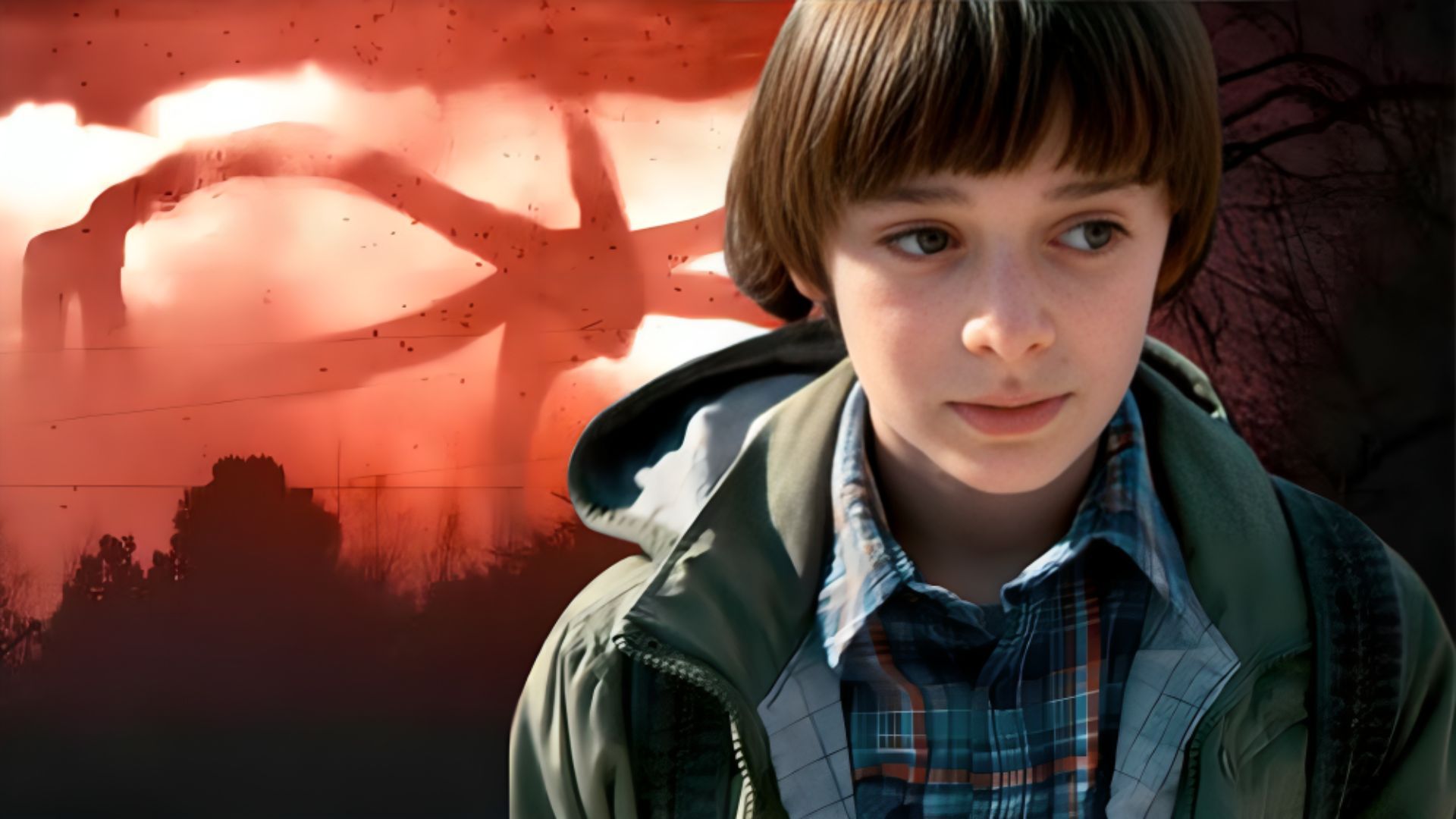
Season 2 did something emotionally heavy that only now gets its full meaning. It turned Will from a victim into a doorway.
At the time, it looked like trauma. Nightmares. Visions. Fear. But Stranger Things Season 5 reframes all of that. Will was not just hurt by the Upside Down. He was wired into it.

His possession wasn’t a one-time event. It was the moment he became part of the hive mind’s circuitry. He became an antenna. A receiver. A living sensor plugged into another world. That is why he had “now memories.” That is why he could see what the Mind Flayer saw. That is why he could feel what the vines felt and later what Vecna feels.
Stranger Things Season 5 confirms that this connection never went away. It deepened. Will didn’t heal out of it. He grew into it. He learned to exist with it.
This makes Season 2 feel like the emotional core of the entire story. Will wasn’t just the kid who went missing. He became the human doorway through which the Upside Down learned about Hawkins and Hawkins learned about the Upside Down.
Even the tunnels tie back to him. His drawings were not imaginary. They were maps. His hand didn’t invent them. His mind received them. Stranger Things' Season 5 reveals that Vecna used Will as a builder, reframing those crayon pages into something chilling. The invasion was not only physical. It was psychological. It entered through a child’s mind before it ever entered the town’s soil.

Hence, Stranger Things Season 5 treats Will as essential, not just emotionally but strategically. He is a sensor, a spy, and sometimes a weapon. And that only works because Season 2 planted that connection carefully, slowly, and quietly.
What once looked like weakness is now revealed as access. What once looked like damage is now revealed as a channel.
Vecna’s rise in Stranger Things Season 5 & 4 only makes sense because Season 2 made the control feel normal
When Vecna finally steps into the story as the face of evil in Season 4, he does not feel like something entirely new crashing into the narrative. He feels familiar, and that familiarity is the point. The show had already trained us to understand what control looks like, what possession looks like, and what it means for a mind to spread itself across other bodies.

Season 2 normalized the idea that power in the Upside Down is not about physical strength but about reach. Whoever controls the network controls everything inside it.
Season 2 introduced this through the Mind Flayer, not as a monster that simply attacks, but as something that sees through others, listens through others, and moves through others. Will was not just attacked; he was used.
The Demodogs were not just wild animals; they were extensions. The vines were not decoration, they were nerves. This turned the Upside Down into a thinking system instead of a random horror space, and that shift is what made Vecna possible later.
So when Season 4 and Stranger Things Season 5 show Vecna commanding creatures, moving through minds, and shaping events from a distance, it does not feel like the story changed direction. It feels like the story finally revealed who was sitting at the center of a system we already understood. Vecna does not invent control. He inherits it. He learns it. He occupies a position that was always implied to exist.
Even the debate about whether Vecna truly rules the hive mind or merely uses it only exists because Season 2 told us the hive mind came first. The shared consciousness of the Upside Down existed before Vecna ever touched it. That means he did not build the machine. He found it. He bent it. He figured out how to drive something ancient and vast that was already humming beneath the surface.
This is what makes Vecna feel layered instead of flat. He is not the beginning of the darkness. He is the shape it takes when someone learns how to aim it. That distinction gives the story depth. Evil is not created suddenly. It is discovered, studied, and then weaponized.
Season 2 gave the Upside Down its nervous system. Stranger Things Season 5 shows us what happens when someone finally learns how to plug into it fully. That is why Vecna feels less like a final boss and more like a consequence.
Without Season 2, Vecna would feel like an upgrade added late in the game. With Season 2, Vecna feels like the natural endpoint of a system that was always moving toward control, connection, and domination.
Stranger Things Season 2 shaped the emotional map of the ending
Stranger Things has never really been about monsters. The monsters are just the pressure that forces people to change. Season 2 is where that change becomes permanent. It is where fear stops being a moment and becomes a condition. That emotional shift is what the final season now depends on.
Will does not just survive the Upside Down. He carries it. He grows up knowing his body and mind are not entirely his own anymore. Joyce does not just save her son. She learns that safety is fragile and temporary. Hopper does not just fight a monster. He accepts that protecting children means stepping into darkness again and again with no guarantee of winning.

Mike learns that loving someone means waiting, worrying, and sometimes watching them disappear. Steve learns that strength is not about being loud or cool, but about staying when things get quiet and scary. Max learns what it means to enter a group not as a hero but as someone who needs one. These are not side arcs. These are the emotional tools the show now uses to tell its ending.
Season 2 is when the story stops being about curiosity and becomes about consequences. Before that, the Upside Down was something to investigate. After that, it was something that leaves marks.
That is why Stranger Things Season 5 feels heavy even in still moments. The weight is not from explosions. It is from memory. It is from characters who have already lost something once and are terrified of losing again. It is from people who know exactly how bad things can get.
Season 2 taught the characters how much pain the world can hold. Stranger Things Season 5 shows what it means to live with that knowledge.
That is the emotional math of the finale. You cannot close a story about trauma without returning to where trauma first became a normal part of life.
Stranger Things Season 5 does not elevate Season 2 by coincidence. It does it because that season quietly built everything the show is now using. The rules of control. The shape of the threat. The emotional cost of survival. The way the Upside Down thinks. The way people change when they survive it.
Season 2 turned Will into a bridge, Hawkins into a battlefield, and fear into a language the story never stopped speaking. It transformed the show from a mystery into a mythology, and from a horror story into a story about damage, memory, and endurance.
What once felt like an awkward middle chapter now feels like the spine of the entire series. Stranger Things Season 5 does not replace Season 2. It finally explains it.
Season 2 was never the detour. It was the road.
 Trending
Stay tuned for more updates & breakdowns on Stranger Things Season 5.
Also read: How does The First Shadow set up Stranger Things Season 5? Explained in detail


 Reply
Reply


