


'%20x='0'%20y='0'%20height='100%25'%20width='100%25'%20%0A%20%20%20%20%20%20%20%20%20%20xlink%3Ahref='data:image/jpg;base64,/9j/2wBDAAYEBQYFBAYGBQYHBwYIChAKCgkJChQODwwQFxQYGBcUFhYaHSUfGhsjHBYWICwgIyYnKSopGR8tMC0oMCUoKSj/2wBDAQcHBwoIChMKChMoGhYaKCgoKCgoKCgoKCgoKCgoKCgoKCgoKCgoKCgoKCgoKCgoKCgoKCgoKCgoKCgoKCgoKCj/wAARCAAGAAoDASIAAhEBAxEB/8QAFgABAQEAAAAAAAAAAAAAAAAAAAYH/8QAIRAAAgAFBAMAAAAAAAAAAAAAAQIAAwQFEQYSEzEhI2H/xAAVAQEBAAAAAAAAAAAAAAAAAAADBP/EABgRAAIDAAAAAAAAAAAAAAAAAAADASEx/9oADAMBAAIRAxEAPwCL1dcqi16mobZSO6b1DNN5WJ9gZTgdDA6jJ5glrMZd81sEjJPk/YQgV3BSzT//2Q=='%3E%3C/image%3E%3C/svg%3E)

Homeland is located in the world of secrecy, troublesome power, and decisions not made under public inspection! Starting from Season 2, Homeland presents Dar Adal, a CIA high-ranking officer whose power can be felt most in the agency’s shadowy and confidential areas.
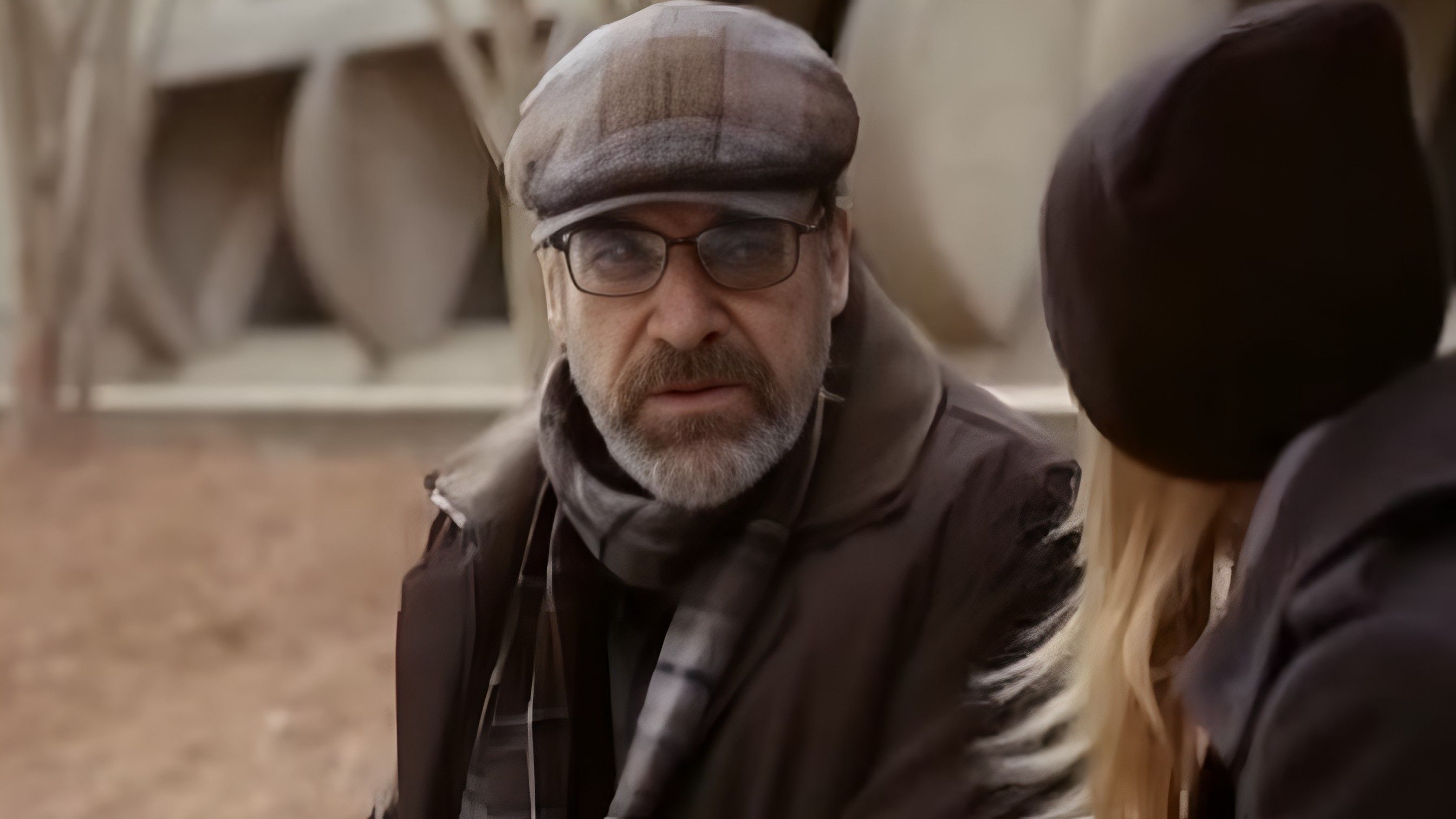
So, who is Dar Adal in Homeland? He is a senior intelligence officer very much in the CIA black ops, marked for his use of discretion through clandestine action, political pressure, and strategic co-opting rather than public leadership.
To the viewers who are trying to decipher how power operates in the realm of Homeland, Dar Adal emerges as a major character to follow! The role that F. Murray Abraham plays is of a person who is intentionally uncommunicative and inscrutable.
He is not put in the position of a hero or a typical villain, but as an institutional actor, someone determined by intelligence systems where secrecy, deniability, and control matter more than public accountability.
The genesis of Dar Adal in Homeland Season 2
Dar Adal appears for the first time in Homeland Season 2, causing the plot to extend not just to the counterterrorism units and field agents but also to the CIA’s covert command structure. His presence marks a change in the show towards uncovering the process of intelligence being made at the highest classified levels.
Though Homeland suggests that Dar Adal has been a part of the intelligence community for quite some time, the series does not go into detail regarding his personal life or the duration of his pre-show service. What is very clear is his seniority, trust within the institution, and the ability to influence within the classified CIA operations.
Role within CIA black operations
In the series Homeland, Dar Adal is part of the CIA's Special Activities Division (SAD), the unit handling paramilitary and covert operations. He acts as a senior supervisor for black operations instead of being a public agency leader. His power is connected with deniable missions, off-the-books employees, and strategic intelligence activities, and is influenced by them.
However, it is crucial to note that Homeland does not cast Dar Adal as the future Director of the CIA. For the short period of Season 6, he plays the role of the head of the CIA, amidst the political turmoil and leadership imbalance. This role is crisis-driven, temporary, and not a long or controversial leadership tenure. In Season 7, his power is greatly diminished.
Institutional thinking and decision-making
Dar Adal's behavior in Homeland is consistently viewed through the lens of institutional reasoning, not personal beliefs. He sets operational results, intelligence power, and agency safety at the top of his list. The plot portrays him as a person who considers confidentiality and his presence as the backbone of national security.
Instead of emphasizing moral philosophy, Dar Adal mostly uses procedure, classification, and necessity. Homeland utilizes this aspect of his character to question how intelligence services manage to argue for ethically difficult actions without portraying them as individual choices.
Relationship with Saul Berenson
The long-standing professional connection between Dar Adal and Saul Berenson is the basis of his character in the show, Homeland. Both of them have a background of secretive work together, including some operations in Nairobi. All these make them feel close to each other, trust each other, and even have clashes again and again.
Saul in the show is sometimes depicted as a cautious person who prefers to deal with things through diplomacy and internal reform, while Dar Adal is the one who encourages the application of harder intelligence measures. Their differences are more about the CIA rather than themselves personally. This is how the show Homeland utilizes this conflict in portraying the ideological split among the topmost intelligence leaders.
Influence over covert missions
Dar Adal, being a senior person involved in black operations, has a tremendous amount of influence over the covert missions in the series Homeland. He is the one who gives the green light and also determines the nature of the missions that involve a lot of risks, very little supervision, and denial of any involvement.
The show does not try to glorify this power. On the contrary, it reveals how the decisions taken by the top management have a direct impact on the people working in the field. The part that Dar Adal plays indicates how the command-forwarding of intelligence translates policy into actions that are sometimes invisible to the public.
Relationship with Peter Quinn
Peter Quinn was a major character in Dar Adal’s life, and their interaction was one of the main events in Homeland. Although Dar did not add Quinn to the CIA's list of agents, he still managed to pull the strings to a greater extent than anybody else in the direction of Quinn's work in Special Activities.
Quinn was sent on perilous missions without a break, and they all connected to Dar Adal’s strategic goals. This situation exposes the fact that secret operatives are sometimes treated like disposable objects in the covert system. The series presents this relationship as institutional rather than personal, highlighting systemic pressures over individual motives.
Secrecy and moral ambiguity
The presence of moral ambiguity is one of the main features of Dar Adal's character in Homeland. He mainly operates in secret environments where the actions are judged internally and rarely come under public scrutiny.
The series does not make him look like a totally immoral character, although Schmidt is one of the unflattering ones. On the contrary, it is through his character that the system of intelligence is shown to be one in which the regulation of difficult moral choices is built in. His role pushes the audience to look at the hidden side of politics, where accountability and responsibility are reshaped.
Dar Adal's political maneuvering and President Keane
Dar Adal's power in Homeland reaches into the domestic political scene, especially during the sixth season. He gets caught up in a tussle over the newly elected President Elizabeth Keane that is planned based on intelligence, and thus gets involved in political maneuvering surrounding her.
Such actions confirm that the intelligence community can sway political outcomes during turmoil. The show, while exposing this arc, keeps the focus on the ramifications rather than the justification and shows how the might of the intelligence world can come into direct conflict with democracy.
Power erosion and later seasons
By the seventh season, Dar Adal's authority begins to suffer a significant decline. His influence is severely limited and disturbed by the investigations, political backlash, and the institution's pushback. The situation is such that he is no longer enjoying the same level of freedom and protection that he had in the past.
Dar Adal's involvement in strategic maneuvering continues, but he gets to play the role of a constrained actor rather than the dominant authority. The series does not portray it as redemption or punishment but rather as the natural outcome of a changed political environment and the cumulative decisions made.
The performance of F. Murray Abraham
F. Murray Abraham's interpretation of Dar Adal in Homeland is restricted and regulated. He does not use strong feelings but instead communicates with gentle delivery and controlled presence.
This selective performance reinforces Dar Adal’s character as a governmental institution rather than a hot, dramatic figure. In the series, his quiet power is very much like the real-life situation when such powers are exercised in a discreet manner.
Dar Adal is significant in Homeland as he is the one who brings about the realization of the intelligence power's concealed operation. His character is not developed to generate either admiration or dislike, but to demonstrate the structural reality of the hidden power.
 Trending
Homeland, through Dar Adal, scrutinizes the topics of secrecy, institutional control, and long-term consequences with a neutral perspective. His character compels the audience to go through the process of examining how unseen decisions shape political outcomes, intelligence failures, and human suffering, most of the time without any clear moral resolution.
Also read: What happened to Dana in Homeland? Character arc explored in depth


 Reply
Reply


