


'%20x='0'%20y='0'%20height='100%25'%20width='100%25'%20%0A%20%20%20%20%20%20%20%20%20%20xlink%3Ahref='data:image/jpg;base64,/9j/2wBDAAYEBQYFBAYGBQYHBwYIChAKCgkJChQODwwQFxQYGBcUFhYaHSUfGhsjHBYWICwgIyYnKSopGR8tMC0oMCUoKSj/2wBDAQcHBwoIChMKChMoGhYaKCgoKCgoKCgoKCgoKCgoKCgoKCgoKCgoKCgoKCgoKCgoKCgoKCgoKCgoKCgoKCgoKCj/wAARCAAGAAoDASIAAhEBAxEB/8QAFgABAQEAAAAAAAAAAAAAAAAAAAYH/8QAIBAAAgEEAQUAAAAAAAAAAAAAAQIDAAQRIQUSMTJB4f/EABUBAQEAAAAAAAAAAAAAAAAAAAAC/8QAGxEBAAICAwAAAAAAAAAAAAAAAQARAgMhYbH/2gAMAwEAAhEDEQA/AMS5i/itbbjDEriSOIqz9K53vIIwe3o1PS38TyOxj2ST4/aUoAFEvbblz14T/9k='%3E%3C/image%3E%3C/svg%3E)

Stranger Things wrapped up its run with a two-hour finale titled The Rightside Up, which hit Netflix on December 31, 2025.
That’s the end of a nearly ten-year ride that started back in July 2016. The last season came out in three chunks: Volume 1 landed on November 27 with four episodes, Volume 2 showed up on Christmas Day with three more, and then the big finale dropped on New Year’s Eve.
Set in the fall of 1987, this last episode throws the Hawkins gang into their showdown against Vecna and the Mind Flayer. They head into the Abyss, trying to save the kidnapped kids and blow up the Upside Down for good.
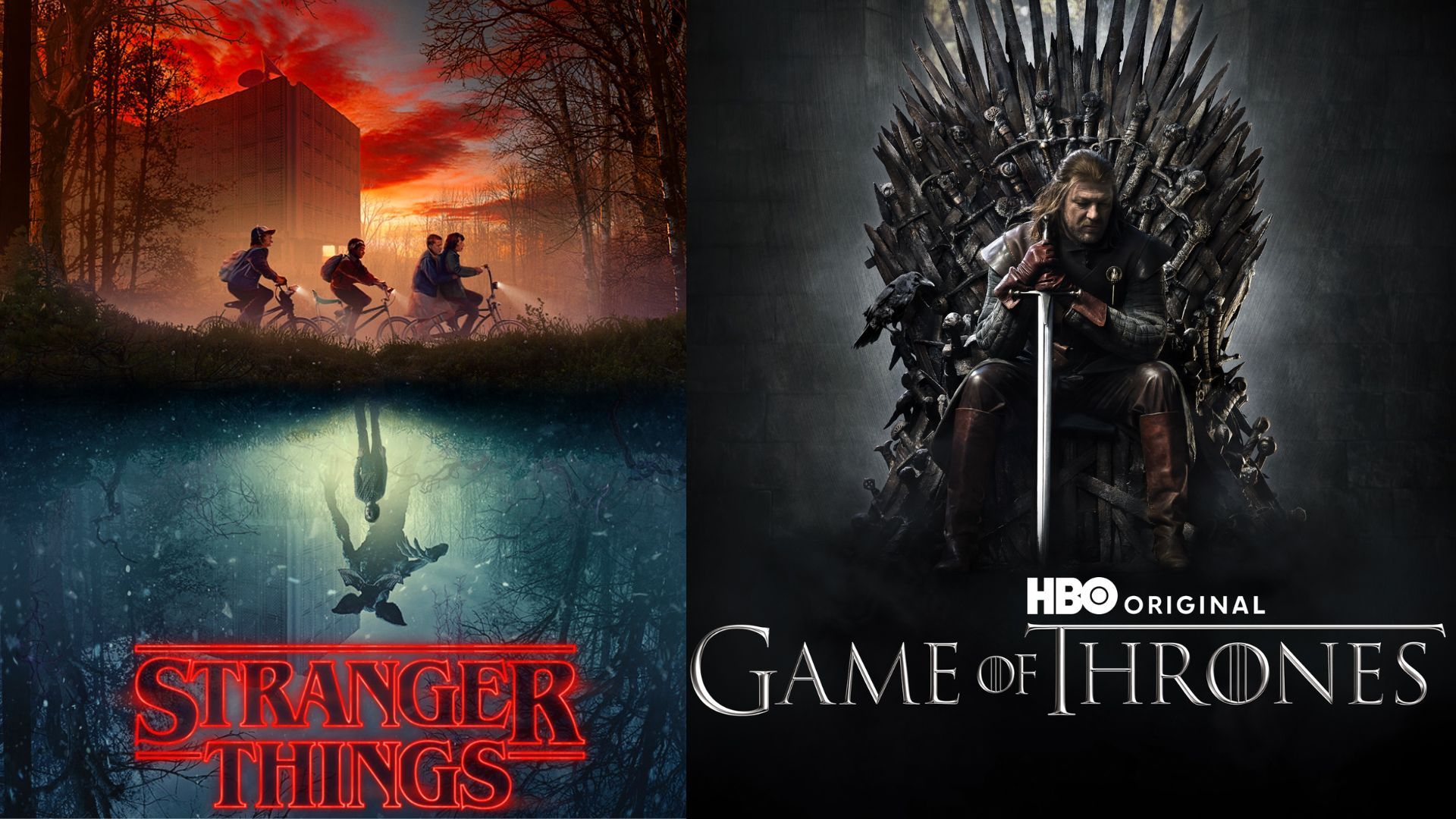
As soon as it aired, people started comparing the finale to Game of Thrones’ much-criticized ending, not in a good way. Fans and critics weren’t shy about their disappointment.
How Stranger Things repeated Game of Thrones’ fatal mistakes

The similarities between the two finales go way beyond low ratings. Both Stranger Things and Game of Thrones started as cultural events before their downfall in the last few hours. Game of Thrones Season 8 scored pathetically low 55% among critics and even lower 30% among viewers on Rotten Tomatoes, a drastic drop in approval of the show that had scored 90% or above on seven of its previous seven seasons.
According to The Ringer, the Game of Thrones finale “was akin to a group of children taking their last vicious swings at a frail piñata,” which a Change.org petition to remake the season with competent writers spawned more than 1.8 million signatures.
The same happened with Stranger Things. Season 5 volume 2 met with heavy criticisms, with Episode 7, The Bridge, being the lowest-rated episode ever in the series history. It got 5.6 out of 10 ratings on IMDb. The finale episode itself ranked as one of the lowest-rated episodes, with 7.9 out of 10, from 57,000 reviews. According to Screen Rant, social media broke out with comparisons of Game of Thrones, with one fan saying that “Game of Thrones has some competition now.”
The alarming trends were also identified by the critical consensus. IndieWire critic Ben Travers gave the finale a C+, saying that it “plays out beat by predictable beat,” adding that while one can feel contentment in a story ending toward the end, it simply lacks the charm to be “remembered in the days, weeks, and years to come.”
Brian Tallerico of RogerEbert.com gave it 2.5 out of 4 stars, admitting that even though the final half-hour is hard to ignore, the resolution nevertheless “falls victim to some of the issues that plagued the entire inferior season.”
The most recurring criticism was the lack of meaningful consequences, such as in the Game of Thrones finale. As pointed out by Giant Freakin Robot, it was safe throughout, and the showrunners did not want to kill major characters regardless of the situation. The only notable death was that of Kali, a minor character from the much-hated Season 2 Episode, The Lost Sister. Such unwillingness to accept consequences deprived the finale of dramatic impact.
Game of Thrones final episode, titled The Iron Throne, was released on May 19, 2019. Since in the penultimate episode, Daenerys Targaryen burnt King’s Landing to ashes, the finale was concerned with the consequences. Jon Snow, who loved Daenerys and hated her actions, finally kills her with a knife. Her body was found by Drogon, the dragon of Daenerys, who emitted a torturous scream and melted the Iron Throne down to molten metal and flew away with her body.
Although the concept of Daenerys becoming a tyrant might have been successful, critics believed that Game of Thrones did not give enough explanation as to why she burnt King’s Landing. It was not clear how she got to the character point of being a tyrant. Her madness came out of the blue and was unwarranted following seven seasons of her character being depicted as a liberator.
The Game of Thrones ending was not only disappointing, but it also hurt previous seasons by making years of action fruitless. Why bother about the parentage of Jon when it does not matter? What is the point of spending time on White Walker threat when they can be beaten with ease? Why do we root for Daenerys in her whole character arc, only to end up as a villain turn?

That’s what happened in Stranger Things, too. The villains no longer made sense. Vecna and the Mind Flayer used to feel invincible, as nothing could get to them. Then, suddenly, they changed into pushovers. The Mind Flayer was meant to be frightening, but was defeated by a group of children with flare guns and slingshots.
Vecna, who initially appeared to be threatening, was incapable of dealing with a child and ended up losing his head to Joyce Byers using an axe. It is a massive decline from the nightmare that they had been creating in the past few seasons.
The finale had the same problem as Game of Thrones: too much flash, not so much story. It all became a CGI extravaganza, and rather than actual character interaction, you had more spectacle. The first half dragged, too. It consisted largely of characters walking around, chatting about plans, those let’s catch up as we walk to the lair of Vecna scenes that did nothing but eat time. Nothing novel, nothing exposing, just filler.
But what is the strangest thing? Some characters simply disappeared. SlashFilm mentioned that Murray Bauman and Vickie Dunne had essentially “evaporated along with the Upside Down,” and neither was referred to again during the 40-minute wrap-up.
Even Dr. Kay, the big villain played by Linda Hamilton, simply came to pass. Eleven dies, Dr. Kay is horrified, and then that is all with her. For a character played by an ’80s action legend, that’s pretty lazy. Eventually, it was as though the writers were unable to follow their own cast.
Stranger Things ended up in the same quagmire as Game of Thrones, a show that builds the mysteries but is not willing to provide actual answers. Fans noticed. On the Internet, there are entire lists of questions that the show did nothing to resolve: What was the deal with that mysterious briefcase? Why did some of the props continue to change colour? Will said stuff that did not even make sense in the story. And what happened to Dr. Owens? In Season 4, he had been chained to a table, and thereafter, we have not seen him.
 Trending
The fact that the show relied on external media only complicated things even more. In case you missed the stage-play spin-off, you were out of luck. All of a sudden, large portions of Stranger Things Season 5, particularly that about Henry Creel and his connection to the Mind Flayer, simply did not add unless you had seen a play that most people never got an opportunity to see.
Then there is a plot hole that cannot be overlooked. In Season 2, the characters were horrified that the Mind Flayer would stalk them via Will Byers. Thus, they did not keep him in the loop. In Season 5, Will is at the center of all the talks concerning fighting Vecna, although he is still attached to the Mind Flayer. No one even attempts to whisper, no one is in any way anxious, no one even mentions it. It is as though the writers lost their story.


 Reply
Reply


