


'%20x='0'%20y='0'%20height='100%25'%20width='100%25'%20%0A%20%20%20%20%20%20%20%20%20%20xlink%3Ahref='data:image/jpg;base64,/9j/2wBDAAYEBQYFBAYGBQYHBwYIChAKCgkJChQODwwQFxQYGBcUFhYaHSUfGhsjHBYWICwgIyYnKSopGR8tMC0oMCUoKSj/2wBDAQcHBwoIChMKChMoGhYaKCgoKCgoKCgoKCgoKCgoKCgoKCgoKCgoKCgoKCgoKCgoKCgoKCgoKCgoKCgoKCgoKCj/wAARCAAGAAoDASIAAhEBAxEB/8QAFQABAQAAAAAAAAAAAAAAAAAAAAb/xAAfEAACAgIBBQAAAAAAAAAAAAABAgMRAAQhBRIiMUH/xAAUAQEAAAAAAAAAAAAAAAAAAAAD/8QAFxEBAQEBAAAAAAAAAAAAAAAAARIAEf/aAAwDAQACEQMRAD8AiTt7MOv0qWeQTQTQLOVYeVL3GjXu+BlYG1HAeQuHblgsC0D9rnGMSTuOmR3/2Q=='%3E%3C/image%3E%3C/svg%3E)

Castle Rock takes the bull by the horns in Episode 3, and right away, it's about the past! The third episode of Castle Rock Season 1, “Local Color,” turns from a wide mystery to personal accountability, memory, and consequences. Rather than a situation full of danger, the series reduces its range, focusing on one character and one irreversible action!
This episode is quieter, but still just as disturbing! Episode 3 gradually increases the suspense through guilt, repetition, and emotional strain instead of directly showing horror. The outcome is an episode that stays with you, making the audience uncomfortable as they go through the realities without the convenience of easy answers.
New episode and narrative change in Castle Rock
The episode "Local Color" is the third episode of Castle Rock Season 1. The original airing date was July 25, 2018. It came after the discovery of the anonymous prisoner referred to as The Kid and Henry Deaver's return to the town. This episode deliberately slows down the narrative pace. Episode 3 favours character history instead of plot advancement.
This change sets up a pattern that the series will keep on doing. The show series is not in a hurry to solve mysteries and instead focuses on how past events keep impacting the present.
Molly Strand as the Episode's central character
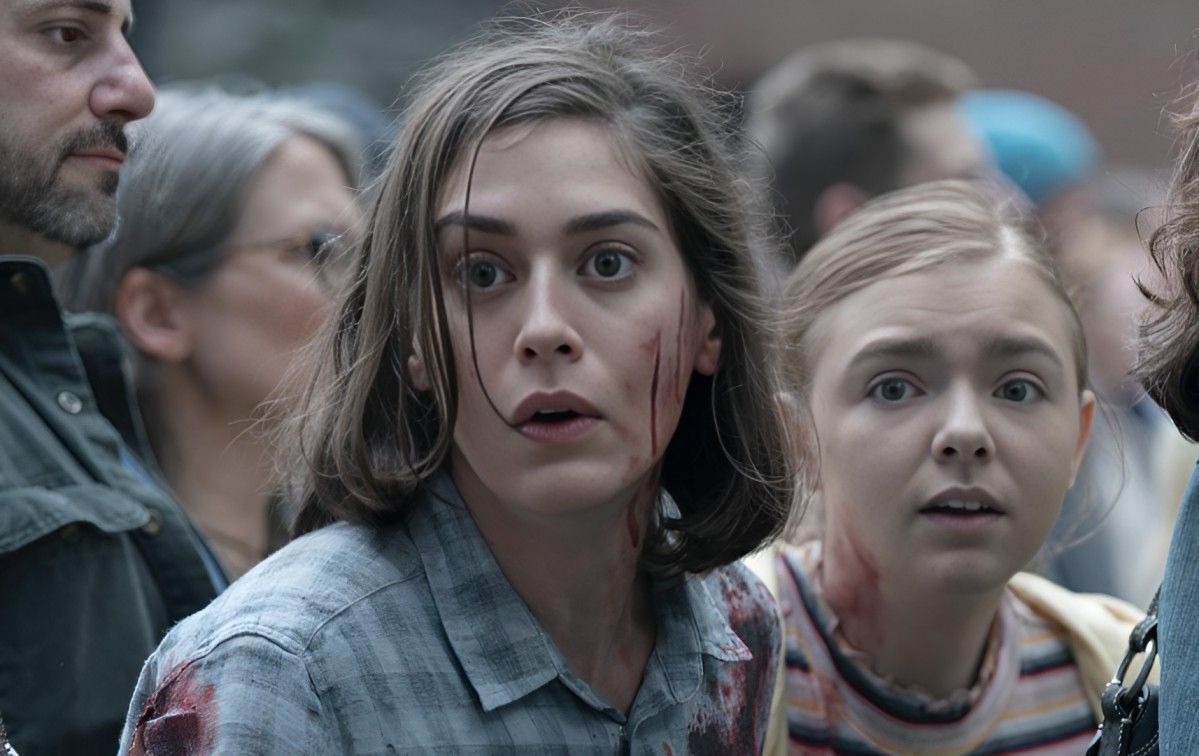
Episode 3 puts Molly Strand in the spotlight. Her psychic ability, which enables her to perceive others' thoughts and feelings, is still a defining trait. The episode shows this gift as tiring rather than liberating, thus adding to the loneliness and emotional instability of Molly.
Her view influences almost every significant event in the episode. Castle Rock takes advantage of Molly's sufferings to delve into how guilt can linger long after the occurrence.
The 1991 flashback: Matthew Deaver's death
Flashback to the year 1991, depicting the adoption of Henry's father, Matthew Deaver, is one of the most prominent scenes in Episode 3. The episode presents a young Molly who visits Matthew in the hospital and disconnects his breathing tube, leading to his death.
The scene is described frankly and to the point, with no justification whatsoever. Castle Rock does not portray the act as either heroic or merciful. Rather, it is represented as a morally ambiguous act done under emotional turmoil. The episode lets the moment linger without giving any explanation, thus underlining its power of impact and not the reason behind it.
Guilt as an ongoing condition
In contrast to the traditional narrative arc where the development of the flashback is followed by its resolution, the third episode of Castle Rock takes a different stance. The guilt of Molly is depicted through dreams that haunt her, withdrawal of emotions from others, and the struggle to keep everything in balance. The pain she feels is continuous, and it is a matter that has not yet been resolved.
It is not a series that gives its audience a neat ending. Guilt is one of the themes depicted in the episode, and it is made clear that guilt does not lessen over time. On the contrary, it signifies life that goes on day by day and thus affects one's conduct and view.
Medication, disorientation, and loss of control
Molly’s dependence on medication throughout the episode becomes very clear. Samantha struggles to manage her thoughts and feelings, and before long, she begins to lose control over her usual day-to-day life. For some time, she has not taken her medication, which only aggravates the situation since it causes her to become even more anxious and confused.
The loss of self-control culminates in a very distressing and lengthy scene where local children stage a mock trial for Molly. The scene is not only awkward but also confusing, and it shows her emotional breakdown instead of driving the plot forward. Castle Rock showcases the scene in its unvarnished state, emphasizing the character's weakness over the dramatic nature of the incident.
Molly’s home and escalating stress
Another instance in the episode is Molly returning home, only to find it completely overhauled. The invasion of her privacy through the break-in causes her even more distress, thus adding another weight to her feelings of not being in control and living in an unsafe environment.
Castle Rock does not treat this as a mystery to be uncovered; rather, it treats it as another of her emotional stressors that keep on piling up. The aforementioned incidents combined are a clear proclamation that the past and the present of Molly are in a face-off, gradually leading her to a state of being unmoored.
A significant day for the Castle Rock televised event
The starring character of Castle Rock Episode three will be the local public-access television show Molly's Local Color, her appearance on which will be a major structural element of the episode. According to the script, she is to conduct a dialogue on real estate and the town's history with a distant, professional attitude.
Molly’s fight for the show is an outward expression of her inner turmoil. Castle Rock employs this contrast to draw attention to the gap that exists between public discussions about catastrophes and the private experience of such.
The awakening one on-air
Molly goes off the beaten track during the course of the live broadcast of Local Color. Instead of retreating to the just-touching-litigate local-history issue, she reveals the indefinite inmate in the Shawshank penitentiary.
This move leads to an immediate chain of events. Castle Rock shows the use of the allotment as a fact, not a drama. It is as if the narrative attempts to make a mundane exposure rather than a hyped-up act, thus reinforcing the entire episode's veracity.
Henry Deaver in the 3rd Episode
Henry Deaver is not only present but also the leading character in Castle Rock episode 3; however, the episode does not spotlight the conflict between him and Molly. Their intertwined lives are mostly left unsaid. Henry is mainly concerned with the practicalities of the Deaver family house and his Shawshank-related work.
Once Molly has appeared on television, the warden comes to Henry with a proposal for a settlement. The exchange serves to emphasize the real-life repercussions of Molly's on-air disclosure, but at the same time, it does not turn into a dramatic turning point.
Henry’s get-together with The Kid
Henry also pays a visit to The Kid at Shawshank Prison as the story goes on. Their meeting is quite different, as The Kid is disturbingly cool and relaxed throughout. He doesn’t say much but poses odd questions like “Has it started?” and “Can you hear it now?”
Castle Rock doesn’t provide any hints for those words. The situation neither explicates the issue nor builds the mystery. Rather, it keeps the intrinsic ambiguity, which is the characteristic of The Kid who appears in the series.
Castle Rock’s attitude to its own violence
As portrayed in Episode 3, Castle Rock is a town that has gotten used to violence. The killings and misfortunes of the past are mentioned in an offhand manner, and that information is often used as background rather than the source of the town’s trauma. The Local Color program itself indicates this attitude by using violence as a subject fit for public discourse.
The episode does not directly criticize this way of dealing with things. Rather, it just shows the public indifference and the private suffering, in contrast to speak for itself.
The importance of “Local Color” in Castle Rock Season 1
Season 1, Episode 3 is a pause in the larger storyline that is built on character. It doesn’t answer mysteries or major plot twists. The series, rather, produces emotional stakes and confirms its commitment to cause over glamour.
The show, by setting the episode in certain, verifiable instances, makes sure that its themes are rooted in reality rather than in abstraction.
“Local Color” is one of the psychologically most focused episodes of the first season of Castle Rock. Its strength is in postponement, precision, and detail. The series shows that the horror of Castle Rock is not based on the sudden use of violence, but rather on the gradual build-up of unresolved acts.
 Trending
In place of giving out the answers, the third episode provides the audience with facts, alongside the uneasiness that is normally experienced with such a situation.


 Reply
Reply


